Skip to content

Clive James, Cultural Amnesia.

28-Aug-13

Several years ago one of my college professors asked me if I was reading Clive James. (The implication was that I should be.) I told him I had never heard of him. He was shocked: James was a regular contributor to those learned periodicals that a certain class of people consider obligatory reading for intelligent people, like The New York Times Book Review, The Times Literary Supplement, and The New Yorker, none of which I ever read except in cases of dire boredom and crushing world-despair (a regular condition for a substantial enough segment of the population, which I suspect is the reason those magazines have so many readers). Besides writing for the periodicals, James had written a billion books and was on television all the time. Still I had never heard of him. The world is large. I checked out his website and it seemed to be a token effort: a few things that apparently had no value in the world of publishing was all he offered. I was not impressed, and I moved on.

But another person, an unusually intelligent friend of mine, suggested James to me once more, and this time she backed it up by producing a copy of one of his books, which is always the best way to get a person to read a book, especially when he is too poor to buy it, and too disorganized to get to the library on time. She gave me Cultural Amnesia, which she said she had been dipping into for months with real pleasure. She cautioned that it was a bit dense and did not demand to be read through at a sitting. She did not need to caution me off: the books other people call dense I find to be my proper element: water is denser than air, but for a dolphin it’s easier going nonetheless.

So I read James’ very enjoyable set of essays over the course of about a week, with a break in the middle when I took a trip to New York and forgot to bring the book with me (which resulted in this recent Freud essay).

Cultural Amnesia is an unusual book. Eight hundred fifty pages long, it consists of brief meditations on a hundred-some odd quotations from a hundred different literary figures or otherwise famous people. These are obviously the gleanings of James’ lifetime of attentive reading and note-taking. Many of them are priceless in themselves. We have Kafka on a woman’s body: “How short life must be, if something so fragile can last a lifetime.” (God, how beautiful that is – if a woman ever wonders what men think of as they watch them sleeping next to them, there it is, put into words that simply cannot be compressed any further – the wonder, the feeling of loss in the face of mortality, the tenderness, the awareness of something precious beside one, something needing infinite protection but ultimately destined to be the prey of something against which there is no protection – again, an amazing, beautiful line.) Flaubert on the collapse of religion during the Roman Empire: “No cries, no convulsions, nothing more than a face fixed in thought. The gods no longer existed, Christ didn’t exist yet, and there was, from Cicero to Marcus Aurelius, a unique moment in which man was alone.” Cocteau on mercuriality: “Too many milieux injure an adaptable sensibility. There was once a chameleon whose owner, to keep it warm, put it on a gaudy Scottish plaid. The chameleon died of fatigue.”

What follows each quotation is an essay, generally on the subject of the quotation itself – hence for the Flaubert quotation the essay is about whether the world is better with or without religion – but sometimes about the artist generally (the Cocteau essay, for instance). Sometimes the essays wander a great deal, however, wherever James feels he has a chance to say something he wants to say. Jazz comes up several times in the book – there are essays gathered around Louis Armstrong, Duke Ellington, and Miles Davis – and the general structure of the book is jazzy. Given a theme – the starting quotation – James improvises, “blowing wherever he listeth.” Thank goodness there is an index, because finding these digressions afterward can be quite a task (who would know to look for the paean to Singin’ in the Rain in the Michael Mann essay based off the line “let’s violate his ass right now”?).

The book’s packaging by the publisher is terrible as usual, because the title and subtitle (“Necessary memories from history and the arts”) suggest that the book will be a liberal education in a can, which it is not, and a screed against modern mindlessness, which it is not. Aging businessmen who want to banish the slightly hollow ache of a lifetime of making money and voting Republican by knowing the intellectual importance of Thomas Mann, in three bullet points or less, will be disappointed. In fact I don’t know how much you can get out of the book unless you love ideas in general and spend your time with them already, and enjoy a breezy, aphoristic engagement with them. Because when his essay on Georg Christoph Lichtenberg veers into a discussion of the vapidity (or profundity?) of beauty (via Tolstoy), James is all-too-sparing of the details:

We can’t begin to be reasonable on the subject until we concede that our response to beauty is unreasonable in the first place. Tolstoy dramatized the truth incomparably – incomparably even for him – when he made Pierre fall in love with the pulchritude of his future wife even while she was busy proving that her head was full of air. Pushing the theme to its outermost artistic limit, Tolstoy shows Pierre obsessed with the shapeliness of her breasts at the same moment when she is obsessed with the shapeliness of her own arm. (397)

“Who the hell is Pierre?” says the aging businessman. “What book is this from?” James gives you no more details than his discussion requires. Some people I am sure will accuse him of name-dropping – the people for whom the world of books evokes only personal insecurity. For me I will simply note that the above example does precisely what James wants it to do – dramatize, incomparably, the problem he is talking about.

The whole book is filled with such excellent dramatizations and brilliant observations – a book of telling details. It is excellent for writers, because writers are basically collectors of telling details: you need to tell the inside story, and the only way you can do it is from the outside.

The book is also good for writers because James is an excellent writer, who has obviously spent a lifetime writing for effect, with a wonderful stock of metaphors and a knack for canny summaries. In keeping with his career as a critic, most of his best effort is critical and summary: “Ezra Pound, typically, was hammering away at a nail whose head was already flush with the wood.” “With War and Peace as a knapsack book, he [Alan Moorehead] was able to complement Tolstoy’s key insight – everything depends on morale – with an insight of his own: morale depends on everything.” “Spenser is only the third most gifted exponent of the stanza named after him.”
These opinions are not backed up with anything, and you have to supply the details. You need to know that there is such a thing as a Spenserian stanza (and a Spenser, for that matter). And of course you may or may not share James’s opinion about Spenser. James is at the end of a long career, and his prose drops opinions the way forest-trees drop leaves in the fall. They are everywhere, and you cannot read a paragraph without three or four of them – even ones theoretically irrelevant to his set theme – bumping up against your mind. I don’t find myself agreeing with them all – who could? – but they are often, to borrow a phrase of his, “unbeatably well put,” and they almost always contain an important insight (for example, he thinks that jazz went astray when it lost “that swing,” its danceability – you may disagree, but this is still a useful way of discussing what happened in jazz after World War II). I am certain that a certain sort of person will find James’s opinionated prose insufferable – the type who believes that only professionals can have opinions. In fact, it would be interesting to hear James analyze at further length the great split in the world of books, between literature and academic analysis. He clearly disdains academics and “professional opinion,” and though he is a critic himself he never feels like one to me, in large part because he can actually write – what he is doing is similar in method (and perhaps even purpose) to other works of art. He contrasts this with academic writing, and he even notes the cultural benefits of the institutional anti-semitism of the universities in early-twentieth-century Germany and Austria:

Whole generations of Jewish literati were denied the opportunity of wasting their energies on compiling abstruse doctoral theses. They were driven instead to journalism, plain speech, direct observation and the necessity to entertain. The necessity to entertain could sometimes be the enemy of learning, but not as often as the deadly freedom to write as if nobody would ever read the results except a faculty supervisor who owed his post to the same exemption. (2)

A similar – but contrasting – point can be made (and James does make it) that America benefitted immensely from the culture of those (mostly Jewish) intellectual eminences driven into exile by Hitler. But I will point out that many of them had in fact compiled doctoral theses, and found their homes in American universities, and yet they made tremendous contributions to American culture. Does this count as evidence against James’s contention that compiling those abstruse doctoral theses was a “waste of energy”?

It may not, but this is the kind of problem James never thinks through, and if you take his statements too seriously you may be bound to get annoyed at him. He applauds the cultural contributions of people driven from the universities, and to some extent claims that their achievements were dependent on that exile, while also noting the equal achievements of people who spent their entire lives in universities at home or abroad. No data is given, and it is merely James’s opinion. He can be caught doing similar things in other essays. To some extent James almost makes it part of his method: his work is not systematic. When he praises liberal democracy – a constant theme of his – he praises it for its capacity to hold contradiction. He allows himself the same freedom.

In a similar vein James discounts there being any real plan or coherence to his book: after all, a hundred discrete essays about a hundred quotations from a hundred different authors, organized seemingly in the most lazy manner possible – alphabetically by author’s last name – seems to be the very definition of a hodgepodge. And the choice of people is bizarre – where else will you find Dick Cavett sandwiched between Albert Camus and Paul Celan? Or Edward Gibbon beside Charles de Gaulle and Terry Gilliam? James had something to say about them, that is all. This is a legitimate consideration for a writer, though again, not useful for the businessman who wants to stick with the 100 most important people to know. The people were chosen not because they were crucial in themselves, but because either their words or their careers were in themselves a “telling detail.” And James pulls it all off, because in fact almost all the essays are interesting.

James also claims that the book’s eight hundred fifty-page heft took “forty years to write.” This is transparently false as a literal statement. The book reads like it was written in a week: the voice modulates for effect but never really changes. The essays are all breezy and digressive and never ponderous: in fact, their digressions into blatant contradiction are of the sort that a long time with a subject generally resolves into some kind of synthesis eventually. Even its contradictions, hence, have a coherence to them – it feels all of a piece. James himself writes an “overture” for the book, which is a description of Vienna before the Nazi takeover, which he takes as somehow an ideal and also somehow not an ideal: a subject of fascination, let us say. Vienna was beautiful, brilliant, witty, learned, humanist: it was stuffed with people who knew history and literature and the passions. And yet it was helpless before the Nazi onslaught: in fact, it was in great part cooperative. Many of the luminous intellectuals seemed to have no idea what was coming. Many more were part of what was coming in some way. Many were collaborators. Many claimed for the intellect a place above such concerns as Hitler and National Socialism – a claim belied by the fact that once National Socialism arrived, the city’s intellectual culture never really returned. Its streets had kept their pretty facades, but their soul had been gutted: it had become just another pretty place for American tourists to make a two-day stop on their way to the next European capital.

Almost all of James’s essays gather around the general phenomenon of which Vienna is but one example: the helplessness, the blindness, and the culpability of those who lead a life of the mind when confronted with anything serious. Sometimes it is just typical human blindness when it comes to love, but most of the essays have as their backdrop the titanic twentieth century struggles with totalitarianism in its various forms. The essay about Sartre is in many respects the best, because it is utterly unflinching. It begins with a long quotation from Sartre whose awfulness should indeed arouse suspicion (and there are entire shelves of this kind of stuff in our university libraries):

The Cogito never delivers anything except what we ask it to deliver. Descartes never interrogated it concerning its functional aspect: “I doubt, I think,” and by having wanted to proceed without a guiding thread from this functional aspect to its existential dialectic, he fell into the substantialist error. Husserl, instructed by this error, remained fearfully on the place of functional description. By that fact, he never superseded the pure description of appearance as such; he remained on the Cogito; he merits being called, despite his denials, a phenomenist rather than a phenomenologue; and his phenomenism borders at all times on Kantian idealism. Heidegger, wanting to avoid the phenomenism of description that leads to the megatic and antidialectic isolation of essence, directly tackles the existential analytic without passing through the Cogito….

James replies, “But enough, and more than enough.” After acknowledging that sometimes expressing complex things is hard, giving the example of Hegel, James goes on the attack:

Hegel was trying to get something awkward out into the open. Heidegger was straining every nerve of the German language to do exactly the opposite. More than half a century later, the paradox has still not finished unraveling: it was Heidegger’s high-flown philosophical flapdoodle that lent credibility to Sartre’s. It was a paradox because Heidegger [rector of the University of Berlin from 1933 through the end of World War II] was an even more blatant case than Sartre of a speculative mind that could not grant itself freedom to speculate in the one area where it was fully qualified to deal with the concrete facts – its own compromises with reality. But merely to call Heidegger a “more blatant case” shows what we are up against. The case is still not clear, and in the years when Sartre and Heidegger were in a supposedly fruitful intellectual symbiosis, it was still not even a case: Heidegger’s involvement with the Nazis was thought of as a flirtation. The means scarcely existed for anyone – philosopher, philologist, literary critic, journalist or clinical psychologist – to point out the truth which has since become steadily more obvious, even if it does not appear axiomatic yet: that these two men, Heidegger and Sartre, were only pretending to deal with existence, because each of them was in outright denial of his own experience, and therefore had a vested interest in separating existence from the facts. (676-7)

To me this does, in fact, appear axiomatic. The makeup known as intellectual culture is opaque because it is being called upon to hide blemishes. You can’t spend much time with artists without knowing this. And the twentieth century might indeed be called the age where this was proven most clearly, when the most cultured, aesthetic nations proved the sickliest and ugliest of all. Germany, Austria, France, Italy, Spain, Russia, and Japan all signally disgraced themselves. Argentina produced the prettiest city together with probably the worst political history in South America, and it also produced the best writer, Borges. That Borges is escapist I think should be obvious enough. Whether you want to call this escapism our noblest or ignoblest faculty is a matter of perspective. You might call our ability to at least mentally remove ourselves from the idiotic primate bloodbath all around us one of our better qualities. Borges’ fellow-writer and Argentinian Ernesto Sabato – whom James quotes with approbation in his essay on Borges – merely thought it was fear, however: “From Borges’s fear of the bitter reality of existence spring two simultaneous and complementary attitudes: to play games in an invented world, and to adhere to a Platonic theory, an intellectual theory par excellence.”

James could turn the conversation from here into a discussion of spirituality – which in this context I will define as the attempt not to hide the blemishes but to address them directly – and an examination of what happens to art which does not believe in the gods, and philosophy which does not believe in wisdom. But James instead tends to chalk the rot up to personal culpability. In a few instances this seems fine, but when you see James pull the same trick in essay after essay – very few thinkers turn out very honorable except the ones who got immediately murdered – his standard of honor seems a bit too exalted for human beings. Can you really hold it against these men – especially the Frenchmen, who had to choose death or silence and generally could not go into exile – that they chose to live? But even in writing about the topic James does us a favor: it reminds us that totalitarianism is all the more to be dreaded, because the moral stature of the individual human being stands almost no chance against it.

And I will say something further about the “outright denial of one’s own experience” which he accuses Heidegger and Sartre of. Any curious observer must note that this denial seems to be an aspect of the creative life in general, which seems, like blood, to flow into the world only from a wound. It is a struggle against helplessness, against limitation, against our smallness. Of course Sartre would write about freedom, the way Jane Austen would write about love and marriage: it was the thing they lacked. One might almost say it was the thing they knew nothing about – nothing perhaps except their dreams. It is wise to scrutinize their writings precisely here, where they were quite literally making it all up. Oftentimes they are delusions and only lead us further away from truth. But this is not to say that an artist cannot begin with such a wound and realistically describe both the helplessness and the thirst for the ideal which is engendered by it. I have never enjoyed Sartre’s work, which to me does indeed feel like a pose, but the work of his contemporary Camus (also compromised by his feeble cooperation with the Nazis) seems always to acknowledge his weakness in the face of the problem (the problem with a plague is that you are not immune to it: and it makes you want to run away from all your moral obligations in the hope of merely surviving it – this is honesty about our weakness, and yet it leaves room for heroism as well).

But even in Camus’s case, you get the feeling that the motivating factor is a kind of self-loathing, or at the very least an intense internal discomfort with life as it is. It is not clear that a more acute consciousness of this would make their work better; exposing roots to the light is not the best way to get flowers and fruit. (If Sartre had figured out he was merely writing out his guilty conscience at not resisting Nazism with his life, what could he have done? Could this awareness have led him to any destination but self-immolation? He would have had his moral integrity, but the liberation of France would still have had to wait for the Allied Army to arrive with the tanks).

I suspect that some of James’s blindness on this topic can be related to himself. His chosen field was the twentieth century – a large field. One might have thought that he would have focused on New York, or Washington D.C., or Los Angeles – major cultural centers which shaped the century – as opposed to Vienna. Or that he would have written about Franklin Roosevelt and Churchill instead of Mao Zedong and Hitler. In other words, his book is quite personal and idiosyncratic – hardly the only or even obvious way to treat such a subject. What does this tell us about James?

James, an Australian who moved to London, is obsessed with the middle-European writers – the Austrians in particular, but also the Poles, the Russians, the Germans, the Czechs. (In a word – Bohemians). What is so striking about them is how entirely un-Australian they are: they were boxed into a tiny, pressurized social space, the inheritors of a vast cultural tradition and a powerful economy, comfortable and hence cut off from nature. The dangers they faced were from human beings; the beauties around them were those of human beings. When they went to the “sea” it was the Lido at dead old Venice: not even at the ocean could they escape human history. It is clear that this world fascinates James. I see in him the same values that I see in the intellectual immigres who come to New York City: they want to be witty and cultured and brilliant and they want to be acknowledged for it. To get it they must be immersed in people, to smooth the rough edges off the pebble, to scrape off what is common and to imitate what is superb. What they want can only be given them by human beings. You can see that this has been James’s method for decades – to observe and imitate the most artful. He never even mentions anything natural in the course of the whole book.

James still seems a little bit surprised that this very social world is made up – necessarily – of people who will knuckle under pretty easily to social pressures. He is like the young ingenue who discovers that the Bohemians are all well-fed conformists after all – marching to a different drummer for sure, but in step all the same. Of course totalitarianism found good soil in these glittering, pressurized societies – totalitarianism itself is a social phenomenon. I find it a bit charming that James thinks that artistic culture should tend to produce insular, Stoic individuals capable of challenging any tyrant with the eternal truths of humanism. I’m an idealist myself and I do sometimes think about what kind of educational culture would actually produce people like this, but I harbor not the slightest illusion that the cafes of Vienna would be the place to look. I have my doubts even about the farm of Cato producing people like this. But for sure the cafe intellectuals are going to be the least likely to be practiced at thinking for themselves.

But it’s that cafe world which is – or was, at least – the beau ideal of James, and he has obviously spent a lifetime immersed in the literary productions of those men and women. And in James’s indignation at the failure of so many of his heroes to be heroic, you can feel the inner tension in the man – the question as to whether these figures should have been heroes at all, whether a lifetime spent, as James has, reading the works of Sartre and Borges and Proust amounts to much in the end. Nothing quite satisfies, but thank goodness the productions are voluminous enough. No matter how well put-together it is, no matter how many notes you take, you get through the book soon enough, and have nothing to do but reach for the next one.
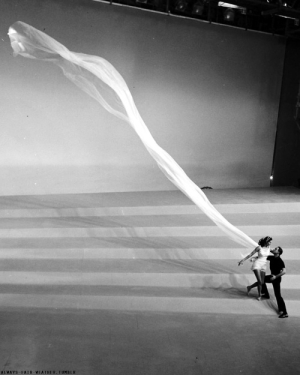
Singin’ in the Rain.

21-Aug-13

Beyond mere singing in the rain.

Last Saturday there was a party to celebrate the Denning Town Garden, the creation of a group of citizens who wanted to create the town’s first public space. After the party – which was a wonderful celebration of our little upstate community – an artist who lives next door to the town garden showed – on a massive screen draped across his barn – the movie Singin’ in the Rain. I had long wanted to see it, and I saw it in style, my neighbors around me, an apple tree dropping apples overhead and a nice campfire keeping my back warm. Sometimes I don’t know how I got to be this lucky.

From the title and the well-known dancing in the rain scene, it would be easy to imagine that Singin’ in the Rain is a typical musical (an art form which has never appealed to me). The rain-dance scene is a good dance number, but it’s lighthearted in precisely that goofy and fake way which makes musicals repellent to certain types of people (like myself). Escapist, superficial, saccharine – it’s easy to toss adjectives at something this syrupy and have them stick.

It’s unfortunate that this is the signature scene of the movie, because it’s not indicative at all. Singin’ in the Rain is different. It’s one of the most extraordinary movies I’ve ever seen.

The first thing I’ll say about it is that it was very much a movie – selfconsciously so, in fact. Often a movie is just a relatively convenient way of telling a story and making money off it, but the story might just as well have been in book- or drama-form (and often it is). Singin’ in the Rain could not be anything else – it is utterly untranslatable. It couldn’t even be a Broadway show – its matter is so completely bound up with the methods of the cinema. And it is highly conscious of this fact – in one astonishing sequence, Gene Kelly is discussing with a movie executive his plan of adding a modern frame to an 18th Century story (“The Dancing Cavalier”). He says “it would go something like this” and then the movie veers into fifteen minutes of musical framing, extravagant beyond belief, about the acting career of a newbie arriving on Broadway, culminating in an astonishing pas-de-deux with Gene Kelly and Cyd Charisse, whose formal composition and manipulation of perspective rivals anything that has ever been achieved in oil painting – and this continually evolving, frame after frame after frame. This pas-de-deux is supposed to represent what is going on in the mind of the young actor as he sees his old love – or what is spiritually happening to both of them – but in the world the young actor has no money, and when the camera reverts to the perspective of the world she walks on by, tossing him a silver dollar as she does. Disappointed he moves on, seeing another idealistic newbie arriving, and that concludes the frame as envisioned by the man making the proposal to the movie executive, who says diffidently at the conclusion of the scene, “Well, I’ll have to see it.” Yes, you would, because nothing short of the cinema can convey the voluptuous visual richness of the world you have been taken to in that time.

That is indicative of the astonishing technique of the movie, which is, as Clive James says of it, “as good as it could be from one end of the miracle to the other.” The main plotline is that a famous silent-movie actor – Gene Kelly – has to confront a transition to speaking movies, which brings out his insecurities about his own abilities and the artistic worth of the movie industry in general (yes, this has been remade). While working on a movie which cannot be successfully presented as a “talkie,” he hatches a scheme to convert it into a musical. On the way there are serious reflections on acting, moviemaking, moneymaking in the arts, the difference between appearances and reality, the nature of celebrity – in short, a summa of Hollywood culture. There are sixty scenes – an unbelievable richness flowing by, ranging from set dance numbers to honest dialogue taking place on sets. There is a love-duet which the actor says he can’t do in the parking lot in daytime – so they return to the studio and put on the lights and fans and create a moonlit night for themselves. There are swashbuckling raids on castles and girls coming out of cakes at Hollywood parties and swanky nightclub numbers and honest conversations in parked cars in the Hills. In short, the amount of interesting things occurring is just about overwhelming.

And it is adorned of course by superb dancing. I had never seen a Gene Kelly movie before, and he is worth seeing: with Cary Grant one of the great standard-bearers for midcentury American culture. Kelly is buoyant and optimistic – that is some smile – but also athletic and powerful and masculine. He is always contrasted with Fred Astaire, the other great male screen dancer of his time, and the contrast is instructive: Astaire looks like he made a deal with the devil, to trade in his masculinity for his dancing abilities. Kelly radiates exuberant, athletic masculinity – Cyd Charisse said of him, “When he lifts you, he lifts you!” He had given up none of his masculinity. He was the America that won World War II – a country which could not only kick the world’s ass, but provide it with its entertainment while doing so.

So this movie comes summa cum laude. It really is “the Citizen Kane of movie musicals.” I can’t believe it took me this long to see it. Be on the lookout for it and don’t miss it if it comes to the Film Forum or the equivalent. Now I want to see some more Gene Kelly movies, but I can’t imagine any can surpass this.

Freud and the Future of an Illusion.

19-Aug-13

A friend recently lent me a copy of Clive James’ book Cultural Amnesia – now that is a good friend – which I devoured over the course of a little over a week. The book is excellent, and what is particularly lovely about it is that it filled me with the desire to read everything about and by all the writers James mentions. When he praises something, he is so convincing and beautiful and earnest you immediately want to go see the thing for yourself. This is a very good quality in a human being.

One of the writers he enthused about was Kafka, and this sent me back to my bookshelf, but I will confess he did nothing for me, as usual. Some writers write about the universe, and some just write about society. As a general rule the Middle-European writers of the twentieth century are social to the exclusion of all else. Whenever I read them, I start thinking, “Goodness gracious, I think the goldenrods are in bloom, I think I had better go check,” and am gone for the rest of the afternoon.

So my Kafka attempts failed. But James also enthused about Freud’s book The Future of an Illusion – nice title – “a powerful argument brilliantly articulated… to this day one of the most magnificent condensations of a world view into a prose style.” The only Freud I had read was The Interpretation of Dreams, which besides being wrongheaded about the interpretation of dreams, is truly dreadful writing. (God, how terribly people write when they think they are being “scientific.”) Freud was a pioneer, and I respect him, even if almost all Freud’s theories have proven very easy to either improve or disprove. But really – could James really be praising Freud as a stylist?

Like most people, my library is a bit more learned than I am, and a copy of The Future of an Illusion was there waiting for me, rescued from the trash when Wagner College was unburdening itself of its book collection in 2001. The book is only 98 pages, and I literally read half of it on a subway trip from Queens to the Bronx and the other half on the trip back. And wouldn’t you know it, it actually was a powerful argument brilliantly articulated, and one of the most magnificent condensations of a world view into a prose style. I heartily recommend it.

The illusion that Freud is talking about – you might be able to guess it – is religion. The book is an extremely tight presentation of an argument which might have been controversial in Freud’s time, but which now is probably the common possession of almost every twentysomething college educated Brooklyn transplant: that religion is unnecessary, irrational, and infantile, a crutch for the weakminded, an illusory consolation and a bit beneath a rational modern person, if a rational modern person even gives the topic a thought. I’m sure most of these Brooklynites have never read the book, which merely shows Freud’s prescience: this was indeed the future which he was sketching. And yes, he could sketch it well. It is probably the best evocation of modern atheism I have ever read:

Let us consider the unmistakable character of the present situation. We have heard the admission that religion no longer has the same influence on men that it used to have (we are concerned here with European Christian culture). And this, not because its promises have become smaller, but because they appear less credible to people. Let us admit that the reason – perhaps not the only one – for this change is the increase of the scientific spirit in the higher strata of human society. Criticism has nibbled away at the authenticity of religious documents, natural science has shown up the errors contained in them, and the comparative method of research has revealed the fatal resemblance between religious ideas revered by us and the mental productions of primitive ages and peoples. The scientific spirit engenders a particular attitude to the problems of this world; before the problems of religion it halts for a while, then wavers, and finally here too steps over the threshold. In this process there is no stopping. The more the fruits of knowledge become accessible to men, the more widespread is the decline of religious belief, at first only of the obsolete and objectionable expressions of the same, then of its fundamental assumptions also. (67-8)

There is something about Freud’s prose that feels inevitable, precisely as the modern mind feels the approach of atheism. People’s stories are all the same: atheism is something forced upon them by the demands of intellectual integrity: “I just couldn’t believe anymore.” And his chapters flow one to another, a brilliant line of argument and sequence of emotions which I think very well represents what happens in the minds of innumerable modern people as they mature.

We say to ourselves: it would indeed be very nice if there were a God, who was both creator of the world and a benevolent providence, if there were a moral world order and a future life, but at the same time it is very odd that this is all just as we should wish it ourselves. And it would be still odder if our poor, ignorant, enslaved ancestors had succeeded in solving all these difficult riddles of the universe. (58)

Fudge the thinking and word-choice a little and you can insert this paragraph into the spiritual autobiographies of half of America’s graduate students.

What Freud decides to do with the problem of theological decline is to state his position encouraging it: he thinks that in general the world will be better off without religion, and that science will continue to displace it. He spends some time trying to answer the claims of those people – who are still with us – whose main defense of religion is that it makes people more moral, with its system of eternal rewards and punishments. Freud respectfully disagrees with this viewpoint, and I believe he has been proven correct: the most atheistic places in the world have in fact become the places where people murder, lie, cheat, and steal least. (Religious people dodge this fact by arguing that those atheist places are the places where people have the most casual sex and wear the fewest clothes so in fact they are all Gomorrahs of moral vacuity, but I find most sexuality not sinful, and most sexual sins forgivable). Morality does not need the crutch of religion.

I find myself reading atheist writers frequently, and I generally agree with them: in fact, I think they generally pick up many of the same themes Jesus himself did when attempting to put the religious practice of Judaism on a truer footing. Freud, for instance, has a superb argument for giving Law to Caesar and disrobing it of its religious mantle entirely (the single most brilliant contribution of Christianity to religion – neither Jesus nor any of the apostles whose faith we claim to follow took any cognizance of Roman law as a Christian concern):

Through some kind of diffusion or infection, the character of sanctity and inviolability, of other-worldliness, one might say, has been extended from some few important prohibitions to all other cultural institutions and laws and ordinances. And often the halo becomes these none too well: not only do they invalidate each other by making conflicting decisions according to the time and place of their origin; even apart from this they betray every sign of human inadequacy. One can easily recognize among them things which can only be the product of short-sightedness and apprehensiveness, the expression of narrow interests, or the result of inadequate hypotheses. The criticism to which one must subject them also diminishes to an unwelcome extent people’s respect for other and more justified cultural demands. As it is a delicate task to decide what God has himself ordained and what derives rather from the authority of an all-powerful parliament or supreme judicial decision, it would be an indubitable advantage to leave God out of the question altogether, and to admit honestly the purely human origin of all cultural laws and institutions. Along with their pretensions to sanctity the rigid and immutable nature of these laws and regulations would also cease. Men would realize that these have been made, not so much to rule them, as, on the contrary, to serve their interests; they would acquire a more friendly attitude to them, and instead of aiming at their abolition they would aim only at improving them. (72-3)

“The law was made for man, not man for the law,” is a good summa of Jesus’s religious reforms, and Freud here is really only echoing this same wisdom. Dante reasoned out the same principle in his De Monarchia to reprove medieval society, insisting on a separation between Church and State and giving the power of legislation to the state. Almost every single major problem concerning politics and Christianity today could be resolved by taking up the position of Jesus and Freud. Jesus had two commandments; how many does the Catholic Church have today? They have proven to be little more than dilution.

The atheist books always seem to do this – they take up their beef with bad religion and never get any deeper. Why the atheists don’t take up their fight with the big hitters – like Jesus, for instance – I’ll never understand. I suppose it is more difficult a fight, but you have to fight the champion if you want to be a contender. If you want to tell us there’s no value to epic poetry, kicking around William Carlos William’s epic poem Paterson is not going to get you anywhere. It’s too easy. You have to go to Homer and Dante or you have no argument.

Freud offers an unusually bogus definition of religion, but it is useful place for me to take up his argument, so I will quote him:

Having rejected various formulas, I shall take my stand by this one: religion consists of certain dogmas, assertions about facts and conditions of external (or internal) reality, which tell one something that one has not oneself discovered and which claim that one should give them credence. (43)

This is a terrible definition, first of all because this definition applies to literally any statement on the news or in a history book. It does nothing to distinguish religion from say, economics or politics or literature or gossip or technical training at a factory. It is a set of propositions – kind of like Euclid’s Elements. But religious propositions turn out to be a lot harder to prove than mathematical theorems, and so they’re just bad math and bad science.

I think this is sleight of hand in general, like arguing the proposition “hedonism is the proper life-philosophy” by proving that it offers more pleasure than other ways of living. Let me say the obvious: provable propositions – science – have a limited application to human life. The reason is: human life. We don’t have infinite time. You don’t get an infinite number of experiments to figure out what the most rewarding type of life will be. You don’t get to make the same choice two different ways. Science relies on replicability of experiments: if you can’t replicate the experiment, your data is useless. Life is itself irreplicable. Hence we are always going to need some shortcut to knowledge – something different from scientific certainty. Hence all the things that make us human and not just computers. Religion is – obviously – far closer to those things than it is to science.

But there is a scientific element to the religious life, just as life does in fact in part consist of errors and corrections. Freud says that religions have propositions for which we have no hard data – e.g. those concerning our future existence – and in general this indicates that religions focus on data-less propositions, which he thinks are really just our wishes. Religion is wish-fulfilment. The first things to be said about this is that our wishes are actually relevant bits of data, and depending on what you think the purpose of life is – I will return to this later – it is possible to believe that your wishes should be taken into account. But yes, by all means get data where data is available. I certainly do believe, contra Freud, that religious propositions have to be proven in the heart of the believer: you must experience Crucifixion, Resurrection, Incarnation, Lent, Passion, Exile, Promised Land, and so forth in your life for it to be your religion. If you don’t experience it, and if it has no meaning for you, then it really is just a social club. And I will confess that there are a lot of things in my religion, for instance, which have little meaning for me: the day I write this, for instance, is the Feast of the Assumption, August Fifteenth. For about sixty years Catholics have had in their religious possession the proposition, considered dogma, that Mary did not die but was “assumed” into heaven directly. I must confess that this dogma leaves me unmoved, though in a pinch I could probably interpret it into something relevant to my experience. But I don’t feel it’s all that necessary to do so, just as I don’t feel I need to appreciate all the writers in the world. Kafka does not appeal to me. He appeals deeply to other people. They are not being insincere: they are just different from me. Jung thought the proclamation of the dogma of the Assumption was one of the most important events of the twentieth century. But he might have been able to sit through the Catholic wedding blessing without thinking it is the most beautiful, deeply religious thing he had ever heard in his life (my position). We’re different people and we experience religious meaning in different places.

But the thing which is most important about religion for me – and which Freud does not talk about at all – is that it deals firmly with the problem of purpose. I think this is something which people should consider deeply, and one of the most striking features of the irreligious life is the sense that people get very confused when it comes to larger questions of purpose. As those Brooklyn twentysomethings become thirtysomethings and fortysomethings at least some of them feel the lack of purpose as an actual problem. I think that everyone lives with some purpose or other, which is, functionally, their religion. If you believe that the purpose of life is to ascertain facts, then science will be your religion; if to amass power, then that will be your religion; if to have new and pleasurable experiences, hedonism will be your religion. Here we sometimes have enough time in our life to get data and change our course. I have ascertained some facts, and had some power, and had some pleasurable experiences, and found none of them a suitable purpose for my life. I have tried to serve God like a slave, and contemplate reality as it is, freed from passions, and found neither really suitable either – though as the guiding principles behind orthodox Islam and Buddhism, they are certainly traditionally religious visions of what life’s purpose is. The only thing that really satisfies me is love – love of people, love of nature, love of art, love of the stars at night, love of thinking, love of music, love of dancing, love of all the things that pass away and love of the oneness which remains. I cannot much control where it arises in my life – I cannot create it – but like a seed I have received I can tend it to make it grow and blossom. This satisfies me. But it requires the cooperation of my mind to really happen – if I believed in a different purpose for my life I would have less love. And if it is not religion which makes these determinations about the ultimate purpose of human life, what is it? No philosopher preaches love as the purpose. Only a religion does, and only one religion, for that matter.

Freud does not use the word “purpose,” and in general he has nothing to say about these concerns of mine. He is more interested in the social effects of increased atheism and decreased religious fervor. But reading him I recognized for the first time a pattern of thought which is all around us every day. In place of purpose Freud attempts to substitute instinct. Freud’s vision of the good life is one in which as many instincts as possible are satisfied. Now this may be correct: this may be the mechanism by which all the things we know as “purpose” may be discussed scientifically: but it is also possible that our sense of our purpose will have to – as it feels – dictate to some extent which of our instincts we choose to satisfy. But the larger problem with this way of thinking is that the thinker will tend to trammel his sense of human purpose to the size of his understanding of the human instinctual equipage. Using this model Freud returns to classic European social-contract reasoning, saying that social life is necessarily a compromise: you suppress your instincts in exchange for the modicum of security that comes from everyone else suppressing theirs. The vision of human nature he derives from this truly leaped off the page at me when I first saw it:

We have spoken of the hostility to culture produced by the pressure it exercises and the instinctual renunciations that it demands. If one imagined its prohibitions removed, then one could choose any woman who took one’s fancy as one’s sexual object, one could kill without hesitation one’s rival or whoever interfered with one in any other way, and one could seize what one wanted of another man’s goods without asking his leave: how splendid, what a succession of delights, life would be! (25)

I ask this in all honesty: after a lifetime of raping any woman you saw, killing anyone who interferes with you, and taking a whole bunch of things which you must die and leave behind anyway – might you not start to wonder what the purpose was? Might not something feel left out, that would make itself known to you in your broken sleep? Would life really be so splendid? Camus orphically said, “Tyrants conduct monologues above a million solitudes.” The closest human beings can come to this ideal life Freud describes is as a tyrant, and do we really believe that Kim Jong Il represents the highest human life? Or Stalin or Hitler? But Freud does go on to say that the tyrant is the happiest of people, the only problem being that only one person gets to be happy in such a society:

True, one soon finds the first difficulty: everyone else has exactly the same wishes, and will treat one with no more consideration that one will treat him. And so in reality there is only one single person who can be made unrestrictedly happy by abolishing thus the restrictions imposed by culture, and that is the tyrant or dictator who has monopolized all the means of power. (25-6)

Research into the instincts was still very fresh and new at that time, but it is still odd that Freud believed that instinctually we are rape-and-murder machines, and all the brakes on this system are the work of human culture (that is the opposition he sets up in this book). Given a different internal vision – different wishes to be fulfilled I suppose – he could easily have seen a different picture. Heinrich Himmler, one of the great modern monsters, head of the German SS, inventor of the gas chamber as a “modern political instrument,” and as Germany’s minister of the interior during World War II directly responsible for the murder of millions of human beings, fainted when touring a German prisoner-of-war camp. This was clearly an instinctual reaction, which almost all of us share, and Freud could surely have observed it operative in other people. Dirty work is dirty work because we actually don’t want to do it.

But there was some truly evil idea abroad in that place and that time, and Freud was under the spell as well. The idea was somehow that the purpose of life was to achieve a kind of hardened superiority – the kind of ideal that got a nice Idaho boy like Ezra Pound to gush about Mussolini. Sometimes the ideal is predatory, sometimes mechanical, but hardness and superiority are always involved.  Freud here becomes another point in the line between Nietzsche’s striving to “liberate the blond beast” from Christian values of mercy and compassion and Hitler’s political realization of the same. The idea that the instinctual, natural human being would be above mercy and compassion is common to all three. Freud here explicitly states that human happiness depends to some extent on overcoming moral strictures created by culture, and that happiness is a zero-sum game, which to tell the honest truth only one person could ever truly win. Civilized life can only provide us with consolation prizes; the real reward beckons to us from beyond all morality. The thinkers were infected with the same rot that was abroad all over Europe at the time. Freud actually went to the same vacation resort as Hitler and the other high officers of the Nazi state, and never seemed to feel out of place enough to sense that there was any real problem. He barely escaped Austria, in 1938, after it was too late to save his family.

Modern atheism does frequently share aspects of this ideal of hardened superiority. That makes sense: Nietzsche and Freud are still important thinkers in the movement. Their vision of the ideal for a person corresponds to the hardness built into their vision of the universe: as Freud says, “nature destroys us, coldly, cruelly, callously.” (By contrast, I note that nature also nourishes us, and entertains us, and is funny and kind – nature is hence both hospitable and inhospitable, and to suggest one without the other is reductionist). And the proper person (so goes this line of thought) will be tough enough to recognize how hostile the universe is, and will look at it unflinchingly, driving away softness in order to get something out of this wretched existence, because it will give you nothing – whatever happiness, meaning, or purpose you get out of it you will have to put into it first. And anyone who suggests otherwise is weak and foolish – the kind of person you left behind when you set off for the big city. The picture has been complicated by the recognition of our social instincts and the necessity of sometimes being nice in order to have an enjoyable life, but the outlines are still roughly in place for certain people.

Freud’s vicious conception of the instincts creates an unusually stark version of this vision – honestly, he makes Ayn Rand look like Mother Theresa – but it is interesting to read, despite the discomfort caused by the Nazi overtones:

It is just as impossible to do without government of the masses by a minority as it is to dispense with coercion in the work of civilization, for the masses are lazy and unintelligent, they have no love for instinctual renunciation, they are not to be convinced of its inevitability by argument, and the individuals support each other in giving full play to their unruliness. It is only by the influence of individuals who can set an example, whom the masses recognize as their leaders, that they can be induced to submit to the labors and renunciations on which the existence of culture depends. All is well if these leaders are people of superior insight into what constitute the necessities of life, people who have attained the height of mastering their own instinctual wishes. But the danger exists that in order not to lose their influence they will yield to the masses more than these will yield to them, and therefore it seems necessary that they should be independent of the masses by having at their disposal means of enforcing their authority. (12-3)

He then goes on to suggest that perhaps by controlling the educational system we could produce people ready to “submit to the labors and renunciations on which the existence of culture depends” who needed no coercion, but that he admits would be difficult:

It may be asked where the throng of superior, dependable and disinterested leaders, who are to act as educators of the future generations, are to come from; and one may be appalled at the stupendous amount of force that will be unavoidable if these intentions are to be carried out. But one cannot deny the grandeur of this project and its significance for the future of human culture. (14)

These sentences could have come from a Nazi propaganda piece.

And so when Clive James notes that The Future of an Illusion is “one of the most magnificent condensations of a world view into a prose style,” I have to agree with the statement, though I will note that I don’t have much respect for the world view itself. The cold imperiousness of the style reflects a vision of what we human beings are: a vision which I think is shallow and incomplete at best, and evil at worst. To live Freud’s ideal life would be to be a monster.

And despite Freud’s assertion that a life of rape, murder, and theft would be fun – “how splendid, what a succession of delights!” – I don’t believe it would be all the enjoyable on the inside. In thinking about this I thought about some of my Christian friends who find especial depth in the doctrine of the Trinity. To me it has never been terribly important, but I do like what these Christians say it means: the thing which we must have for there to be a God, is a multiplicity to complement the unity. In life all religious experiences must involve both the unitive element and the sense that you are actually meeting and encountering something different and separate: both must be present. Trinitarian theology seems to me a very roundabout way of getting to that point, but I thought about it when analyzing what seemed so awful about Freud’s universe, and that is how terribly lonely it seems. Recently I heard an intelligent young woman talking about how she believed the main thing in life was to satisfy yourself – maybe even that was the only thing. I don’t believe that she actually believed that, though I do believe that she believed she believed that. People’s thoughts are always so much more impoverished than their lives. But one way or another, the word “love” accomplishes all the things that hard-core Trinitarians tell us Trinitarian theology accomplishes: it suggests that in life you have to meet something outside yourself and also be united to it. All the other visions of life seem terribly lonely. I feel sorry for people who preach a life of selfishness. And the Trinitarians tell us such a concept is built into the Trinitarian God itself.

As far as empiricism goes, I think we can find this out by experience, if only we would open ourselves to it. We certainly have data indicating that Freud’s theories on instinctual satisfaction are false. Erich Fromm, writing about Freud’s very solipsistic ideas about sex, wrote (I have quoted this earlier):

According to Freud, the full and uninhibited satisfaction of all instinctual desires would create mental health and happiness. But the obvious clinical facts demonstrate that men – and women – who devote their lives to unrestricted sexual satisfaction do not attain happiness, and very often suffer from severe neurotic conflicts or symptoms. The complete satisfaction of all instinctual needs is not only not a basis for happiness, it does not even guarantee sanity. Yet Freud’s idea could only have become so popular in the period after the First World War because of the changes which had occurred in the spirit of capitalism, from the emphasis on saving to that of spending, from self-frustration as a means for economic success to consumption as the basis for an ever-widening market, and as the main satisfaction for the anxious, automatized individual. Not to postpone the satisfaction of any desire became the main tendency in the sphere of sex as well as in that of all material consumption. (85-6)

And as for Freud’s ideas about religion, I think there is reason to believe that its weakening is a problem rather than a solution, and its shriveling is actually leaving a hole in people’s lives. The established religions, admittedly, are not doing much to step into the gap, but the need is still there. Freud may have believed that we should discount such a wish for a religious life as infantile, and our overcoming it a sign of a hardened intellectual maturity, but I am not so hostile myself to our wishes. Sometimes they are the very things we need to listen to. Jung is a fine example of that direction in life, and I will close with some of his thoughts on the topic of religion and purpose:

I have frequently seen people become neurotic when they content themselves with inadequate or wrong answers to the questions of life. They seek position, marriage, reputation, outward success or money, and remain unhappy and neurotic even when they have attained what they were seeking. Such people are usually confined within too narrow a spiritual horizon. Their life has not sufficient content, sufficient meaning. If they are enabled to develop into more spacious personalities, the neurosis generally disappears. For that reason the idea of development was always of the highest importance to me.

The majority of my patients consisted not of believers but of those who had lost their faith. The ones who came to me were the lost sheep. Even in this day and age the believer has the opportunity, in his church, to live the ‘symbolic life.’ We need only think of the experience of the Mass, of baptism, of the imitatio Christi, and many other aspects of religion. But to live and experience symbols presupposes a vital participation on the part of the believer, and only too often this is lacking in people today. In the neurotic it is practically always lacking. In such cases we have to observe whether the unconscious will not spontaneously bring up symbols to replace what is lacking. But then the question remains of whether a person who has symbolic dreams or visions will also be able to understand their meaning and take the consequences upon himself.

Love.

14-Aug-13

“No specter assails us in more varied disguises than loneliness, and one of its most impenetrable masks is called love.” – Arthur Schnitzler, quoted by Clive James.

I’ve been reading James’ Cultural Amnesia, a fine book; essentially excerpts from James’ commonplace-book with essays built around them, on a general theme.  Probably for personal reasons, my favorite parts are the few times when he writes about love.  The Schnitzler essay is one of the very best.

“That we feel bound by a steady longing for freedom, and that we also seek to bind someone else, without being convinced that such a thing is within our rights – that is what makes any loving relationship so problematic.”  The question here is about possessiveness, and the first thing to see is that there would be no possessiveness if there were nothing real to possess.  So this is not loneliness concealed by an impenetrable mask.  This is the other person, whom you love enough to be worried about her rights.  You are worried, that is, about someone who is not yourself.  You want to be free, and assume that she does too: but you want her to be yours.  You could want that with a whole heart if your heart were less sympathetic.  There have been men in all times, and there are still men all over the world, who have no trouble believing that their women belong to them.  But those men are not educated.  If Schnitzler’s writings on the subject can be said to have a tendency, it is to say that love provides an education.  What is problematic about the relationship is essentially what tells you that it is one.  It might not be an indissoluble bond, but as an insoluble problem it gives you the privilege of learning that freedom for yourself means nothing without freedom for others.  When you love, the problem begins, and so does real life.

There are some things about this that are awkwardly put – truly conscious love tends to make us all awkward, I think – but the conflict between the desire to hold and the desire to do what is best for the woman you love is very real.  Wendell Berry’s novel Jayber Crow is in certain ways a long, sorrowful meditation on this problem.  “If you love somebody enough, and long enough, finally you must see yourself.”  What you see is all the ways you fail that other person.

Wildcat Woodstacking.

14-Aug-13

Down in the upper 30s at night.  Beautiful, early autumnal weather.  Time to stack up the wood for the winter.

Into California.

13-Aug-13

It was a short drive from Vegas to the California border. We had done it – we had driven New York to California, from Pizza Box on Bleecker Street to the Giant Sequoias in five days. We ate our lunch in a diner in Barstow, right on Route 66. Barstow could have been any of the bland desert towns between Bakersfield and El Paso, and in particular it looked like Truth or Consequences New Mexico – concrete boxes choked in diesel and dust. It was a town that had an unfortunate finishing energy – just fifty miles from the Cajon Pass, where the San Gabriel mountains separate the yucca deserts of the Mohave from the orange groves of California. There was no stopping here except to quickly start again. All the pleasures were ahead.

We took 66 out of town and then turned off onto a little two-lane highway headed northwest for the Tehachapi Pass, across a desert landscape so barren it had been turned into an air force base. We went through the town of Boron, where borax has been mined for decades – one of the major ingredients of cleaning products from laundry detergent to toothpaste. We went up the Tehachapis and down into the Central Valley of California.

The Central Valley is an easy place to dislike. It is a vast smog-bowl, where the air is so thick you cannot even tell it is a valley – the mountains merely vanish into the corrupted air (and these fourteen-thousand-foot Sierras, no less), and all you see are crops, produced on farms so vast you would almost imagine they were simply the effortless creations of nature – where are the houses? Where are the farmers? This too is an illusion of corruption. From time to time along the fields you see little knots of parked cars, where the migrant workers are working for the day. The farms are so large there are no buildings within walking distance of where they harvest.

It is a feudal society, where the lords own the land and the serfs work it. It is considered an improvement on feudalism – at least from our perspective – because we, that is to say myself and my readers and American citizens generally, are the beneficiaries. The workers were all Mexican without exception. It is nice to think that these are merely entry-level jobs in the land of opportunity – but that is of course precisely the question. If the migrant workers graduate to other work, then someone else must do this work. And they will not graduate to other work if they are not allowed in as full members of our society – as citizens. And in my heart I don’t even really believe in “entry-level jobs” – I think we should work to create a society where every job has human dignity. All around me in the Hudson Valley my friends were doing more or less the same work that these migrant workers were – landscaping and planting and harvesting. But we had employers that treated us as equals, did much of the work themselves, and tried to make our lives decent. These workers were not so honored. And we of course were just playing around in the dirt – these people, in this one valley, were feeding the entire country. And a BLT at Wendy’s would cost ten dollars if these people were given a decent life – a price we are told no one wants to pay for food. In fact, the trend is still in the opposite direction. Much American food production is moving to Mexico – where the same labor can be had for an even lower wage.

Steinbeck wrote about all this. It was then less about race, but equally about money. It fascinates me – it has all the repulsiveness of something human and real. I know the Central Valley is one of the key places for understanding what America really is. The question for America – as it perennially is for all those who wield power – is whether power can be handled without slowly and inexorably destroying the character of the handler. Here the problem is obvious. The foundation of all economy is food, and all the ways we produce our food are problematic: in the Mississippi basin where we grow our staples our machines are removing the topsoil that was the accumulation of millions of years, in California we rely on exploitation of a class of people we do not wish to have the human rights enshrined in our Constitution, and of course the oceans since they belong to nobody we are destroying outright. Almost everything else in American food production is gentleman farming and a kind of pleasant fiction. It will not feed three hundred million. I like the Union Square Farmers’ Market, but imagine if it were the only food source for the city.

A man loses a great deal by this alienation from the land – most notably, a spiritual life (atheism will always be an urban feeling) – which you feel as soon as you come back to it. Despite all the problems of the Central Valley there is something amazingly beautiful about standing in the midst of a working, producing farm – we stopped the car and I ran out into the orange groves in sheer delight to be there.  It goes through all your bones.

We headed for Visalia, through thick California traffic on fast roads. We asked around for a supermarket and found one, a vast one, Californian in size, where the food was dirt cheap and we bought the rest of everything we would need for the next ten days. Getting out of the car, however, I had an odd numbness in both my arms – it remained with me for days. I suppose it was due to five days in a tiny Volkswagen, but at the time it was just another reason to be apprehensive about the difficulties ahead.

We then headed up into the mountains. I remembered that it was a long and winding road up to the sequoias, but memory had failed to record just how long and how winding it was. This road is much of the reason why Giant Sequoia National Park is so little visited – it’s not close to anything. It’s a long drive even for Californians.

But as we drove up higher and higher and saw more and more beautiful plants and mountain views, we got excited. We entered the Giant Forest at dusk, and there they were, the incredible trees, right by the road, eight and ten and twenty feet in diameter. It was a miracle, a remnant of an ancient world that was more beautiful, so beautiful not even nineteenth century Americans could destroy it into something useful.  They tried of course, but the trees were so big they couldn’t conveniently be turned into board feet, the way a mile-long pig couldn’t be driven to the slaughterhouse no matter how much bacon he had in him.  Now we had this forest, this miracle, standing on the mountain’s edge and watching the smogs try to climb the mountainsides.  I felt like I was home – the life of the sequoias was as close as I could get to an image of own soul.

Still we kept driving the long road to our campsite. We set up in the darkness, and found that it was freezing cold – I’m sure it was in the forties and it might have been in the thirties that night. We were camping around seven thousand feet. As I watched our little fire start to die, I was hoping we’d be all right when we got up to fourteen thousand.

Veneri Pulcherrimae.

01-Aug-13

The Venus of Las Vegas, holding aloft her golden apple.  The fairest of them all indeed.

Fearlessness and Affection in Las Vegas.

01-Aug-13

Guess, Marcus Aurelius, Guess!

Our night in St. George was our first in a bed – each night going across the country our hospitium had been a floor – and we took advantage of our opportunity, sleeping soundly and late. It was to be our last night in a bed until the other side of the Sierras. This good night of sleep exacted its toll, however, as we somehow managed to leave the motel without the packet we had prepared for the trip, which included our maps, guidebooks, and permit for the hike. We did not discover the amission until we had gone too far to turn back.

Our original route was across Nevada along the Extraterrestrial Highway and straight to the eastern terminus of our hike, where we would meet the friend who would shuttle us to the western trailhead. As we discussed it with him, however, we learned that this plan was not going to be practicable because Tom – good L.A. man that he was – drove a Chrysler convertible, which was too small to carry the three of us and our packs. We were going to have to head for the western trailhead, drop off our packs, and send one person – that ended up being me – to meet Tom on the eastern side of the mountain, to leave our car at the eastern trailhead to be picked up when we left the mountains.

This created an entire day of driving for me – more than fifteen hours in a car, as it turned out – but I think it was providential. Our new route was I-15 around the southern nub of the Sierras and then up into the Central Valley. It would take us right through Las Vegas, one of the handful of large American cities I had never visited. We didn’t have much time – we were going to be camping that night under sequoias in the Sierras – but I felt it was time for me to get a glimpse of Vegas.

The night-approach to Las Vegas is celebrated: for dozens of miles before the city comes into view, it appears on the horizon as a blister of unearthly light in the desert darkness. The day-approach is no less striking. In the East, the country is thickly settled: in remote areas there are towns every few miles, in populous districts such northern New Jersey the country takes on the appearance of a single continuous conurbation. As you approach Las Vegas, you cannot believe you are nearing a major city – there is not even a village in any of the surrounding country. The city is surrounded by unpeopled wastes. Outside the reach of Las Vegas’s municipal water system the barren desert can scarcely support a measly village.

And then, you round the corner, and there is Las Vegas. It is aptly named. The mountains drop away and you enter a truly vast plain – the largest we had seen since entering mountain country west of Denver. The basin probably collected water and was furnished with modest springs which might have supported the city’s population in 1950, which was eight thousand people. Now it is a city of two million, with skyscrapers and a fine skyline emerging out of the nothingness of the desert. And those springs have long since been drunk dry.

Two million people – it was almost impossible to believe that we had put two million people here. There was nothing immediately prepossessing about the site, a baking lowland in a flat sterile desert. But there was something about the human landscape which was bewitching: the buildings were not like the businesslike blah-boxes of Tucson or Omaha or Albuquerque. There was some style to the place – some effort to be beautiful, some kind of sheen. Even in the first glance you could feel that this was not a place that had merely evolved as a matter of course: it was the result of a concerted effort to make something out of nothing. A glimpse showed both the sheeny vitreous ingenuity and the sandy nothing it had arisen from.

We pulled off the interstate at the northern end of town and at first it looked just like any other city, with highway underpasses and big square buildings and paved gridded streets – this was comforting to some extent, showing that the place was real and not just a hundred casinos in the desert. But we then turned onto Las Vegas Boulevard, the “Strip,” and sure enough, it was truly unlike anything I had seen anywhere else in the world. It was first of all the most completely tourist-dominated city I had ever seen – even Florence looked like a local hangout compared with this, and it went on for mile after mile. It was also very cheap – where else can you stay on the most important street economically in a major city in the developed world for less than $30 a night? And then there were the wedding chapels, which were truly striking and bizarre. I couldn’t believe how many there were. Can that many people really get married in Vegas? (Then how was it I had never met any?) And the wedding chapels all competed for attention with each other, with over-the-top decorations, dumb names, and alluring signage. Its organizing principle was the impulse-buy from an automobile, a very specific specie of advertising. And again, there weren’t three or four wedding chapels – there were dozens upon dozens, indicating that Nevada businessmen had discovered what religions discovered long ago, that marriage was a tidy and profitable business.

The wedding chapels are mostly found on the northern edge of the Strip, with the motels, where rents are relatively cheap and the buildings are all one, two, or three storeys. We then drove through a large construction zone – a sign that Las Vegas is not yet done growing – and entered the area you’ve probably seen pictures of, the ritzy part of Las Vegas, with skyscrapers, giant hotels, big casinos, fountains spewing into the desert, replicas of famous monuments from all over the world, and fat Americans waddling and squinting in the desert sun, waiting for the light to change to cross over to the next casino. Oh well.  At least there was some kind of pedestrian culture.

I had an inkling that I wanted to see Caesar’s Palace, and when the Augustus of Prima Porta came into view, wearing headphones and carrying a bouquet, the decision was made. It was so absurd it had to be seen.  Celine Dion was playing the Colosseum. “In Las Vegas there’s no place like Rome,” proclaimed the ad. We swung our car into the vast – vast, ten levels – labyrinthine parking garage, which was stuffed with innumerable cars on a Tuesday morning, and parked for free. Las Vegas, they say, is a cheap city if you don’t spend money on vices. I believe it. One way or another, I was very impressed that Caesar would let us use his parking garage for free. This was not Vail. In fact in general it was the anti-Vail, democratic where Vail was oligarchic, open where Vail was closed.

My general good impression of Caesar’s Palace never left me. Coming up the escalator into the mall – the “Forum Shops” – I saw a garbage can in the form of a Greek krater. Lining the walls were the frescoes from the Villa of the Mysteries in Pompeii. We walked into a vast circular atrium, where every detail had been considered – floor, plinth, column, capital, caryatid, rotunda, trompe l’oeil, grotesque, monumental statuary, coffers. There were frescoes which told stories of poets and lovers, and statues whose sculptors you could feel winking at the few passersby who actually understood them. There was a statue of Aphrodite holding aloft the golden apple given her by Paris, as the fairest of them all. In all my years with classical images I have never seen Aphrodite with an apple – obvious iconography, and doubly meaningful in the context of Eve – and it pleased me mightily to see it. Whether or not anyone else noticed it or understood it that day was irrelevant to me – the artist and I had made the connection. And this went on for blocks and blocks: the entire area is enclosed in a single building, the shops fronted by an artificial Roman “street,” with a fake blue sky painted onto the vaulted ceiling overhead and fake sidewalks below, with rhythmically interspersed fake piazzas with fake public fountains and fake “open-air” restaurants. Busts of emperors and philosophers were set into the cornices, glowering down on Juicy Couture and Guess shops. There were giant fishtanks where salt-water fish swam amid fake Roman ruins. There were fountains with moving parts, at least one of which – I did not stay for the show – featured a dirty old emperor – let us call him Tiberius – surrounded by buxom women, each one of whom could have made it to the Fountain of the Nymphs in the Piazza della Repubblica in Rome.

Those odd frescoes from the Villa of the Mysteries.

In short, everything pleased. And there was a grandeur to the place which was hard not to be affected by. Some was produced by size: massive caryatids fifty feet high looming over tesselated floors over which flowed crystalline waters; vast rotundas frescoed over every inch; and columns which would have suited the Zeus of Baalbek. Some of the grand effect was the result of technology: spiral escalators, intricate lighting, high-oxygen air. And some by artistic excellence: the replica of the Trevi Fountain, for instance, was an excellent copy. And I do not need to hear any nonsense about originality. Rome herself was a copy of a Greek original.

The Romans would have been most impressed by the escalator.

But of course there is an element of hilarious decadence, which I cannot deny. In one place I saw a pilaster which had been struck somehow, and had broken open. It was styrofoam, coated in stucco to produce the effect of stone. (Let it be noted that this is becoming modern custom: in repairing old buildings, styrofoam and stucco is frequently used in place of stonemasonry, in universities, federal buildings, institutions, etc. Harvard and the U.S. government are as fake as Las Vegas when it comes to things like this). But Las Vegas had wit and style to go with its decadence, and for a man who does not take humanity too seriously the place has a great deal to offer. Many of the casinos were a bit bland, but several had superior themes which were pursued with art and ingenuity. Across the street from Caesar’s Palace I saw a replica of the Doge’s Palace in Venice. It made me think of Ruskin, who lovingly catalogued every column and capital in almost every major building in Venice in his famous Stones of Venice. We need a new Ruskin, to write a Styrofoams of Las Vegas.

Modern architecture I can live with.

A story is told about Goethe, that when he visited Assisi – locale of the famous Basilica of Saint Francis, with its superb frescoes by Giotto – he glimpsed the Temple of Minerva in the main piazza, a work of the late Roman Republic, and he was so awestruck by its proportion and antiquity – it was the first ancient building he had ever seen – that he covered his eyes and insisted that he be led out of the city into the fields immediately, so he could keep unsullied in his mind that singular image of perfection. He was in fact led out of the town, and he never did visit the Basilica.

That was what we did with Vegas. Caesar’s Palace was so superb that I needed no more impressions of the place. We returned to our car, and drove on out, back into the desert.


Caesar's Palace from the outside.

Las Vegas on the inside.

From Denver to St. George.

24-Jul-13

We got up before it was light and showered and dressed in the dark, then left silently, not wanting to wake up Rachel’s grandmother.

The day was just beginning to lighten outside as we hit the road. Amazingly, the highway was already eight lanes of red lights plodding toward Denver. But we soon turned off the main road south and struck west, where we had open highway. We passed through Golden and thought of breweries, and then we were in the mountains. It is impressive how abruptly the mountains begin: they rose up out of the plains in a violent burst, which you can see even today. The highway runs up a dramatic “hogback,” as they are called, where the strata which had run flat across the plains for hundreds of miles suddenly rise and crumple and break, like a cake out of which emerges a dancer. We had seen nothing so violent all the way across the country, from New York City to Denver. Now we were seeing thirty-million-year-old violence, when the Rockies punched their way up out of the plains.

An odd place to put a highway.

I have never completely understood why Denver became the capital of the Rocky Mountains, and I-70 offers no answers. The route was clearly built for Denver, not Denver for the route. Only a madman or a 20th-century American would have gone through the mountains this way; the highway in many places drops down to fifty miles an hour while it tries to squeeze through tiny canyons or go over 10,000-foot passes. Giant gates were visible in several locations where the road is closed for snow. The Rockies have several natural gaps, the most remarkable being the “Gangplank,” a bridge of land running straight from the plains near Cheyenne right onto the summit of the Continental Divide, the route of the Union Pacific, which sowed state capitols all along its chosen path; and a less spectacular but no less useful route, the southern one from El Paso almost straight across to Tucson where the Southern Pacific ran, which was so essential that the U.S. went and renegotiated its treaty with Mexico to get its hands on it (the Gadsden Purchase). Denver is not located on a natural gap and has no good route across the mountains. I believe Denver grew because of its mines, and by the time the mines were exhausted the city had grown enough to keep itself afloat. I-70 is a testament to American engineering but it is a strange road: crossing great mountain passes and passing through beautiful rocky canyons, it makes its way across remote Colorado and Utah, connecting not much of anything, until it ends at I-15 at a town called Fort Cove. But it offers another route for Americans to cross from east to west, which is our great passion, and the road gets a fair amount of traffic. It is beautiful too, though I wondered if a highway was the best use of these canyons and mountain passes.

I had the wheel first, as long time in the woods had made me the most reliable riser out of our group, and the one who did morning driving most effectively sans caffeine. None of us had breakfasted, and as we climbed higher and higher into the mountains we figured we would find a nice small town to have a good big breakfast. We went over Vail Pass – over 10,000 feet – and I figured maybe we’d stop in Vail. I had gotten postcards from Vail from classmates of mine at Princeton. If young Princetonians were hitting the slopes in Vail, there must be some legendary breakfast joint there, we figured. I had been to Telluride, another of the great ski resorts of the Rockies, and it was breathtakingly beautiful: maybe the most beautiful small town I’ve ever seen in America.

We were looking for something similar in Vail, and we were sorely disappointed. The place appeared to be a pre-fab piece of fakery, where you were supposed to stick your car in the big parking lot for $10 and then walk around “Vail Village,” which was about as much a “village” as a Holiday Inn lobby is the Bazaar of Istanbul. We had no interest in eating in a glorified hotel lobby-turned “village,” thank you very much. We shook the dust off our feet and kept heading west. We didn’t see a single real thing in Vail, though we were mighty impressed that the Vail police force drives Volvos – Volvo SUVs. You can’t make this stuff up.

We ended up breakfasting in Eagle, in the Eagle Diner, which satisfied all our expectations – we had a heavy mountain breakfast and stretched our legs most agreeably. By that time we were very nearly at the Colorado River, and already the landscape was beginning to change from Alpine to American West. The firs and spruces vanished and the dust and red rock began. I immediately began to miss the mountains: my eyes love the blue and green and gray and white palette of the mountains, but the tans and oranges and reds and pinks and blues and yellows and browns of the drylands are not for me: I never feel at rest in places where there is no water.

There wasn’t much to make us stop in such a landscape, so we headed straight for Utah. I wanted to visit at least one of the Utah national parks, and for whatever reason I had it in my head to see Capitol Reef. Arches was also on the way, but I wanted to see Capitol Reef. I think this was a mistake, born of a few nice pictures I had seen in my geology textbook in college, but I’ve got Arches in my future still.

We turned off the interstate and found ourselves on a straight local highway unadorned by a single building of any sort. We put on Paul Simon’s Graceland and I floored the pedal, singing along.

She looked me over and I guess
She thought I was all right –
All right in a sort of
A limited way for an off-night –

She said don’t I know you
From the cinematographer’s party?
I said who am I
To blow against the wind.

I was driving over ninety miles an hour without noticing it. I also waved to every single car I passed, out of sheer joy of being alive, and not a single person showed any response, which we took as a further cause for mirth. The cars were obviously vacationers, doing the Utah National Parks, with plates from all over. There were a number of RVs.

We pulled into Capitol Reef. We passed a tiny redstone cabin where a man, his wife, and eight kids eked out their pioneer lives in the red rock. The rock was now familiar to me: it was the same rock, the same formations, you see all over northern Arizona and western Colorado, the rock of the Grand Canyon, Monument Valley, Mesa Verde, and innumerable Anasazi sites. Looking up at the yellows and pink rock-faces, some of them gorgeously smooth as if polished, I thought, “that’s Monument Valley.” Looking down at the gray and pink and white grit below I thought, “Painted Desert.”

Native American petroglyphs.

On one of the rock-faces were some notable pictographs, the finest I have ever seen, odd mythical figures which strike one immediately as the work of some ancient long-vanished mind, simple and yet entirely unlike anything we moderns would produce from our own inspiration.

We came to an old Mormon outpost, known by the name of Fruita, where the water is gathered by the valley and there are pioneer-orchards and cottonwoods shading a green lawn. Here we picnicked in the company of a sizable herd of nearly tame deer. The deer urinated so frequently in our sight it was hard not to believe that they were drinking just for the hell of it – because they were in Utah and there wasn’t a stream for a hundred miles in any direction and they knew they had it good. It was astonishing to see how green the river-bottom was against the stark rocks all around. On the rocks the vegetation so eschewed the color green it could not even be immediately detected by the Eastern eye.

Reminds me of my "garden."

We took the scenic drive, which was nice but it did not feel like anything but scenery, and we went on a brief hike into a slot canyon. It was a strange place: there is something about these places that makes me feel irresponsible – as if nothing quite mattered, perhaps because the land itself seems so unresponsive. I felt this in Arizona as well – what do concepts like “sustainable living” mean here anyway, where there is no sustainable source of water or food or fuel? You may as well just suck the tit dry now. No one will live here in fifty years anyway. I don’t enjoy this feeling, but I’m sure it’s a normal human response to the desert, and it explains a great deal of the culture of desert places in this era of massive importation of whatever people want to import. When all this is over, the deserts may return to the hardened Abrahamic monotheism of stones and serpents and manna and mercy.

Big cottonwood.

Back at Fruita on our way out we admired some extraordinary old cottonwoods, which like the deer had grown almost ostentatiously fat on the desert springs, as if gloating in front of the other cottonwoods. Cottonwoods are fast-growing trees, and I did not imagine these were very old trees despite their massiveness: I think these things simply grow quickly when there is perennial sun, perennial water, and perennial warmth.

At the ranger station we got to look at the sun through a special telescope. Its sunspots were visible.

We then set off across Utah. As we got into its western reaches the elevation and precipitation increased, and I was surprised to see lovely pine forests clothing the mountain slopes. The towns were just a bit neater too, from the Mormon influence, and it looked to me like a place worth exploring more. It was certainly less barren than I might have thought from seeing the pictures of the National Parks.

We drove and drove and drove, and ended up that night in the southwest corner of the state, in St. George. We stayed at a well-run little motel right in the center of town, and we walked around to see what could be seen in the little downtown grid. The place had the feel of a resort town – it seemed to have no business but its climate. Groups of thirty-somethings walked by, all fit and all pushing baby strollers. We went to the old Mormon church – which was quite nice, and showed that in the 19th century Mormons like the rest of America did have a brief fling with aesthetic competence – and admired the perfectly pointed brick and manicured lawns and squared-off parking lots. The town had been the winter home of Brigham Young, and his house is still there, a fine New England Edwardian that could have been the home of any lawyer in any old Connecticut town. It’s odd to think of a Prophet of God living in such a place with a direct line to the Almighty from his butler-pantry or servants’-stair or fourth bedroom. But on the other hand it was almost the perfect synthesis of New England life, where the more bourgeois your life, the more direct your connection to God is believed to be. Of course there was a great deal more to Young, with his truly astonishing 55 wives, which again makes his conformity to almost everything else about 19th-century American life – from the starched shirts and beaver top hats to a paranoid fear of miscegenation – a kind of sick comedy.

Capitol Reef itself. A geology textbook, no doubt.

We ended the night in the one bar in St. George. Utah prohibits the sale of alcohol except with meals, so we were obliged to buy food at this bar in order to be served a beer after a drive across the desert wastes – Phariseeism thriving wherever religion has power. However, the bar for this reason was all the more interesting a place – when there is only one bar in town, and where alcohol is considered a sin in itself, the outcasts have only one place to go, and all the more reason to cling desperately to each other. The place had sinners old and young, and it really did seem to me like it was the one place I would feel comfortable in town – with the acknowledged sinners, the divorcees, the outcasts, the people whose facades had long ago been peeled away by the harsh hand of personal failure and misery. Everywhere else in the country these people were normal, but in Utah they were unusual and had to huddle together. I saw immediately that an interesting book could be written about the bars and bar-culture of Utah. I had a “polygamy porter,” made by a Utah brewing company, which was not to my taste, but nevertheless I obeyed its sage injunction on the label, “why have just one.”

[Next installment here.]

Day Three: Kansas City to Denver.

22-Jul-13

It's always a good omen when the house you're staying in has a sign saying "Omnia Vincit Amor."

The friend we were staying with in Kansas City – Rachel, who was going to be coming with us and hiking in the Sierras – was at a show that evening for Father’s Day, and we made it to her house just as she was arriving back home around 10:30 in the evening. We had logged more than a thousand miles in a single day, which ends up being very easy as long as you have multiple drivers who can sleep in a car when off-duty. After some excited talk about our trip we all hit the sack. The next morning was our first morning together as a hiking group of three: we compared our packing lists, eliminated redundancies, wrote our grocery shopping list, and set off for the supermarket. We were going to be hiking for eight days and needed to carry all our food on our backs. In addition to this, our plan was to overload on fresh fruits and vegetables – which are watery, have little nutrition relative to weight, and take up a great deal of volume and so are unsuitable for long-distance backpacking – in the days prior to our departure. We had a cooler and would fill it with food and munch on it all the way to the trailhead. We had three days to drive from Kansas City to Giant Sequoia National Park, and then two days camping in the Giant Forest acclimating to the park’s elevation (6800’), before setting out on our hike across the Sierras.

We were not dawdling in Kansas City so I had to see what I could see of it from the window of a moving car on our way to the supermarket. Its greenness surprised me; I know that precipitation decreases as distance west from the Mississippi increases (until you are almost at the coast), but I was surprised to see no obvious change of the landscape yet in Kansas City. The city was filled with tall trees and there were a number of conspicuous fountains. It seemed like a nice enough place to me. There was a neighborhood called “the Plaza” which was all done up in Spanish colonial style, like Balboa Park in San Diego. Mostly this was just a backdrop for a mall: places like Sephora and Victoria’s Secret which were renting the spaces. But I suppose the same thing could be said of Bloomberg-era New York City, a nice backdrop for a mall. All in all it seemed a great deal nicer than your average mall, and I approved.

We had done all our necessaries by about 1 p.m. and we shot out of Kansas City. The speed limit went from 60 to 65 to 70 to 75 and the roads were straight and wide. We set the cruise control at four miles an hour faster than the limit and busted out the food.

I was apprehensive. I was aware that the hike we had planned was extremely ambitious, and as an Easterner I had always wondered if I was tough enough to handle “real” mountains like the ones out West – I had climbed precisely one peak in my life over 5,000 feet, and that was in Arizona the year before (Mount Wrightson, 9,500’). We were planning on climbing the tallest mountain in the continental United States, Mt. Whitney (14,491’). And before that we were going to be hiking clear across one of the largest National Parks in the United States – Sequoia and Kings Canyon together are some 860,000 acres. This apprehension proved unwarranted, and in fact Russ and I had hiked across a great portion of the Catskills the year before on the Devil’s Path, and the Catskill Park is in fact some 700,000 acres itself, which is in fact not at all shabby. But still, we were going to be hiking days into the backcountry, across a mountain range so imposing that its crest lacks a single mountain pass crossed by a road for more than a hundred miles – and this in densely populated and well-developed California. In the middle of our trip we would be quite literally days away from any help.  Our starting and ending points on the trail were 350 miles apart by car.

All of this is to say that none of us were sure if we’d be dying of starvation in a week, and so our drive was a moving feast of strawberries, cherries, carrots, snap peas, bananas, and apples. And when it came time for an early dinner we pulled into Abilene.
I have always found the name Abilene evocative, and seeing the name approach on the map made me want to stop there. “In the fifteenth year of the reign of Tiberius, when Pontius Pilate was governor of Syria, and Lysanias tetrarch of Abilene…” Besides that little snippet of the Gospel, I had in mind a song:

Indian summer
Abilene
You were new in town
I was nineteen.

That song might refer to Abilene, Texas, but I don’t think it really makes much difference. The Abilene in Kansas is not as big as the one in Texas but it is fairly important in American history, as the place where Dwight Eisenhower grew up. I was curious about seeing the house and the grave, but we were moving quickly, and so we came there just to eat. I refused to eat at roadside garbage vendors such as McDonald’s and Taco Hell on this trip as on all trips – I haven’t eaten at such a place since 2003 and I see no reason to eat at another one ever again. This requires some poking around in small towns to find places to eat, which is good entertainment anyway.

Abilene, Kansas.

Once we were in Abilene – which was a pleasant prairie town, with a little grid of shops downtown and a relatively large grid of nice houses around downtown – it wasn’t hard to pick a restaurant, because when we saw a man literally passed out on the bench in front of Joe Snuffy’s Bar and Grill and a bunch of pickup trucks lined up in front of the place, we knew it was where we were going to eat. Abilene was one of the towns where Wild Bill Hickok had been sheriff – he who died with aces and eights in hand.

I steeled myself to look tough before stepping in, but the bar’s rough exterior belied what we found inside, which looked like a parish hall basement on Sunday afternoon. Pairs of old couples were seated at four-person tables, fleshy cheeks bursting up against big old old-person eyeglasses. The waitress was nice and I felt that our trip was something she would want to hear about: driving New York to California, hiking in Giant Sequoia National Park, and so forth. I concluded my description of our trip by proclaiming, “So we’re hungry!” I said. “I’ll bet you are,” she replied. “You know there’s room in the car for a fourth,” I said. “We picked this girl up in Kansas City” – pointing to Rachel – and we still have room in the car.” “I don’t know what my husband would think of that,” she said. “Well, he can come too.” “Why that’s very sweet of you but I don’t think I have enough money to take a vacation right now.”

Joe Snuffy Himself!

We got milkshakes after lunch and she asked me if I wanted a “to-go cup.” I said sure, and instead of taking what I had left and putting it in a cup she gave me a whole new Coke. We got pictures with the owner – the actual Joe Snuffy (“more or less,” he said), and the waitress made me promise to like the place on Facebook. “That way we can see the pictures from your trip,” she said.

Back to the highway. We had dallied, and we had to drive straight through just to make it to Denver that night. Western Kansas and Eastern Colorado unfolded in endless vistas. The trees by now had quite vanished, and the land was brown and tan and yellow. It was beautiful driving in the late afternoon light. Our Kansas friend wasn’t too excited about this part of the world – flat, flat, flat – but to me it was the first truly different place we had seen. We had come a distance, and we could feel it. It was amazing.

A few dozen miles outside Denver we could see them – the snow-capped peaks of the Rockies. It was incredibly exciting. We took the old Kerouac road into downtown Denver – US 50 – and again, all I could do was drive by and look, but I was amazed by what I saw. The neighborhood we were rolling through was rollicking – mostly Hispanic people hitting the streets in the cool of evening, flirting, calling out, pushing baby strollers, walking around. It was great and took me completely by surprise – from the news I just imagine Denver to be an endless roll of cul-de-sac suburbs populated by well-armed video-game-playing adolescent-weirdo recluses. But it actually seemed kind of nice. The downtown was pleasantly monumental and had at least one nice square, and I was surprised to find that it was a place I was interested in returning to. We rolled through town, out the other side, back onto the highway and up to Thornton, where we were staying the night in Rachel’s grandmother’s basement. On our way in we picked up a cheap bottle of Chianti at a liquor store which ended up being the single worst bottle of wine I’ve ever had. The shop was interesting, though, an older Indian woman who obviously owned the place sat sullenly glowering at her young female employee who smiled and acted pleased as punch to see us. She wore a lot of makeup and was showing a little cleavage, and she looked in every way like one of those American girls with absolutely no idea of a good time outside of beers and bars and music, which was fine enough, as my biggest problem right now is not with good-timin’ women but with the people who have no idea of a good time at all. I chatted with her awhile and then left her to get glowered at by her dour Indian boss-lady until closing time.

Rachel’s grandmother lived in – you guessed it – a cul-de-sac neighborhood in an incorporated town outside of Denver. You couldn’t have walked two miles in any direction without hitting a Chili’s. But there was something excitingly different about the place: there was xeriscaping in place of her front lawn, red rocks and statues and so forth. We had passed out of the world of green and grass. And on the horizon were massive mountains.

Grandma herself was completely fabulous, full of stories and vim and a bit of bawdy. Her romance novels were out in full force on the kitchen table, and somehow we got on the topic of the Golden Girls and then Southern girls and our romantic lives. It was generally fabulous.

We slept that night on a carpeted floor in a basement in Denver. We would hit the road at first light the next morning.