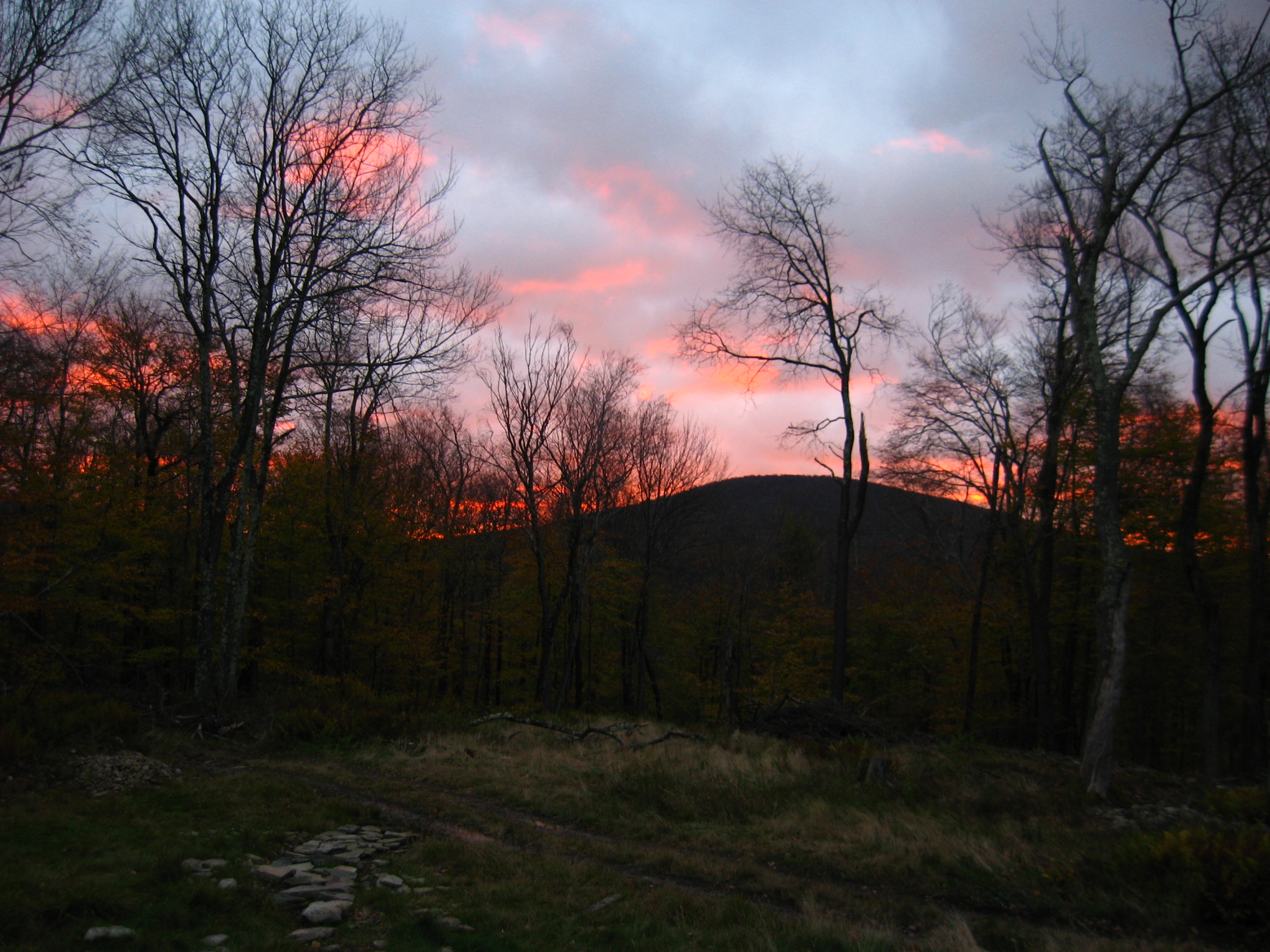
 Dawn over Red Hill.
The View From My Window.
26-Oct-11Down on Wall Street.
26-Oct-11I was in New York City last weekend, and made two trips down to Wall Street to see what was going on. I arrived first on Saturday, and found Zuccotti Park jammed. People with signs with standing around everywhere, some signs indicating personal distress, others witty, others pithy. One sign featured a long quotation by Hugo Grotius (sure enough, I went to high school with that guy). Plenty of gawkers such as myself. And there were the sleepers and all their accoutrements: sleeping bags, tarps, tents, chairs, drums, guitars. There was a “library” of (mostly bad) books. A “general assembly” area, where speakers – almost inaudible due to the thundering drum circle at the other end of the park – spoke in brief phrases, which were repeated loudly by the people closest to them (Demosthenes and Cicero would be aghast, of course, as a major part of classical oratorical training was learning to speak normally while also roaring like a bull: the classical orators filled up public squares with their voices, speaking over entire crowds, with no megaphones). There was a kitchen, where people dished out food to long lines of demonstrators. The people were of every sort, homeless crazy people and well-heeled professionals, beautiful young people and people that no one would ever consider anything but unfortunate. In a ring of investment around the square were police and press, Eyewitness News vans and police cars nose-to-tail on the streets, in case something happened. Everything was so interesting that nothing was interesting; there was no place to stop, really, and latch onto things. I walked around the square a couple of times feeling nothing but sympathy and support, with a vague sense that I was unnecessary there and more competent people had the situation in hand. All I could add was another body, and the square was full already.
I walked down to Wall Street itself, two blocks south of the occupation site, curious to inspect the security apparatus there. There was nothing new in particular, but the changes since 9/11 are still striking: Wall Street and Broad Street are pedestrian zones – fear achieved what environmentalism and common sense could not – with impressive barricades aestheticized in polygonal sheathing bronze, and remote-control chevaux-de-frise, which at the press of a button can sink into the street and let delivery vehicles through. Police were everywhere. Wall Street’s name seemed appropriate again: it was a fortress.
I walked along Wall, and let my fortune guide me: as I passed by a large atrium near the Deutsche Bank building, the neo-Egyptian style of the atrium attracted me, and I walked in. The atrium was full of seated people, and I did a double-take: they didn’t quite seem like the sort of people who work at 60 Wall Street. They were on their macs and had pads of paper and looked quite diligent, but just a little bit dirtier than they should be, and I realized I had stumbled onto the braintrust of the Occupy Wall Street movement.
There were some small groups, but I was attracted to the larger groups, who sat in circles of fifteen people or so. I stood at the outside of a circle, listening, until I was beckoned in. There I sat and listened to an hour-long debate about security in Zuccotti Park – apparently the occupation had made the park the favored spot for the city’s homeless, as well as drug dealers and thieves. The occupiers were aware that the presence of the homeless was not entirely irrelevant to their purpose, but the girls were sick of having their asses grabbed and all feared that the lawlessness would constitute an open invitation to the police to shut the occupation down.
The debates came with special hand signals, which I found a bit entrancing, actually, because they were generally effective: all-fingers-wiggling (like a catcher’s sign for a changeup) meant something like “Hear hear”, one finger raised meant “I have a fact to add,” two index fingers moving back and forth meant “I have a person you need to connect with.” The meeting was conducted with purpose and intelligence – I never felt a need to speak, because I felt that everyone there was fair, smart, and competent – and the general upshot of it was that they were going to have an identifiable group of people dedicated to security, to resolve disputes and harass people if necessary to get them out of the park.
It reminded me of the Republic – the book, I mean – as the movement gained complexity, they needed to create a city, with its differing roles, to solve problems. They were creating a security apparatus. Eventually, I thought jokingly, they would need to create corporations and invest them with personhood to solve some problem or other. But I was entirely sympathetic, really: the people there, for their combination of purposefulness and grievance, seemed truly admirable. They were not backing down and they did not want to go off-message. They were almost entirely in their early twenties.
Speaking with another friend, he found the above tableau depressing: “The occupation right now,” he said, “has become an end in itself: it’s about keeping the occupation going.” I cannot agree. The occupiers are a group of people with nothing better to do, literally: they are not taking an irresponsible vacation from their normal job rewriting American corporate law or spearheading ethical reforms at financial institutions. They are insignificant people airing a grievance – and doing so highly effectively. They should continue to do so. It is something in itself, to register the moral and pragmatic complaint against greed and luxury. I do not mind that the well-educated and well-respected people who work in those buildings in the financial district have to encounter daily a group of people whose presence alone is their cahier de doleances. It is up to everyone else to do something about it: to take your money out of the largest and worst financial institutions, for a start, and convince someone else to do the same; to make more ethical decisions with your money; to live more simply; to stop empowering these people and to drive greed of this sort to the margins of your life. And to consider further the political and other implications of this movement.
Pawpaws, the Northeast’s largest fruit.
26-Oct-11 Pawpaws are the largest fruit native to eastern North America; they were part of the diet of the native Americans, but like most of the native foods of this area they are almost unknown today. The trees are not easy to grow: the seeds are favored by rodents, the seedlings can easily be killed by ultraviolet light, and they grow slowly by all accounts. The fruit does not store or ship well, and individual fruits are said to vary highly in flavor even on the same tree, which is not well suited to modern business, which likes product consistency. So it is likely that you have never eaten or even seen a pawpaw fruit – as I hadn’t when a friend gave me one this fall from his trees.
The fruits are enclosed in a tough skin which has to be cut open like a mango to reveal the soft flesh inside. The flesh has a custard-like texture, and the flavor of the pictured fruit was rather bland, and sweet, like a very insipid banana custard. I ate mine with a spoon, using the tough skin as a cup. I ate, I will confess, more with fascination and curiosity than pleasure: I take a passionate interest in wild flavors just as surely as I am apathetic to flavors produced by human process, and the pawpaw is another of the strange and uncouth flavors of the North American forest: more edible than culinary, I suppose. But I find a kind of perverse sweetness in all the bitterness of nature, as long as it nourishes me; a sensual delight in the mere fact that I am sustained roughly by a system whose beauty is not impaired by my dwelling in it.
 The pawpaw is not a major component of the eastern forests; it appears to be somewhat outmoded evolutionarily. As we all know fruits are meant to transmit seeds to the stomachs of animals, which then deposit them in distant places in small cocoons of fertilizer ideal for germination, i.e. scat. But the seeds of pawpaws are so large that even a bear would hardly swallow one whole; the evolution of pawpaws was something of a mystery until it was proposed that the giant ground sloth, an extraordinary creature which lived in North America sometime more than ten thousand years ago, was the probable vector for the pawpaw’s seeds. (Ground sloth remains are found in numbers at the La Brea tarpits in downtown L.A. The Latin name for at least one race of ground sloths is Megatherium, or “great beast.” Most of the very large North American fauna – ground sloths, mastodons, camels, tigers – went extinct relatively recently (in the tens of thousands of years), while almost no smaller species vanished at the same time, and at least one theory is that this is because of the arrival of humans, who by preference hunted big game).
Pawpaws are now often touted by permaculturists as good garden plants because they are native, make fine understory trees, and produce food for human consumption. I’m planning on planting the seeds from this pawpaw and seeing if I can grow some trees on my property, though of course I will be in my fifties before I see any trees go from seed to fruit.
Chesterton, a giant among men.
26-Oct-11“People are only hungry because they are healthy.” Said G.K. Chesterton, whose weight “hovered between three hundred and four hundred pounds.”
Catskill Park Signs.
26-Oct-11While driving through Massachusetts recently, I was struck by the signs they have at the edges of their townships: they are not flashy or special, but in terms of aesthetics, class, and a relationship to human signmaking traditions they are a step above the normal American roadsign. Well apparently someone in the Catskills felt that new road signs were required. The signs are now popping up all over the park. The result is a classic lipstick-on-a-pig solution: the old roadsigns, with a little computer-printed strip of greenery on top. Terrible.
Strange Odd Coincidence.
24-Oct-11Down at the Occupy Wall Street protests, I passed a woman I knew from somewhere, but I couldn’t quite place where. She was deeply engaged in a conversation, and I remembered from talking to her once that it wasn’t the most astounding connection of my life, so I passed on without making any fuss about it. I wondered where I might have met her, but I just couldn’t recall. I hate forgetting, and I hate disposableness of all forms, so I am surrounded by things that help me to remember – which does work, sometimes. Here I am in the house where I grew up, by a window where I can pirate an internet connection from some neighbor to the north of my mother’s house – the connection comes in literally at one window alone – and I picked up a business card that had been left ages ago on the sill, and it was hers.
Now I remember the party where we met, her singing, her conversation – and I can direct you to her website, too. I suppose there is no particular significance – just synchronicity of a sort that always feels strange and otherworldly, and a vague sense that no one should be forgotten, though we do anyway.
Occupy Wall Street.
24-Oct-11
From Reuters. I generally don’t like using children for propaganda purposes but when I saw this girl down at Wall Street I did not mind it at all – it seemed to be the point, really.
The Incoherence of the Incoherence.
23-Oct-11GOP Senator Lindsey Graham advocating infrastructure spending in Libya, and opposing it in the United States. The similarity to ancient Rome, which broke down under the incoherence of limited government at home and unlimited empire abroad, is remarkable as usual.
Color, color, color.
02-Oct-11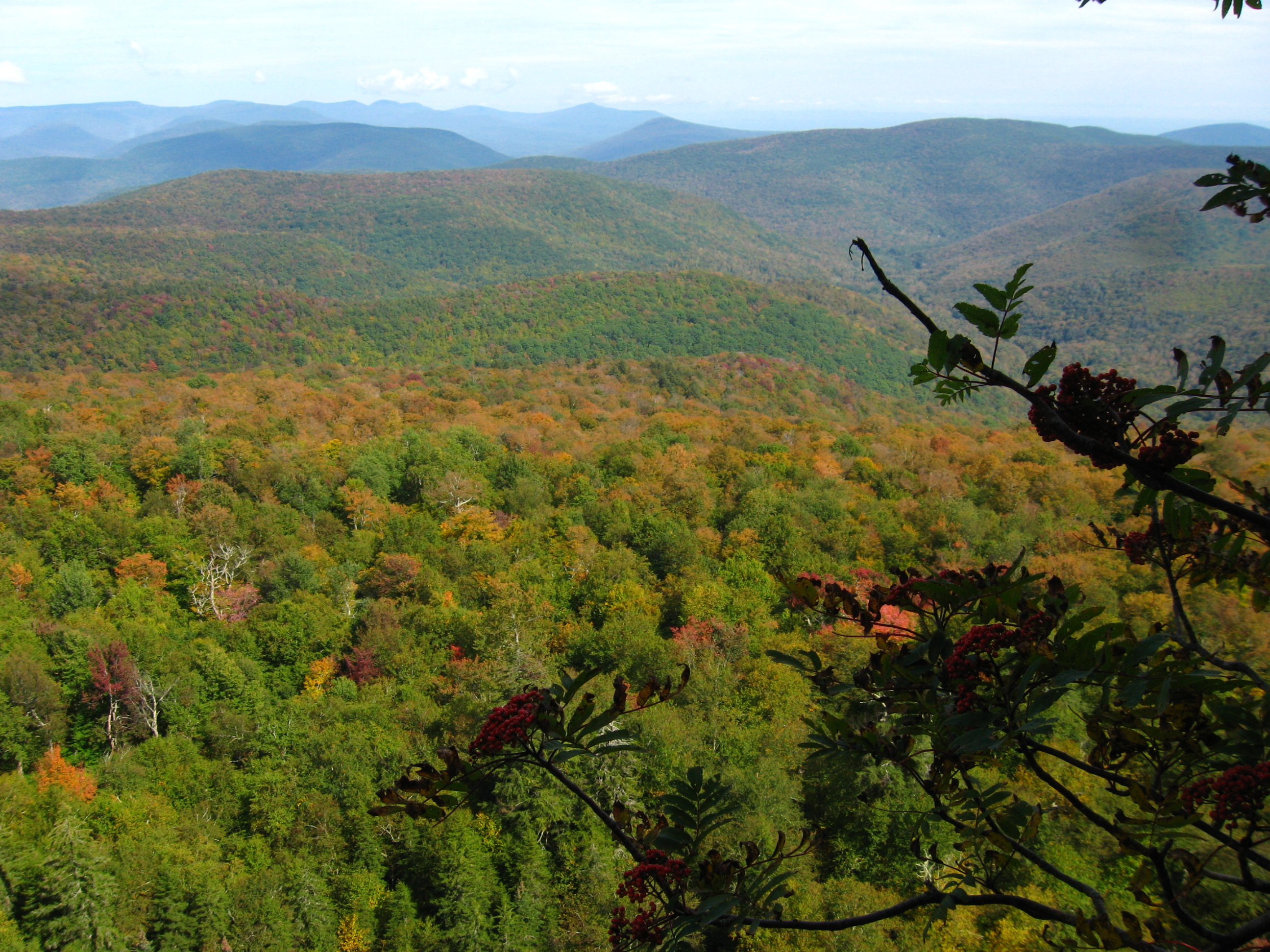
Taken last week. Should be even better this week.
Aristotle, Sullivan, Occupy Wall Street, and the Middle Class.
27-Oct-11From Andrew Sullivan’s superb piece on Occupy Wall Street:
Sullivan’s piece, which absolutely should be read in full, explains the Occupy Wall Street phenomenon and the tremendous support it has received all around the world, including mine.
It is easy enough to say that the real grievance on display here is one for which there is no solution: because of global trade, money and jobs are going to move where labor is cheapest, until there is equality throughout the world and eventually the American lower quintiles have no more or less money than the lower quintiles in India or China. In other words, things will get a great deal worse here. Innovators like Steve Jobs have no need of American workers: he can put his ideas into practice with Indian or Chinese ones, and if they start having a decent standard of living and command a good wage, Apple can take their factories to Chad instead.
But the above way of looking at things is based on a great number of assumptions, which do not have all have to be accepted. We can start with small things, like the idea that labor is, under our current system of taxation, “punished” (taxed, disincentivized) more than capital gains or consumption of finite resources via mechanization. A simple alteration like this would greatly affect labor patterns in this country. Second, exporting countries do need markets – importing countries – which gives us power to dictate terms on our imports. Poisonous competitive practices are as bad as poisonous Barbie dolls, and should be banned as well.
And the larger argument is that there is money in our society – our economy is growing, not shrinking, despite the fact that China’s is growing as well – and wealth is entirely a social phenomenon. We can say that people like Steve Jobs are necessary and special, whereas the rest of us are replaceable and valueless, but still if you put Steve Jobs on an island all by himself he cannot make any wealth at all. Any thinking person must see our astonishing indebtedness to one another, how we cannot do almost anything without the vast inventory of tools invented by others, and which for the most part we use without any payment to their inventors or the inventors’ heirs. If you were to tally up the debt Jobs had to others – to his parents, teachers, the people who built his homes, made his food, transmitted his messages, and so forth, not to mention the thousands of years of human technological progress which he took simply as a given – you would not necessarily arrive at the conclusion that his contribution was that much more valuable than that of the people around him. The greatest innovators in the world cannot make any money at all without the legal protection of their patents, which is a power derived from the very voters and societies which the worshippers of the barons of industry treat as so much replaceable human filler.
As for the possibilities of enacting real change – how are we going to manage macroeconomic global shifts? – we have one great one in our hands in a democracy. All of those who are interested in wealth consider it useful to form corporations which legally limit their liability. The CEO of Lehman Brothers never had to worry, when running the company into the ground, that his own bank account would be affected by the failure: he had used the law to insulate himself from risk. The purpose for limited liability corporations is that we believe they are socially useful. If they are not socially useful, we can withdraw their protection, so that failure means financial catastrophe for the people who run them. But the best mode of action is to have further legal requirements for corporations, such as the elimination of severance packages, or pegging top compensation in a ratio with the minimum wage (reforms like this are certainly long overdue for “nonprofits”). There are so many examples of failure being highly profitable for executives that the notion that this is a meritocratic, socially useful system is risible. And anyway, the big money should, by strict capitalist standards, be outside the corporate systems and in the world of real risk – your own business, which you own.
I have heard some people complain about the protests, because the 1% are employing the 99%. This shows clearly enough the path we are treading – toward feudalism – but in general, the point is not “death to corporations”. The point is reform and improvement. The compensation systems in place in Japan would not be out of line here in America – indeed, Japan has some of the world’s most effective corporations. And a further point: I have heard it said that “corporations” make the computers, cell phones, cameras, clothes, and food being used by the occupiers – this is an important bit of factual blindness. All those things are made by people, and the general point is that the actual makers of things are becoming more and more faceless, less and less empowered, while there is more and more wealth generated in the world.