Skip to content

First Morning and First Brush With The Law.

15-May-14

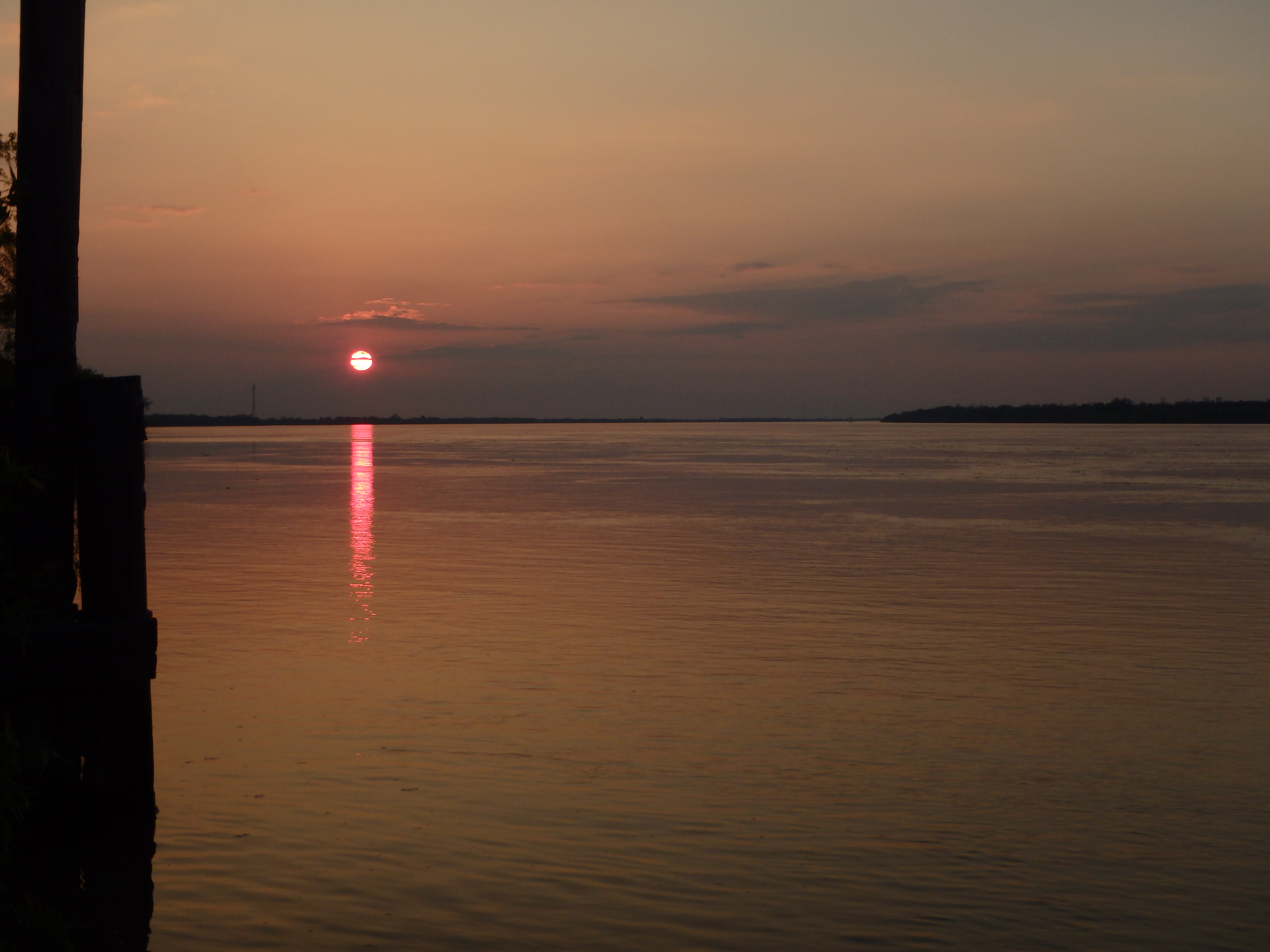
how to buy neurontin online Unfortunately the next morning I lingered a bit in watching the sunrise – it was one of the most spectacular I had seen, beginning almost clear and then rising into a layer of cloud or smog, and turning red and strange.  It was precisely the kind of sunrise you would expect in a town called “Port Sulphur.”  The cause of the strange redness I do not know, but it is certainly a fact that the lower stretch of the Mississippi from Baton Rouge south is home to a substantial segment of America’s chemical plants and refineries.  It is known as “Cancer Alley” for the effects living here seems to have on local residents.  But however terrible these sunrises may be, I may also report that they are beautiful: I just stared and stared and amazed into it for quite awhile.  The reason this is significant is that when the colors of the sunrise had faded I was still packing away my tent when a pickup truck came over the levee and pulled to a halt nearby.
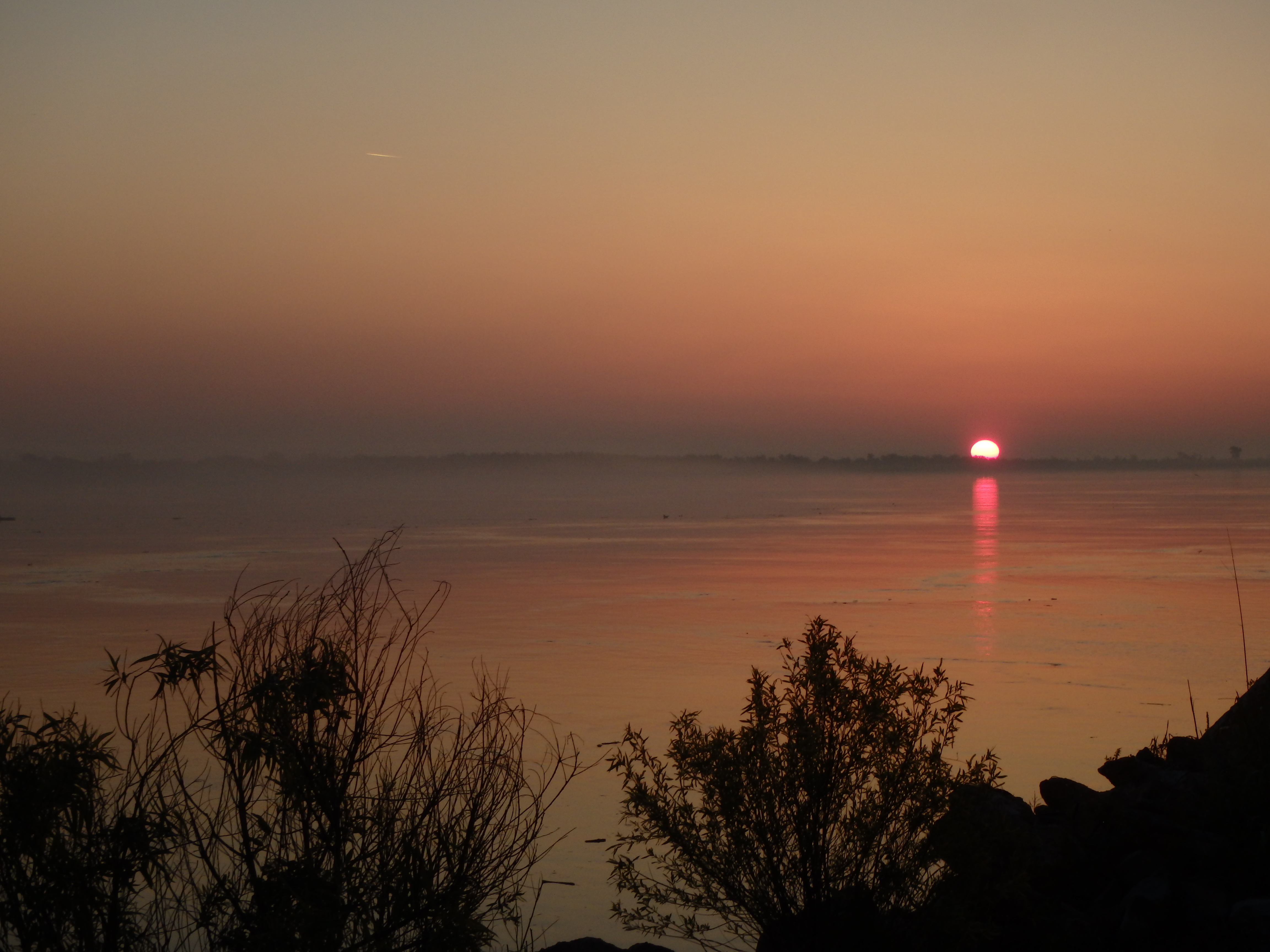
Kuantan Port Sulphur Sunrise.

I had known the area where I had camped, some flat ground by an old landing between the river and the levee, was not truly abandoned or waste ground: I had seen vehicle tracks. But it had been a convenient place to stop for the night. There is a good deal of good camping between the levee and the river: since it floods, no houses are built there, but there is often quite a bit of ground which is flat and (this not being a bad flood year) dry. The only problem is that the rich, fertile soil will typically support a tangled thicket of vegetation, except where human beings have kept the ground clear. And in order to do this, they must be using the ground a fair amount. And so you are likely to be discovered in your campsite. The best plan is to leave before sunrise.

But I hadn’t left before sunrise, and now I had a serious-looking visitor.  He got out of his truck and walked right toward me, with his head down. A lack of direct engagement is a pretty sure indicator that the conversation will not be between person and person, but between violator of rules and enforcer of rules.

“Uh-oh, am I in trouble?” It was my standard opening gambit.

“Straight to jail,” he replied.

“Straight to jail!”

“Straight to jail,” he repeated, looking up at me. He was an older man with a gray moustache and a baseball cap. His face was hard and did not change when it met my gaze. I did not get any particular impression from him that he would give a damn about calling the cops on me.

“I’m sorry. I’ll be out of here in a minute. I was biking along the levee yesterday, and I thought that the levee was public property. I’m biking up the Mississippi River, and last night was my first night, so I wanted to be right by the river.”

“This is private property.”

“I see you’re doing work here. These look like bulldozer tracks.”

“I’m building a gravel dump.”

“You know I was talking with some guys yesterday about how they used gravel for the oyster business. Will you be doing any of that?”

“Well,” he said, warming slightly now that the topic of his business had come up, “I’ll be selling mostly for building purposes, driveways, that kind of thing.”

“I would imagine with the subsidence and water around here, there would be quite a need for shoring up driveways.” Just now another pickup truck came over the levee. I was a bit afraid it would be a cop, but the truck was a bit beat up and it was driven by a plainclothes black man.

He watched the truck come to a stop, then looked at me.  “So you’re biking up the Mississippi, huh?”

“From the Gulf to Minnesota.”

“You haven’t gotten very far.”

“Well, just the first day. And I took it easy.”

“Well, I’m going to get to work. Watch your step.”

“Will do. Thank you.” He had been mollified, it seemed. I was not going to get arrested that morning. He went off to speak with the black man, who it appears was his partner or employee.
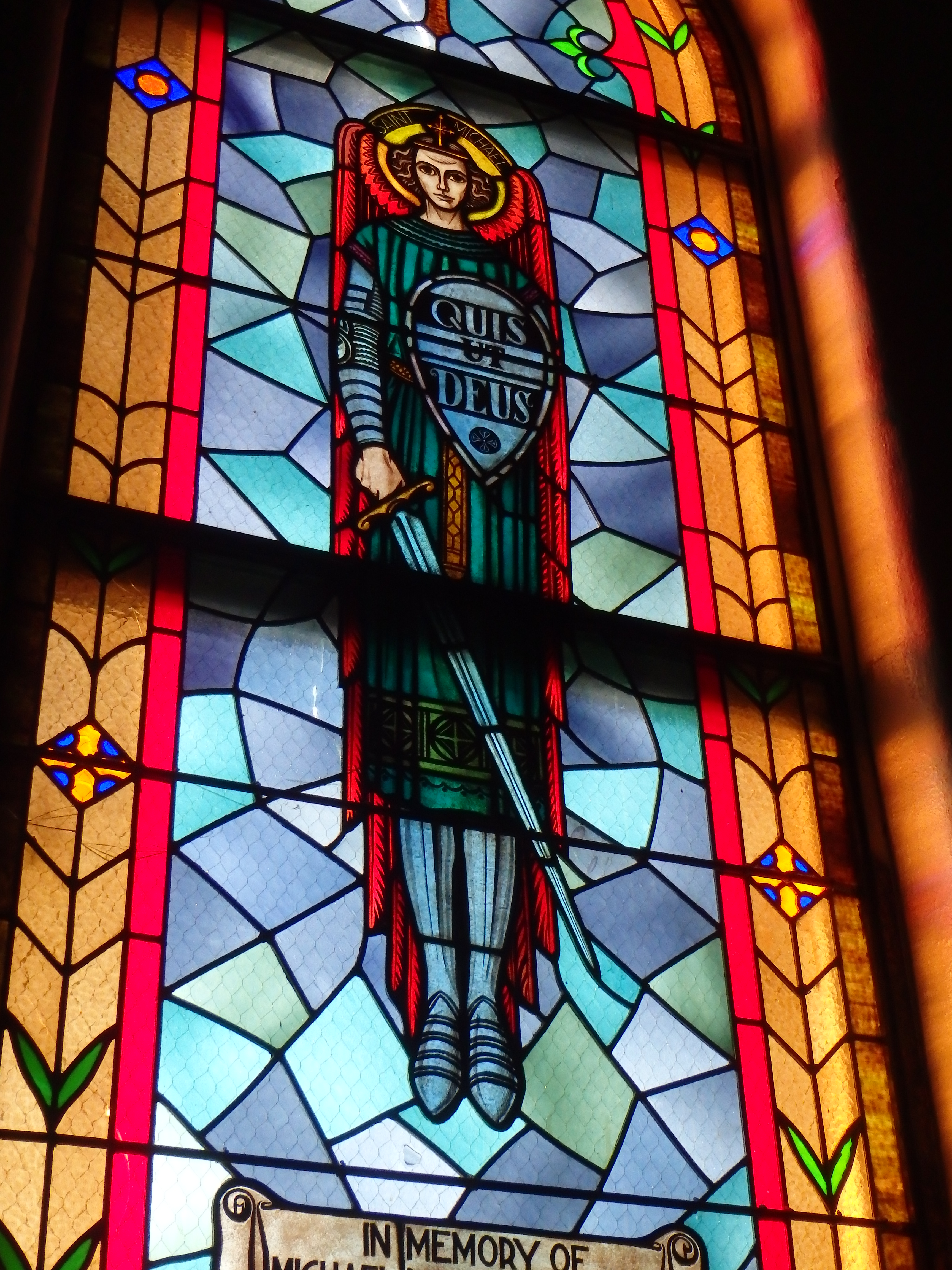
Quis ut deus?

I packed up quickly and off I went. Within a few minutes I was in Port Sulphur. I stopped off at the Catholic Church there, and, finding the door open, went in. It was a nice enough church; I always appreciate that Catholics offer these spaces to the public, for people to use – just to sit in, or be alone in, or be quiet in. This one had some windows which I found nice, and finding my back very stiff from a night on the ground, I prayed for health enough to finish the trip. I also prayed for love, to have and to give.

Port Sulphur was the site of a large sulfur industry; the swamps nearby contain underground some of the world’s largest deposits of the mineral, which was brought through the swamps to the river here, where it was processed and sold. Sulfur is a basic component of many industrial chemicals, as well as being used as an acidifying fertilizer on alkaline soils. Most of the world’s demand today, however, is met by sulfur extracted from petroleum during the refinement process, a nice example of industrial thrift: desulfurized fossil fuels emit far less sulfur dioxide into the air, which is not only a pollutant in itself, but becomes sulfuric acid in the atmosphere, a major component of acid rain. And by purifying our gasoline of this brimstone, we get sulfur for our industrial purposes.

But in the process the need for sulfur mines was greatly diminished, and the mine is now closed. The old buildings have now become the de facto seat of Plaquemines Parish, whose courthouse and offices burnt down some years ago (and then Hurricane Katrina came, which gave the Parish government other things to do besides restore their own buildings). But Port Sulphur still lives on as a town, and in fact it had a supermarket, the first I had seen coming up the river. I stopped to “make groceries,” as they say, and I enjoyed the atmosphere there: it seemed everyone knew everyone, white and black both.
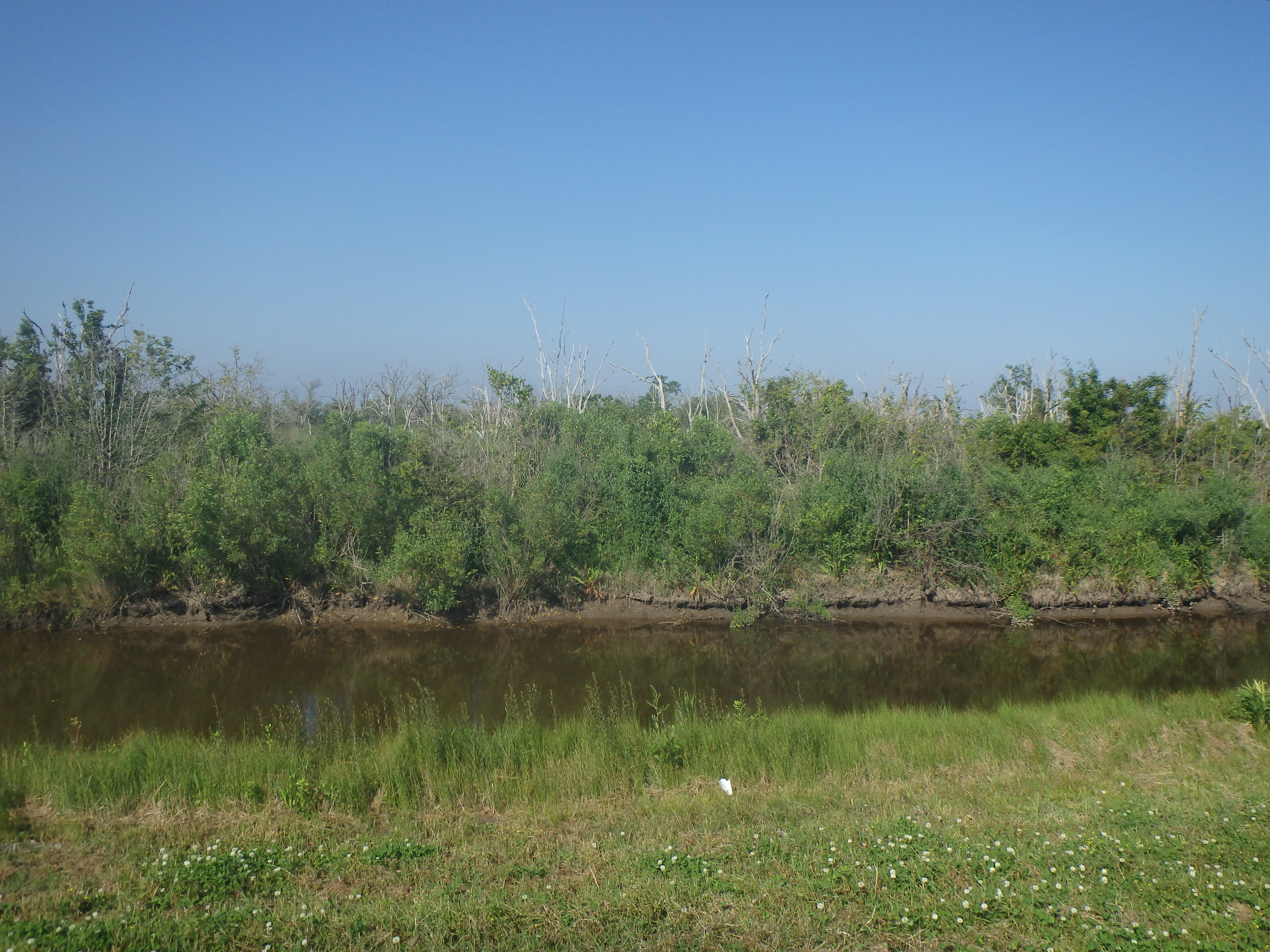
Sea-irrumated swamp. Becoming marsh.

North of Port Sulphur all the northbound roads are gathered into the highway, which passes through a swamp; the larger, older trees on the western side of the road were almost all dead, from the sea’s irrumation of the wetlands during Hurricane Katrina. I turned off the highway at West Pointe a la Hache, where a quiet country road brought me over the levee and down to a metal structure on the river; it looked like a canal lock, but with a drawbridge rather than doors. There were no people there; just a port-a-potty and a large garbage pail which had fallen on its side. This was the Pointe a la Hache ferry. Coming to it, though, I feared that like many ferries it had been shut down: there were no cars there, no signs, no schedules: the ferry, it appeared, was closed.

This was a disappointment. As I approached each potential river-crossing I considered which side of the river I preferred to follow, and I had determined that I would like to cross to the eastbank here. New Orleans was on the eastbank, so I was going to cross sometime before New Orleans; the bridges at New Orleans were dangerous – extremely dangerous, as I recalled – for bicycle traffic, so I was hoping to cross by a ferry. I was confident the Algiers Ferry would still be running, but there were two others, at Pointe a la Hache and Belle Chaisse. I wanted to get a chance to get on the river, and see Pointe a la Hache besides: like Venice, it was at the end of a road, this time the end of the eastbank road, and I wanted to see if the eastbank was different.

West Pointe a la Hache Ferry.

As I was contemplating this a car came up behind me and pulled to a stop, cutting its ignition. The driver was not looking for me: he was expecting the ferry. Looking to the other side of the river, I could see that there was a boat moored on the other side; and indeed, as I watched, it darted out from its dock and came into the middle of the river, facing the current, its course sagging downstream like a clothesline full of wet clothes. But this was no gradual process, like watching the Staten Island Ferry lumber across New York Harbor: this boat had powerful little engines, and its arcing course was a study in efficiency: in a few quick moments it was chugging up to the ferry-dock before me, facing upstream. Two more cars had appeared behind me, and the gangplank was lowered and I walked my bike on, followed by the cars. I parked my bike in a corner of the boat and took a seat on a chest of life-preservers. I was crossing the Mississippi River.
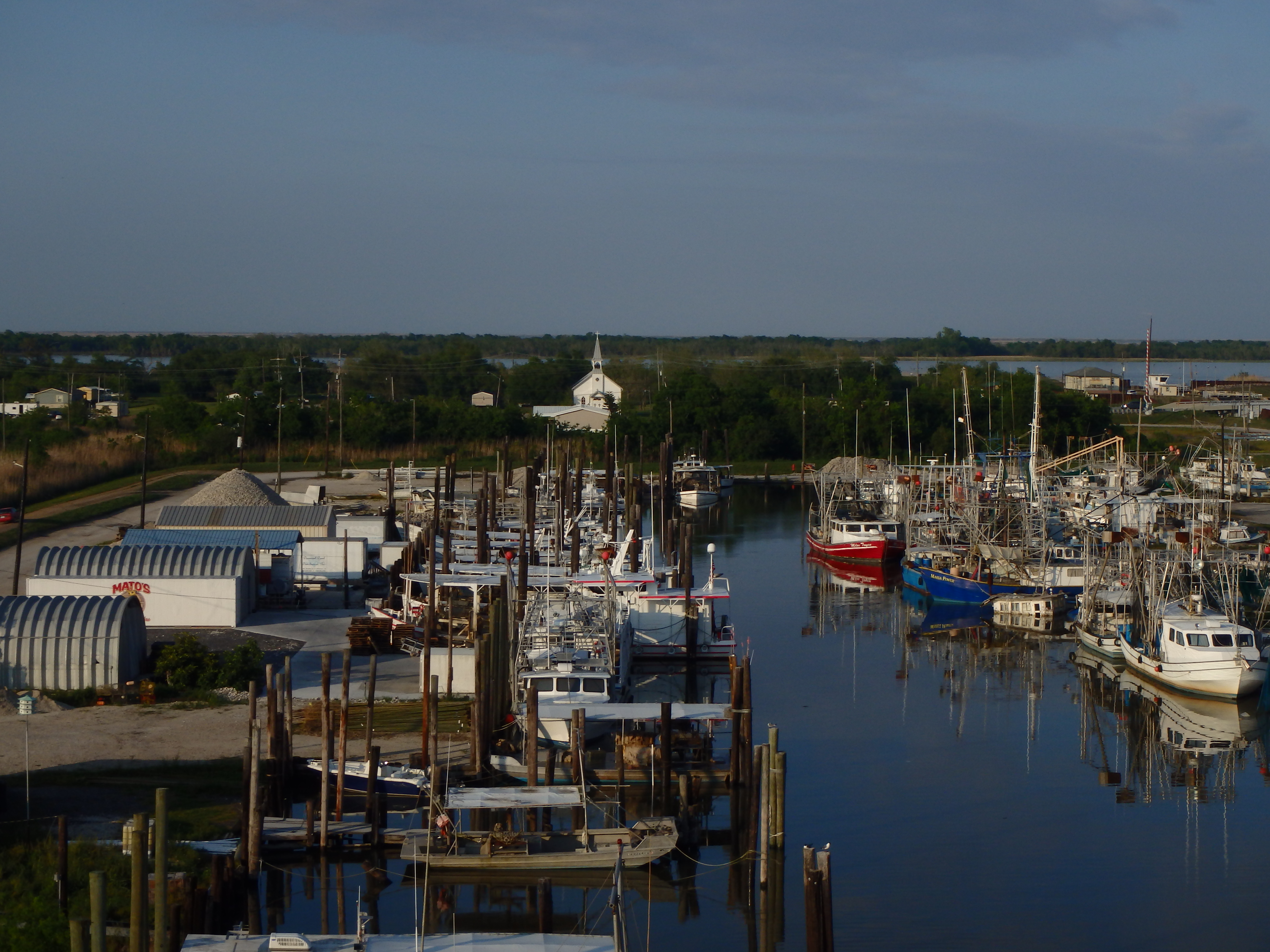
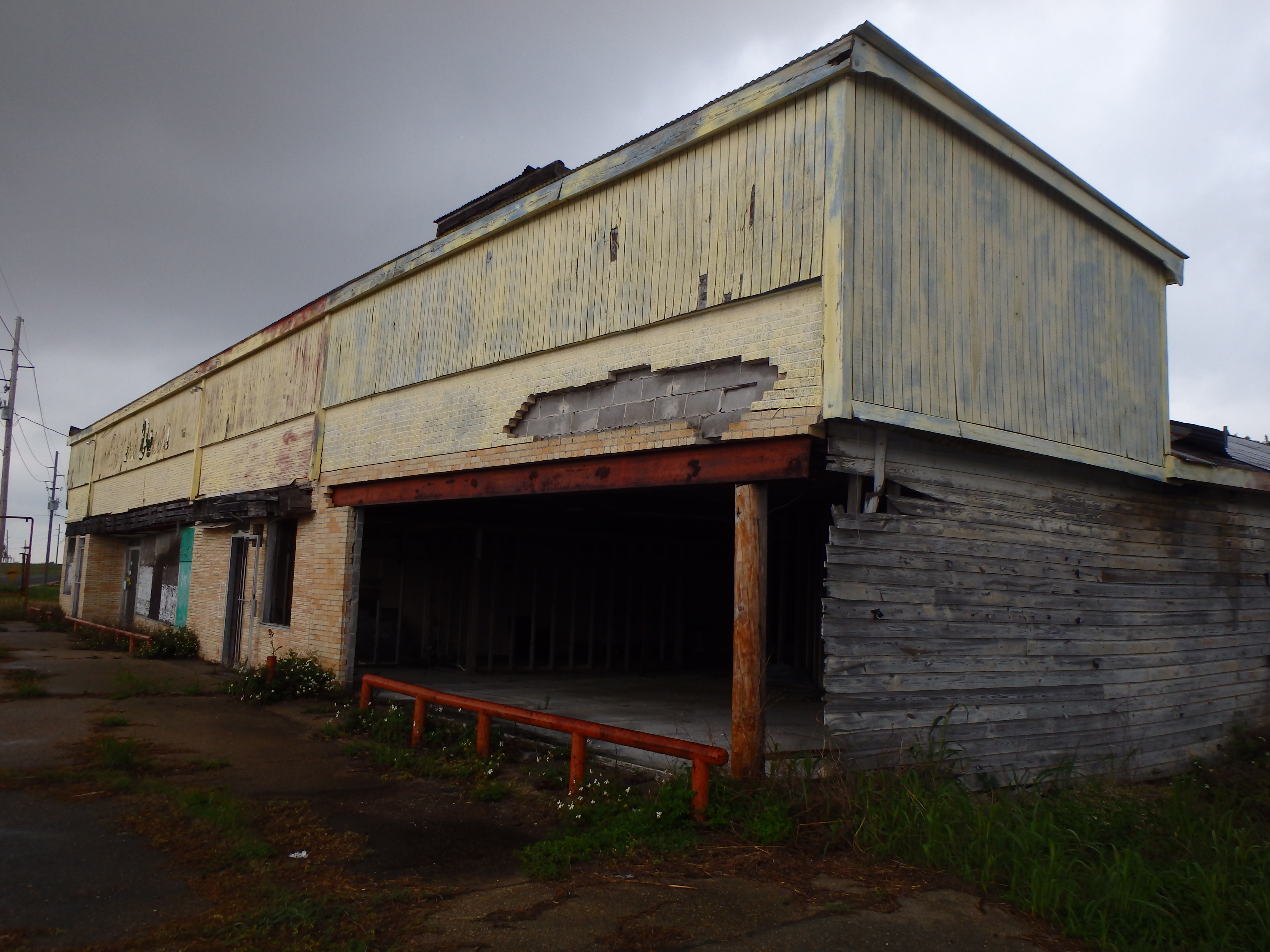
Night on the Big River.

13-May-14

That night in my tent I awoke to find the light strangely changed – was it morning already? I looked at my phone – no, it was only two a.m. Everything inside the tent was lightly wet – it must have started raining. I put my shoes on to get the rain-covering on the tent. But strange – stepping outside I could see the stars above me. It wasn’t raining – it was just a thick river-fog, rolling down with the cold water, covering everything with dew in the middle of the night. It was only a few feet high – enough to envelop my tent, but standing I had lifted my head above it.

With the rain-covering on my tent, I was enclosed in a cocoon, and truth be told, a U.F.O. right out of Close Encounters of the Third Kind could have landed on the shore opposite me, and I would have presumed it was just another big ship making its way along the river. All night long big, ghostly ships came up and down the river, their decks and riggings and towers lit up in strange ways, their engines chugging in the darkness, the waves of their wakes slapping the banks just a few feet beneath my tent. The boats might have been a quarter of a mile in length. I could hear the cars on the highway too – it was a narrow peninsula, and sound travels well around water. And then there were the animals – things splashing in the water, and the crying of frogs, their croaking neither a deep bullfrog groan nor a high-pitched coqui peep, but a violent, middle-toned, frenzied audible desperation, a strange sound. There was also something that sounded like a laughing witch – I presume a bird of some sort.

No voices, no music, nothing human – just animals and machines.

Gas Station Dinner.

13-May-14

I had stopped to camp at mile 34 on my odometer; it ended up being three miles in the dark to get to downtown Port Sulphur, where I was told there was one store open in the evenings that would have food – a gas station.  I had a headlight for the bike, but its attachment decided to break as soon as I actually started using it, and so I held it in my hand as I rode.  I then finalized my earlier determination not to do much night riding.

The gas station ended up being quite a bit livelier than I could possibly have expected – though I really should not be surprised anymore by the vitality of Louisiana.  The gas station had a larger-than-normal grocery section, and a small pizza parlor attached, where frozen pizzas were thrown into a little oven. With the assistance of a ravenous hunger I managed to finish half of one, swearing to the Lord above that in the future, with all due respect to his Provident Mercies, I would rather starve.   The pizzas are made by a company called Hunt Brothers; and if they ever start selling pizzas in New York City, we know the Apocalypse is near, for the Abomination of Desolation will be in the sanctuary.

But they did a brisk little business in Port Sulphur, did this pizza company which sponsors NASCAR drivers, and the place was a hub of activity.  Strange, lonely-looking men with baseball caps and red eyes and moustaches stood around, waiting for their pizzas and ogling the attractive young woman who threw them in the oven; others sat at their tables, looking off into the distance, finishing, in a room full of men, another meal alone.  Groups of Hondurans came through getting groceries.  A black man yelled at his little son who had started crying: “I TOLD you it was hot.  I TOLD you not to eat it! Now don’t come cryin’ to ME!”  A black woman who worked the counter barked at everyone around her: “Now that’s the LAST PIZZA I’ve had enough we’re closin’ down NOW!”  “Where’s the mop?  Where’s the god-damned mop?  I don’t CARE if the place is full, it’s time to mop!”

She looked up at me.

“You’re closing?”

“Damn right we’re closing what does it look like?”

It looked like the place was not closing.  “Can I get a pizza?”

“Didn’t I just say we were closing?”

“What about one to go?”

The other woman behind the counter, a young blonde, said, “I’ll make you a pizza.  What do you want?”  I placed my order and the black woman turned around and started muttering.  An older, poorly shaven man who was standing very nearly behind the counter and had the general air of a derelict and a drunk, smiled.  The black woman reached into a refrigerator, opened a beer, and gave it to him.  I slunk away from the counter.

“Don’t SIT there I just CLEANED that table,” the black woman said to me.  I sat at a different table, but I will say, the place showed no sign of closing whatsoever.  In fact, it was just about full.

A young black woman came in.  “Gimme a root beer.”  The black woman behind the counter reached for a cup to fill the order.  “No, a BIG ONE.  Hey, fill the ice to the top!  Gotta be ALL the way to the top!”  When there was a pause, she barked, “I don’t wanna cup of ice I wanna ROOT BEER.  Hey, all the way to the top, Bee!  Yeah.  No, wait til there’s no more foam.  Fill it up.  Hey – don’t put that lid on yet!  Fill that up!”  When the cup was full – and the black woman behind the counter, I will add, complained the entire time about these proceedings: “You’ll get what I say you get!  I know when it’s full!  God-damn, bitch!”  – as I say, when the cup was full and capped the customer said, “Now gimme two straws.”  And when she got the two straws, she just burst out laughing, saying, “Ha, she gave me two straws!” turning around to everyone else in the pizza parlor in triumph, showing her two straws.

Then I knew I was getting closer to New Orleans.

When my pizza came out, I asked the blonde woman, “Are you closing?  Do I have to take this to go?”

“Naw we’re open for another half-hour.”

“I got the impression you were closing.”

“Naw don’t listen to her she’s just having fun.”

“Is it always this lively here?”

“This?  This is slow.  Usually it’s a lot brisker than this.”

“You all seem pretty saucy.”

“Yeah, well, we have to be!”

“Are you from around here?  You certainly seem at home here.”

“I was born here, but I live in Texas.”

“Why are you here now?”

“This is my vacation.  My Dad lives here, I come back for two weeks.  I work here because it’s fun.  I’m hoping to move back here, I love it around here.”

“You don’t like Texas?”

“No it’s just that I love it here.  But you know, my mom is in Texas, we’ll see.  Excuse me one sec.”  Some young man she knew had showed up, and it seemed he was trying to arrange some kind of date with her.  She went to the other end of the counter.  After a few moments she came back, smiling.

“You seem like you get plenty of attention,” I said.

“I won’t lie, I like to have a good time.  I don’t like to stay at home much.”  Another young man came in, and she started talking to him – he was another man she knew.

I ate half my pizza, hopped on my bike, said my goodbyes, and headed back to my tent.  It was certainly the most interesting meal I had had in a gas station.

Empire, Louisiana.

13-May-14

The Otters of Saint Ann Empire.

13-May-14

The old Barrois Drug Store.

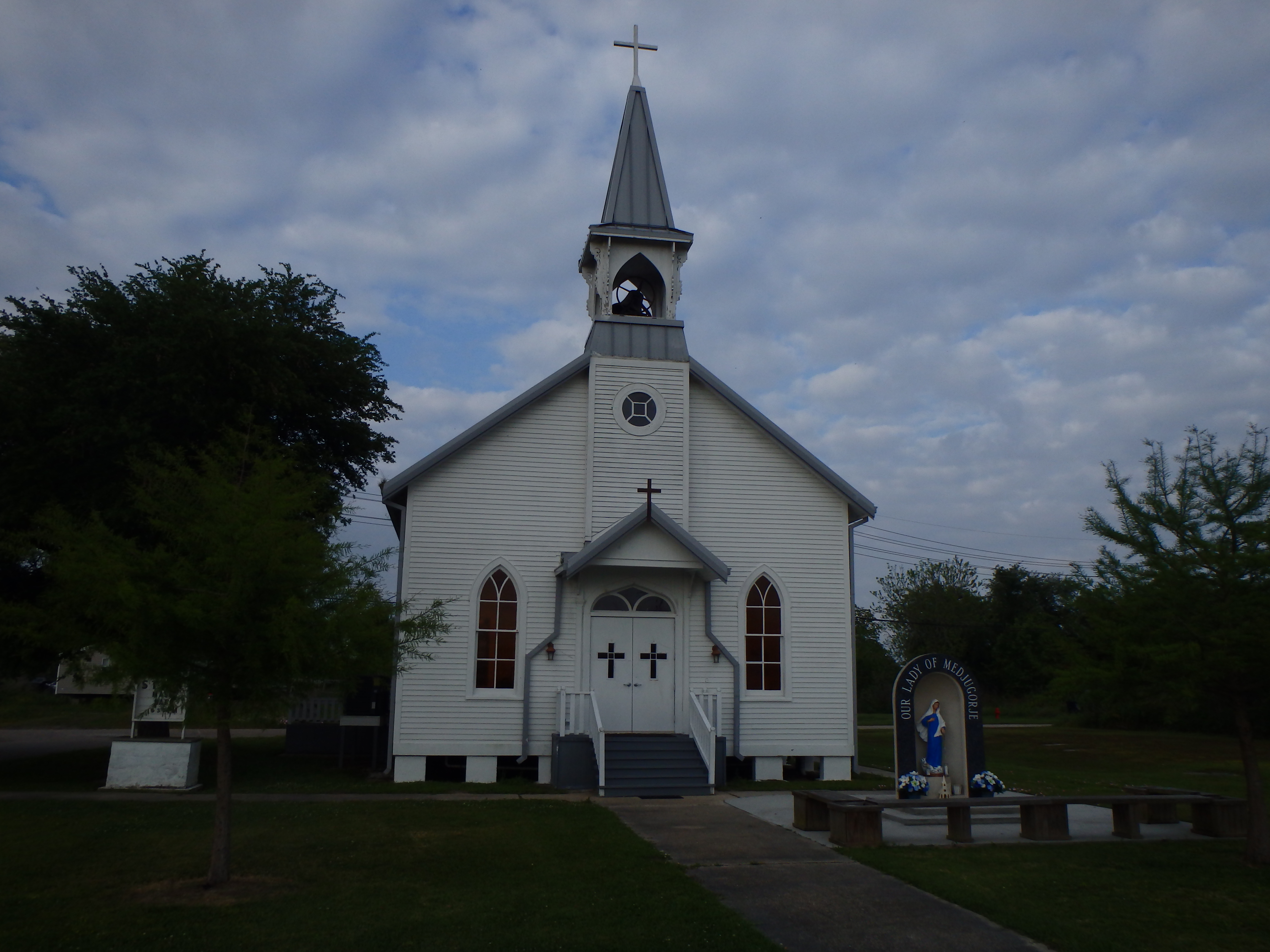
Buras did indeed have a little downtown, but the shops were all boarded up or abandoned; it did have a library, however, built on stilts. Local government has apparently made the determination that future floods are to be expected. I visited at a Vietnamese coffee shop just to see it, and got a soda in its cheerless environs; I then cycled through some quiet ground, springing up in dense thickets of trees and shrubs and vines. I saw the fish-oil factory Roland had mentioned, run by a company called Daybrook, and so I knew I had arrived at Empire; I crossed a canal on a drawbridge, landing at a fine old church called St. Ann’s, a white clapboard structure which, except for its denominational affiliation (Roman Catholic) and a noticeable emphasis on the cross as a decorative element, might be at home in New England.

Saint Ann of Empire.

Here beside the church a pair of older men were working on a malfunctioning sedan. They were as unlikely and picturesque a pair as could be imagined, the one looking like a respectable retired manager of a stationery business, the other a big fat slow man in baseball cap, overalls, and a footlong ZZ Top beard. I do not have to say which man had come to fix whose engine. They had apparently gone to school together. Overalls had a pickup truck which for grime, rust, and picturesqueness could not be excelled; its odometer read over five hundred thousand miles. “That don’t tell you nothin’ ‘cept how old the odometer is,” he said. “I think I’ve changed out every other part in the whole thing.”

“Probably more than once,” Professional said.

“Probably more than once,” Overalls agreed.

I wanted to take a picture of them but was too shy to do so.

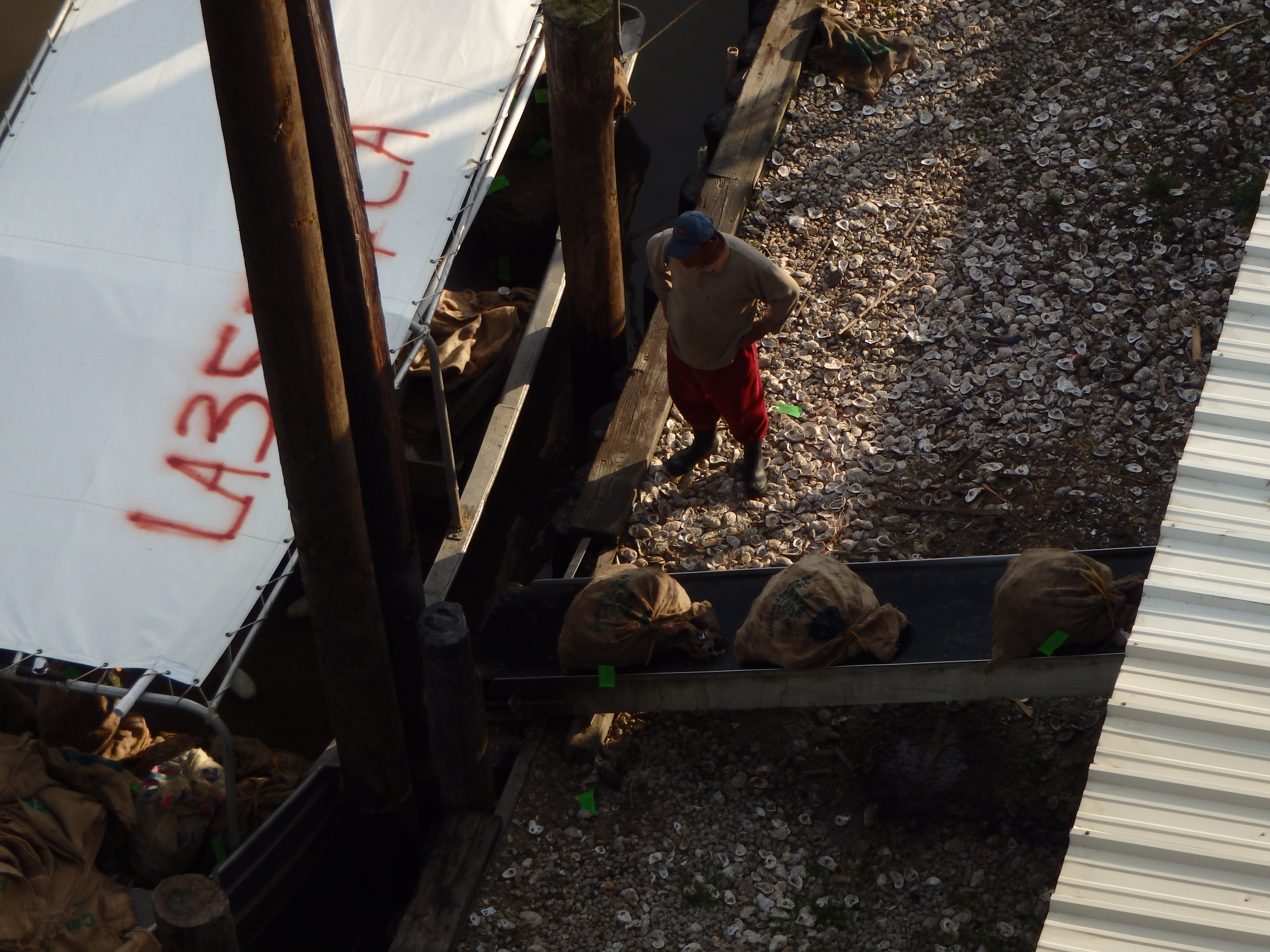
Unloading oysters.

The light was very fine, and the sun was setting; so I decided to leave my bike and walk over to the highway, which crossed the canal on a large, tall bridge which commanded a fine view: it had been the highlight of the drive from New Orleans to Venice. It did not disappoint. I watched the boats down below; I had been wondering about some of the canopied flat-bottomed boats I had seen, wondering what their various purposes were; and I found out. These were oyster boats. I could see men unloading the boats, one burlap sack at a time. This was one industry which had hardly changed at all, apparently: these oyster sacks had been the standard mode of gathering oysters for many decades.

Roland had told me that the oyster harvest was smaller than it had been before Hurricane Katrina, but he did not think it was because the oysters were fished out or unhealthy: he said that there were simply fewer oyster fishermen. They had all gotten big payouts from the insurance companies after Katrina; and many, who were nearing retirement age anyway, had taken the payouts and retired on them.

I could see large piles of white stuff near the oyster boats, and my eyes are not what they used to be, so I called down to the men:
“Hey! Are those oyster shells there all piled up?” Because if they were, I had never seen so many oyster shells in one place.

“It’s gravel,” a man yelled back at me.

“What do you do with the gravel?” I called back.

“We dump it in the water. The oysters attach themselves to it.” They were building oyster reefs.

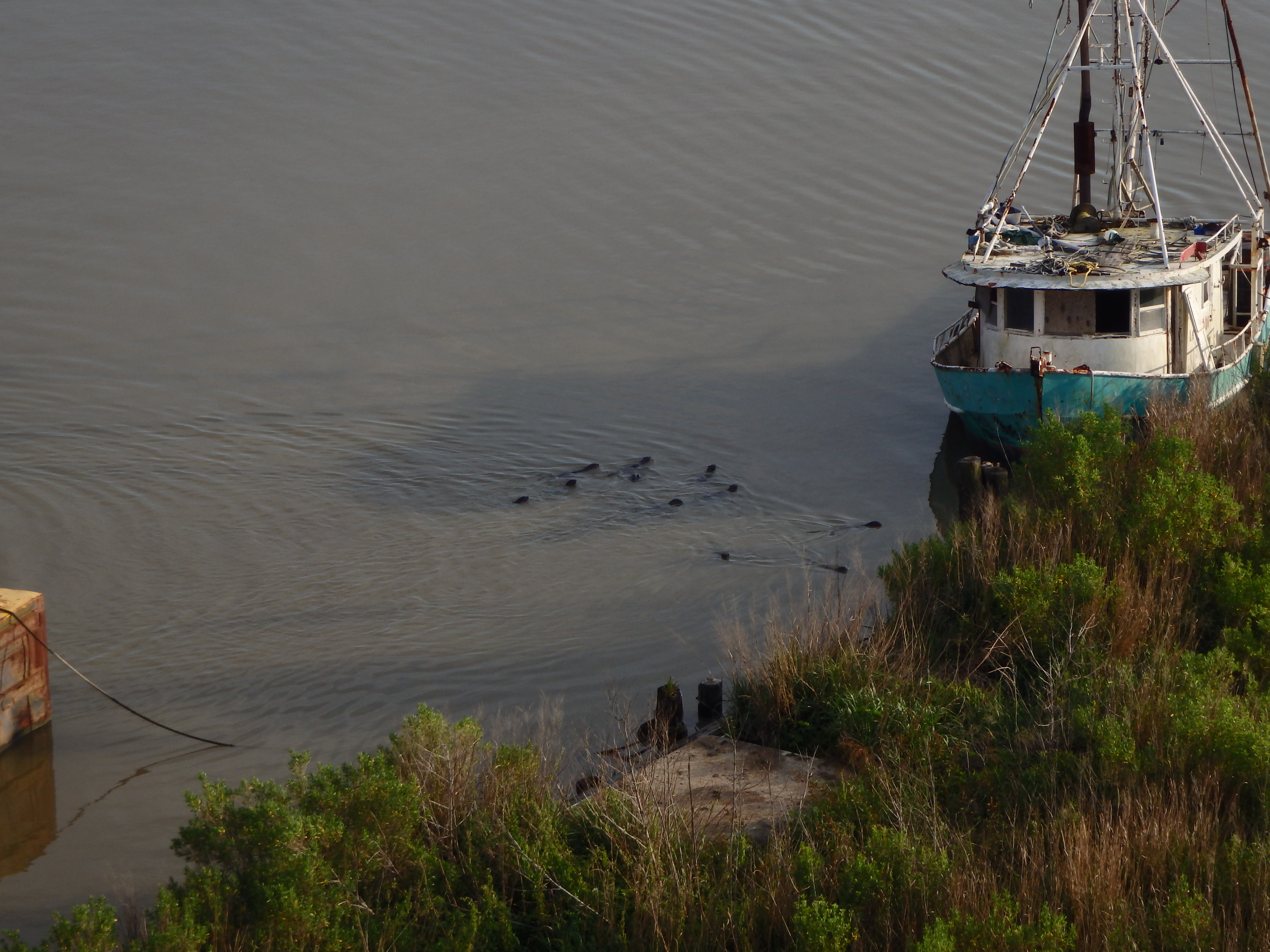
Otters!

I kept on walking, up to the top of the bridge, and there – mirabile dictu – I saw some dark shapes moving in the canal below. Again I was struck with wonder and joy – “Oh my God,” I said, “SEA OTTERS!!!” I have since read that sea otters live only in the Pacific, so these must have been river otters, but my joy in them was the same. They were swimming around in the open water of the canal. I watched as they swam, in a pack, to an abandoned boat, which they boarded, using it as a gangplank to get onto land, where they frisked about a bit on the tall grass, and then, in a pack, all decided to go back into the water and swim under the bridge, playing and gamboling all the while. It was amazing. Again, I was struck by how alive this place was – how beautifully alive.  I could watch the human beings living off it just as much as the other animals.

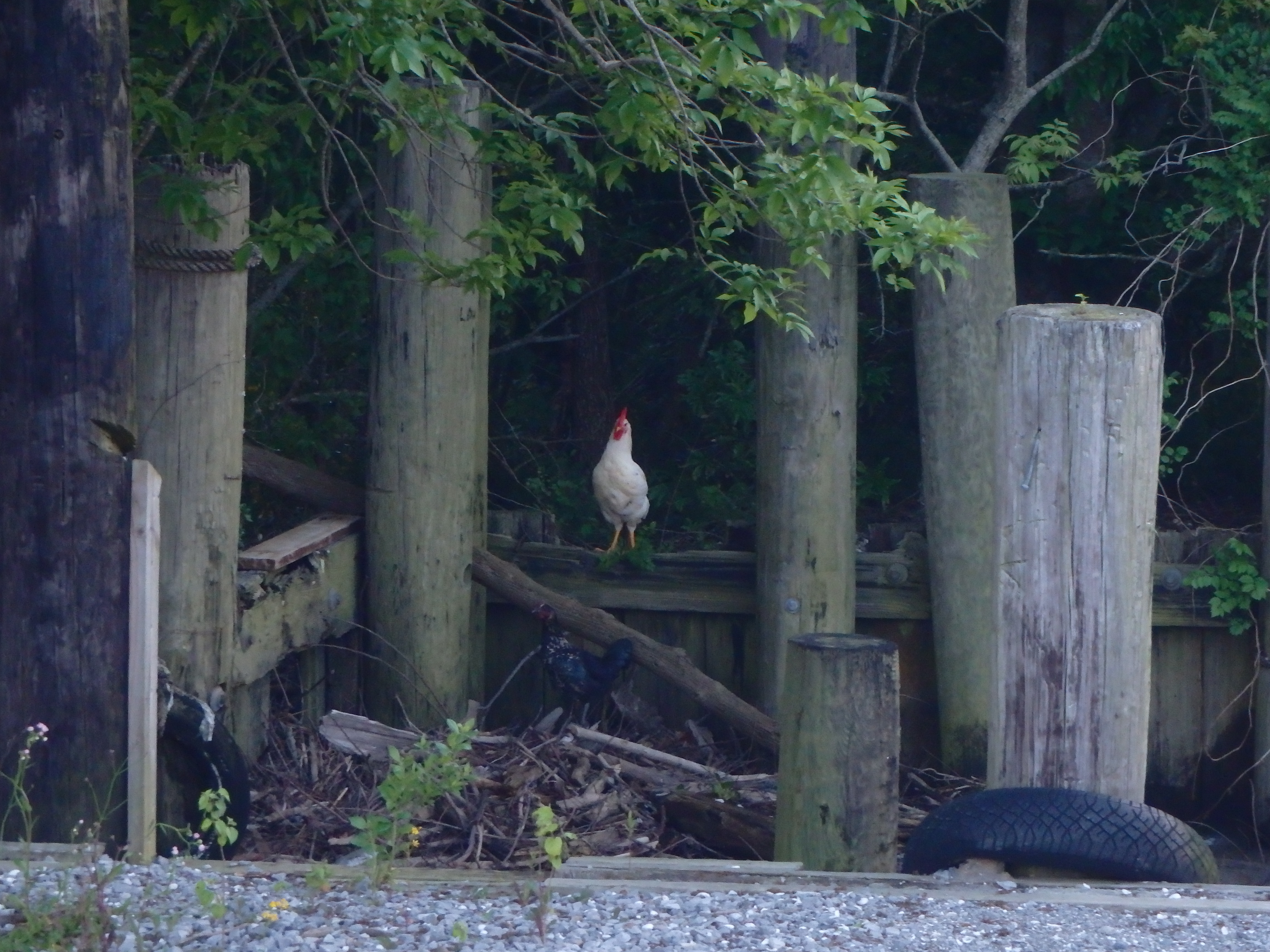
The Rooster of Empire.

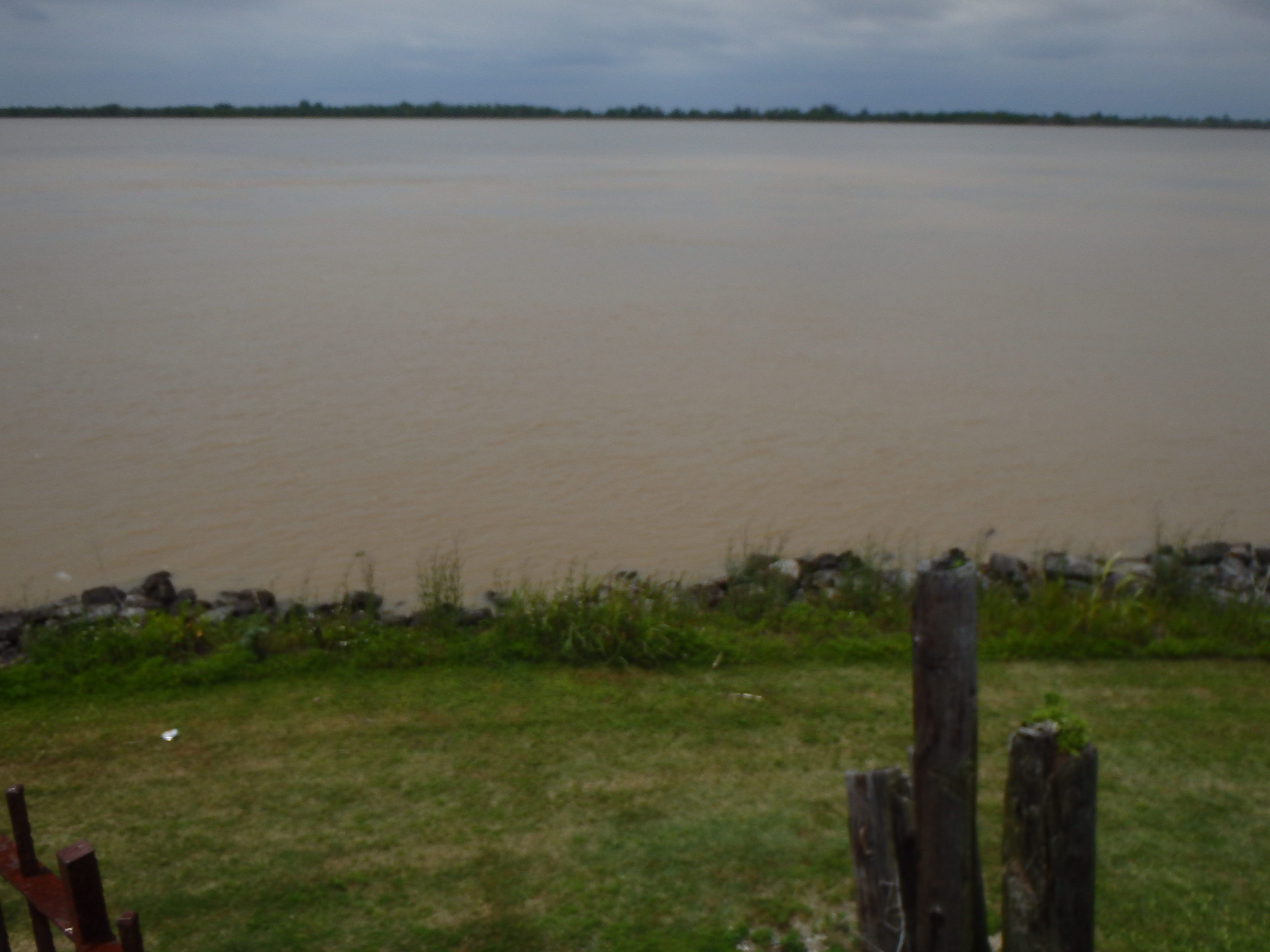
I went back to my bike and set out once more. I had heard that the pastor of the Catholic Church in Port Sulphur let people camp out behind the church, so I figured I would head there; but the sun was setting, so I pulled off the road where I saw a little pathway go over the levee to an old river-landing. Here I found an old rooster and his hen living happy little independent lives in the old dock; and I pitched my tent not far from them, just a few feet from the bank, and watched the sun go down on my first day on the Missisippi River.

I had found, during the latter half of the day, neither supermarket nor restaurant of any sort; and so I set up my tent and struck off in the dark for Port Sulphur. This was not an ideal situation – I don’t like biking in the dark – but I was hungry, and I felt I had to try to get something.


Where Even the Gravestones Are Racist.

12-May-14

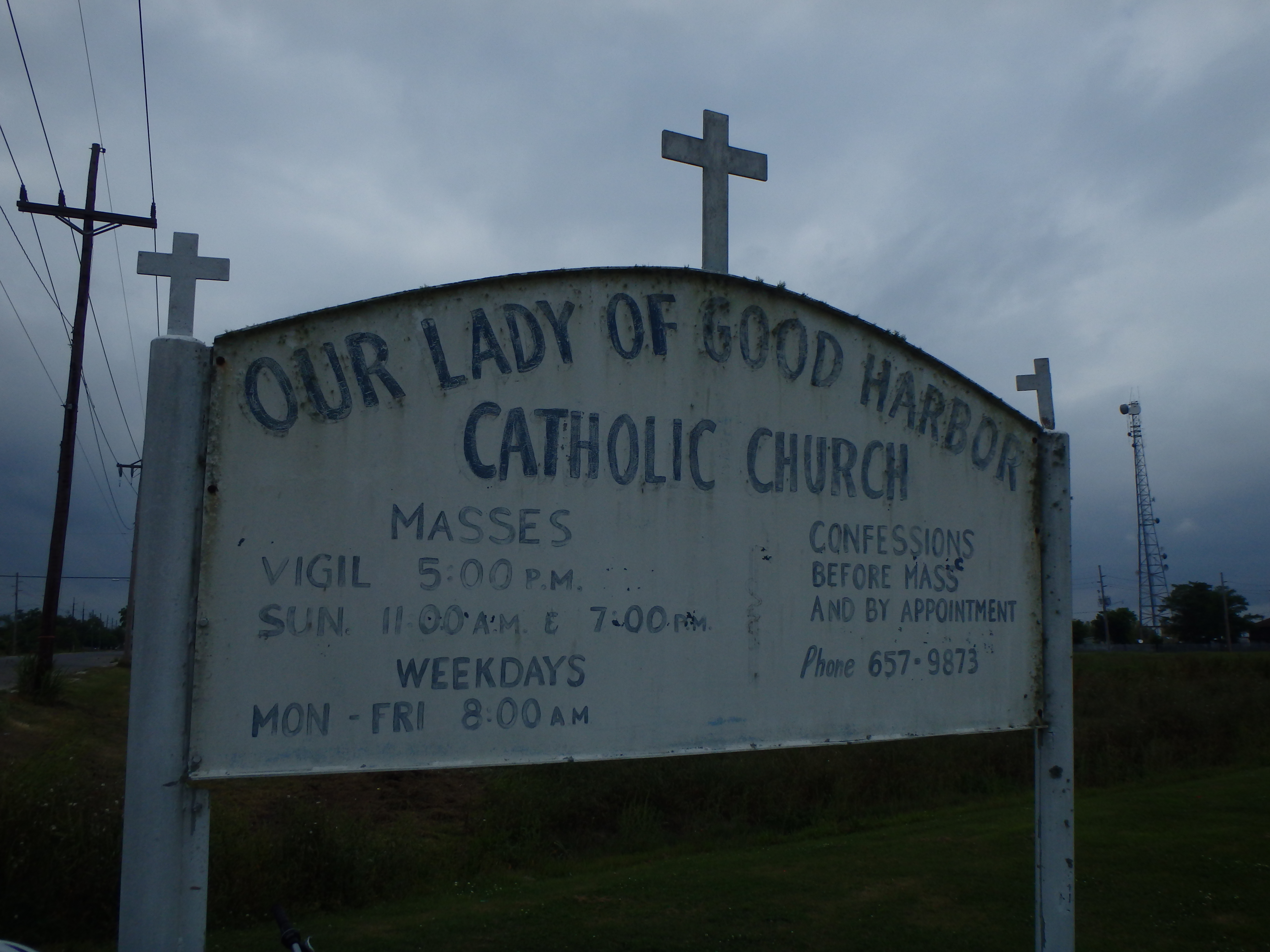
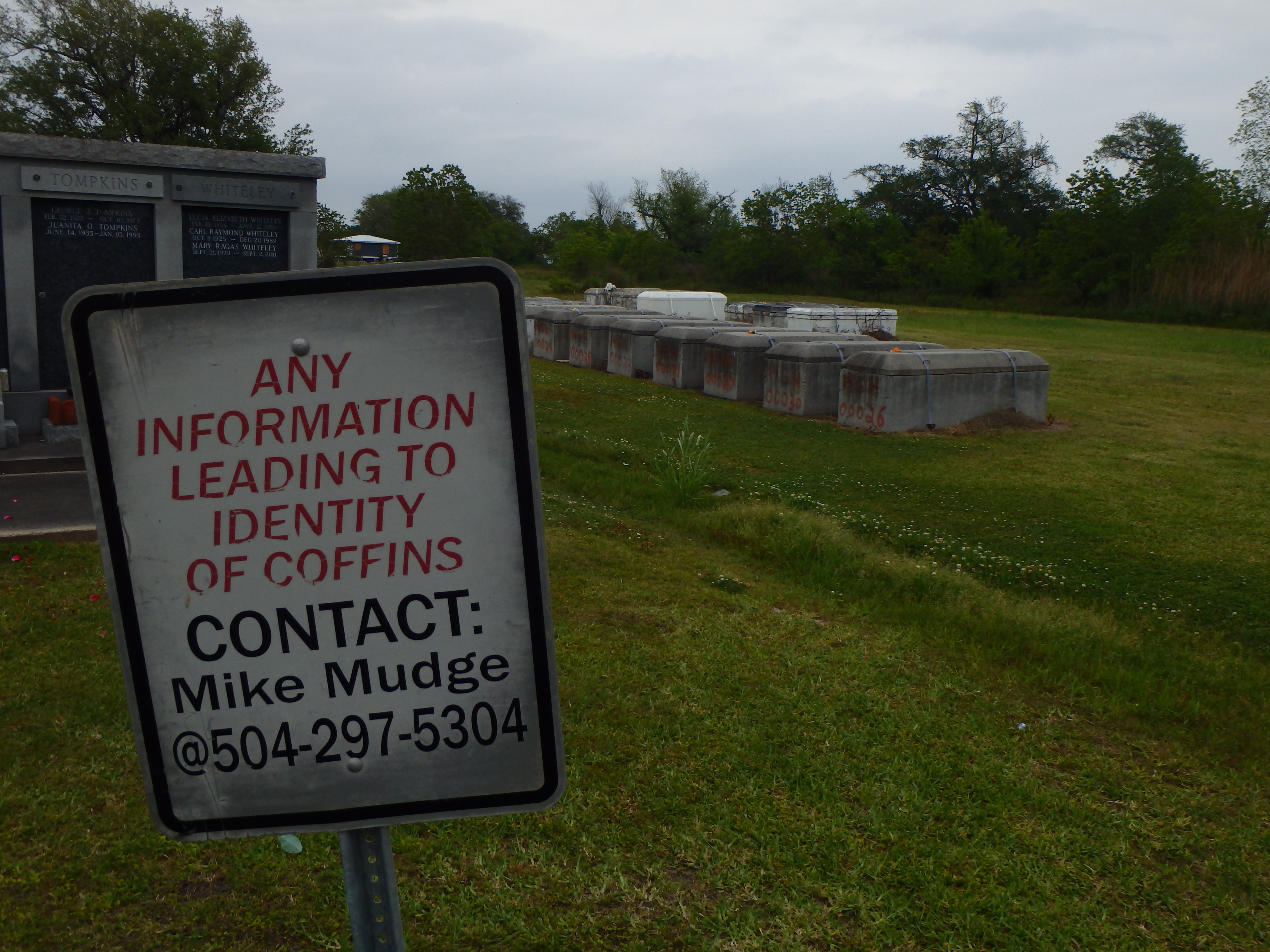
There was a battered sign by the road advertising Our Lady of Good Harbor – masses at 11 a.m. and 7 p.m. Sundays, 5 p.m. Saturdays – but there was no building anymore. I couldn’t even see a foundation for one. There was a cemetery. I used to walk around cemeteries often enough – I suppose looking for some kind of insight into what happens to us when we die – but since I usually leave them no more enlightened than when I arrive I have mostly given up the habit. I might simply have gotten back on my bike after taking a picture of the weathered sign which had outlived the church it advertised, when I saw another sign that struck me:

ANY
INFORMATION
LEADING TO
IDENTITY
OF COFFINS
CONTACT
MIKE MUDGE
(504) 297-5304

Behind this sign was a row of ten cement coffins, and another row of six behind them, with numbers spraypainted on them. Presumably their inscriptions were lost, and they could not be identified by church records because they had been dislodged by the storm from their places. As Irving says of sepulchral inscriptions worn away, the monuments had ceased to be memorials: they contained no memory; all they remembered to us is the ultimate failure of human memory.

At the back of the cemetery I found what must have been the church: only the poured foundation remains. Someone had scrawled into the cement when it had been laid, “Come Holy Spirit 10-5-81.” The church had stood less than twenty-five years.

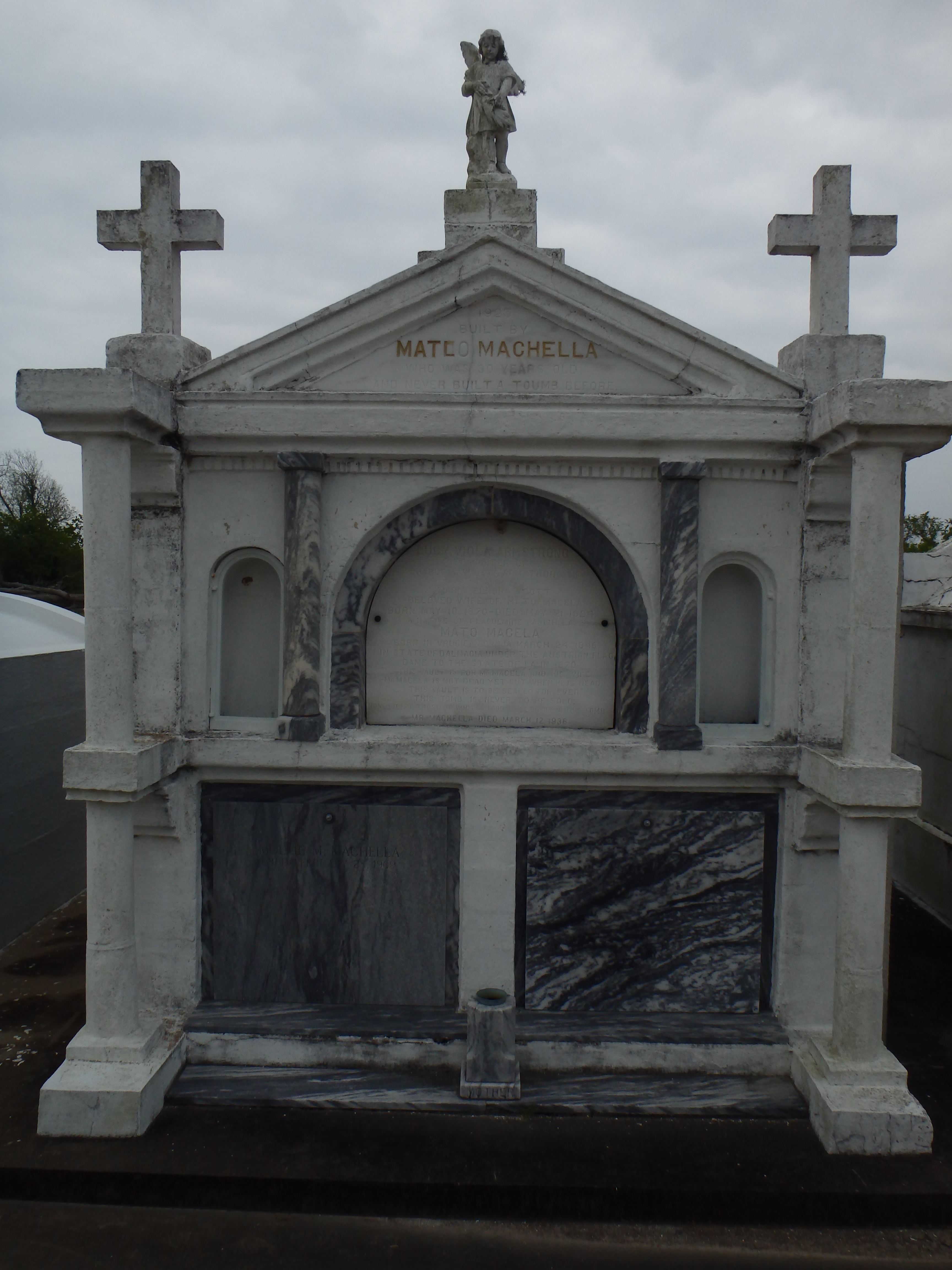
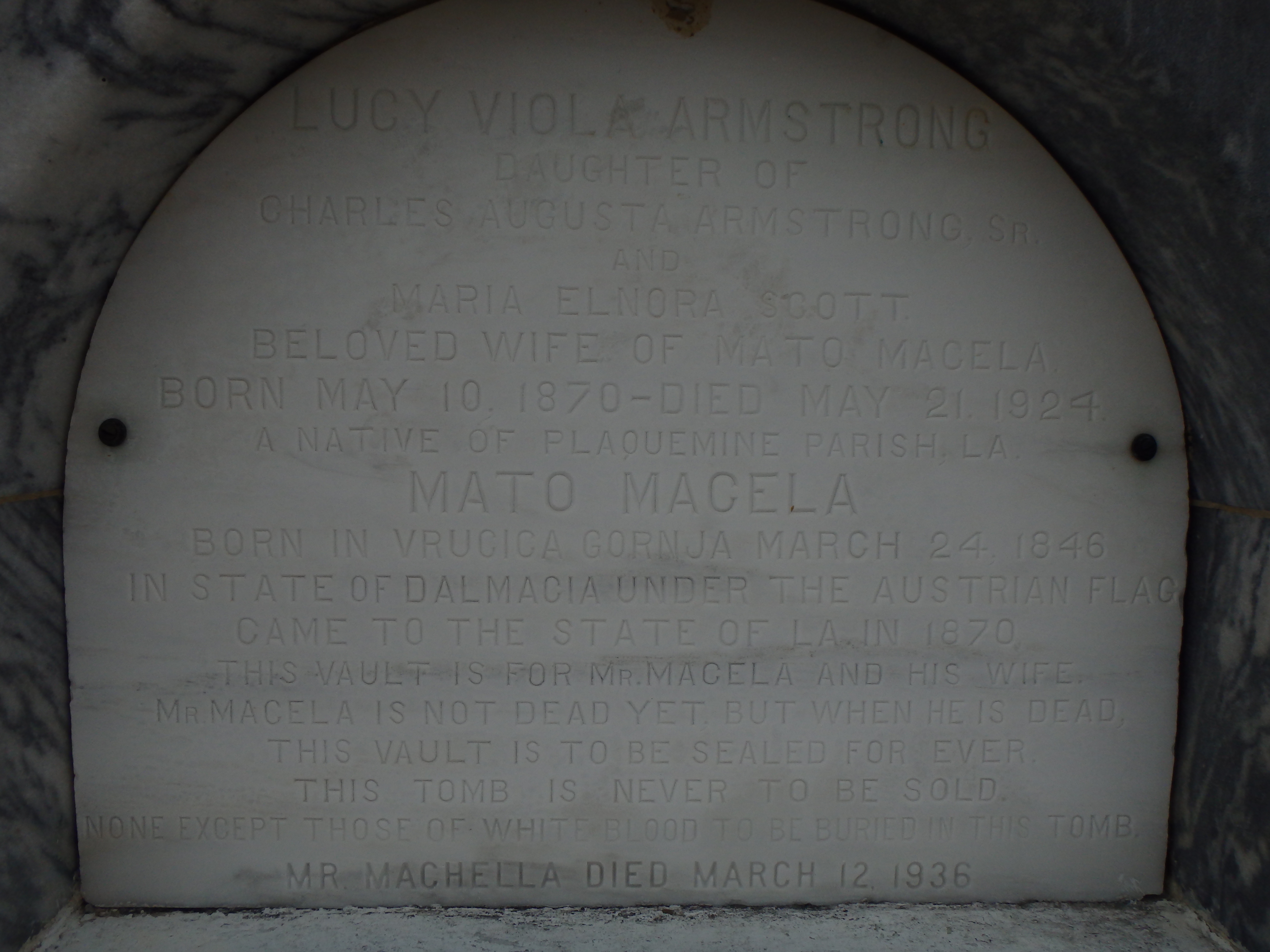
As I was leaving an unusually elaborate, and slightly awkward, tomb caught my attention. It had an inscription in the attic of its pediment which I found curiously self-regarding, and it made me want to read the longer inscription below. The upper inscription read:

1925
BUILT BY
MATCO MACHELLA
WHO WAS 80 YEARS OLD.
AND NEVER BUILT A TOUMB BEFORE.

Down below the funerary inscription ran:

LUCY VIOLA ARMSTRONG
DAUGHTER OF
CHARLES AUGUSTA ARMSTRONG, SR.
AND
MARIA ELNORA SCOTT.
BELOVED WIFE OF MATO MACELLA
BORN MAY 10, 1870 – DIED MAY 21, 1924.
A NATIVE OF PLAQUEMINE PARISH, LA.
MATO MACELA
BORN IN VRUCICA GORNJA MARCH 24, 1846
IN STATE OF DALMACIA UNDER THE AUSTRIAN FLAG
CAME TO THE STATE OF LA. IN 1870.
THIS VAULT IS FOR MR. MACELA AND HIS WIFE.
MR. MACELA IS NOT DEAD YET BUT WHEN HE IS DEAD,
THIS VAULT IS TO BE SEALED FOR EVER.
THIS TOMB IS NEVER TO BE SOLD.

And then the final line Mr. Macela composed, which made me feel like I was far from home, in a place I didn’t understand:

NONE EXCEPT THOSE OF WHITE BLOOD TO BE BURIED IN THIS TOMB.

Fort Jackson and Coming into Buras.

12-May-14

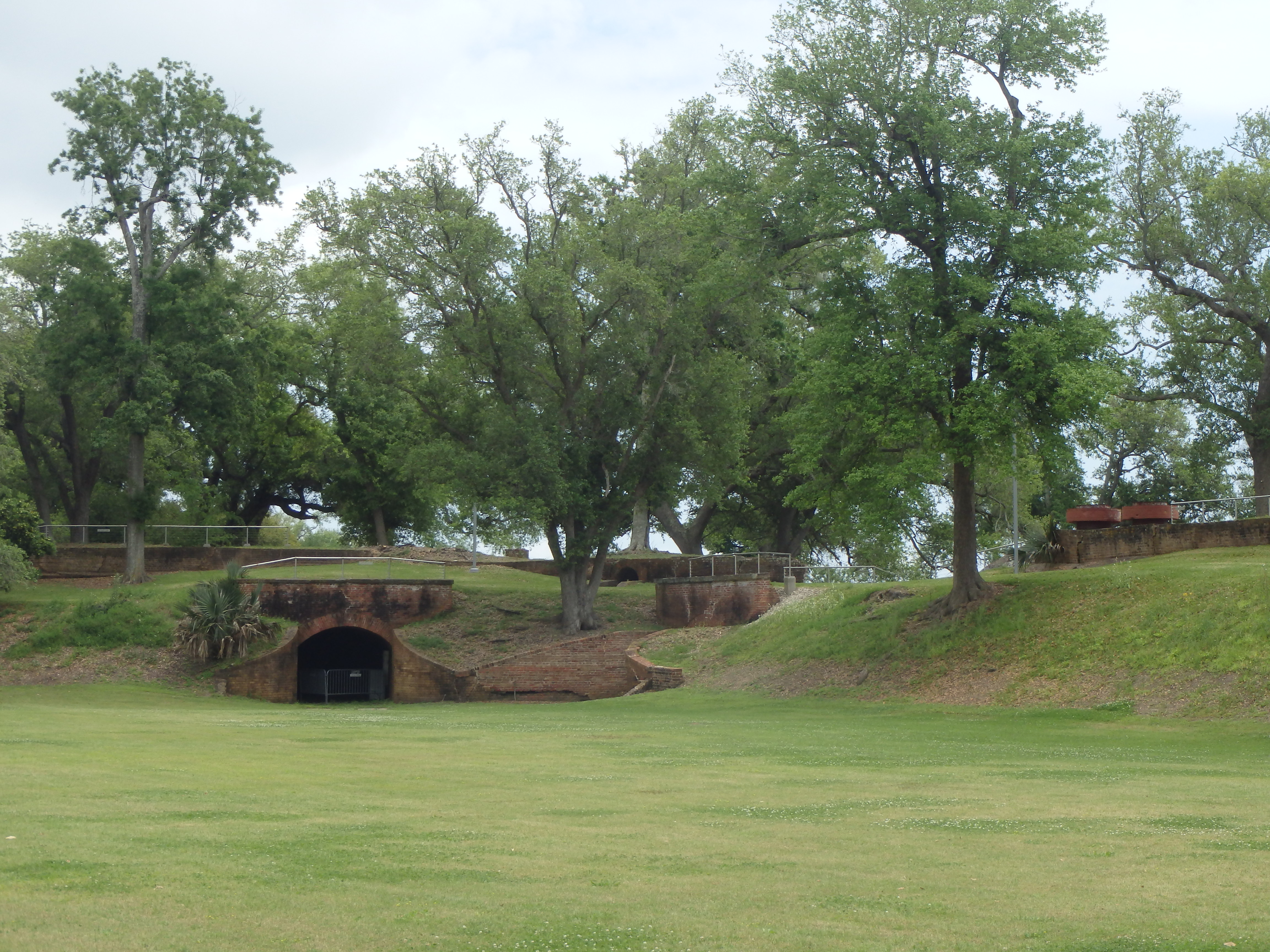
The inner ruins of Fort Jackson.

After Boothville there was some waste ground, which was coming up in forest; here there appears to be ground enough to grow trees. Cycling along the levee I came to the ruins of an old fort, Fort Jackson, which had been built in 1830 to complement a similar Spanish fort on the other side of the river, Fort St. James. These structures – large pentagons of stone (or here, since there is no available stone, brick) with holes for cannon – are found in several of the Spanish colonies of the Caribbean, and around New York Harbor as well. The fort was refurbished with concrete around the time of the Spanish-American War. I took my picnic lunch there, and then seeing the clouds beginning to look threatening – after what had been a glorious, sunny morning – I tried on for the first time my rain gear. But when I resumed riding I found it was too warm and humid to ride wearing rain gear – I preferred rain to sweat.

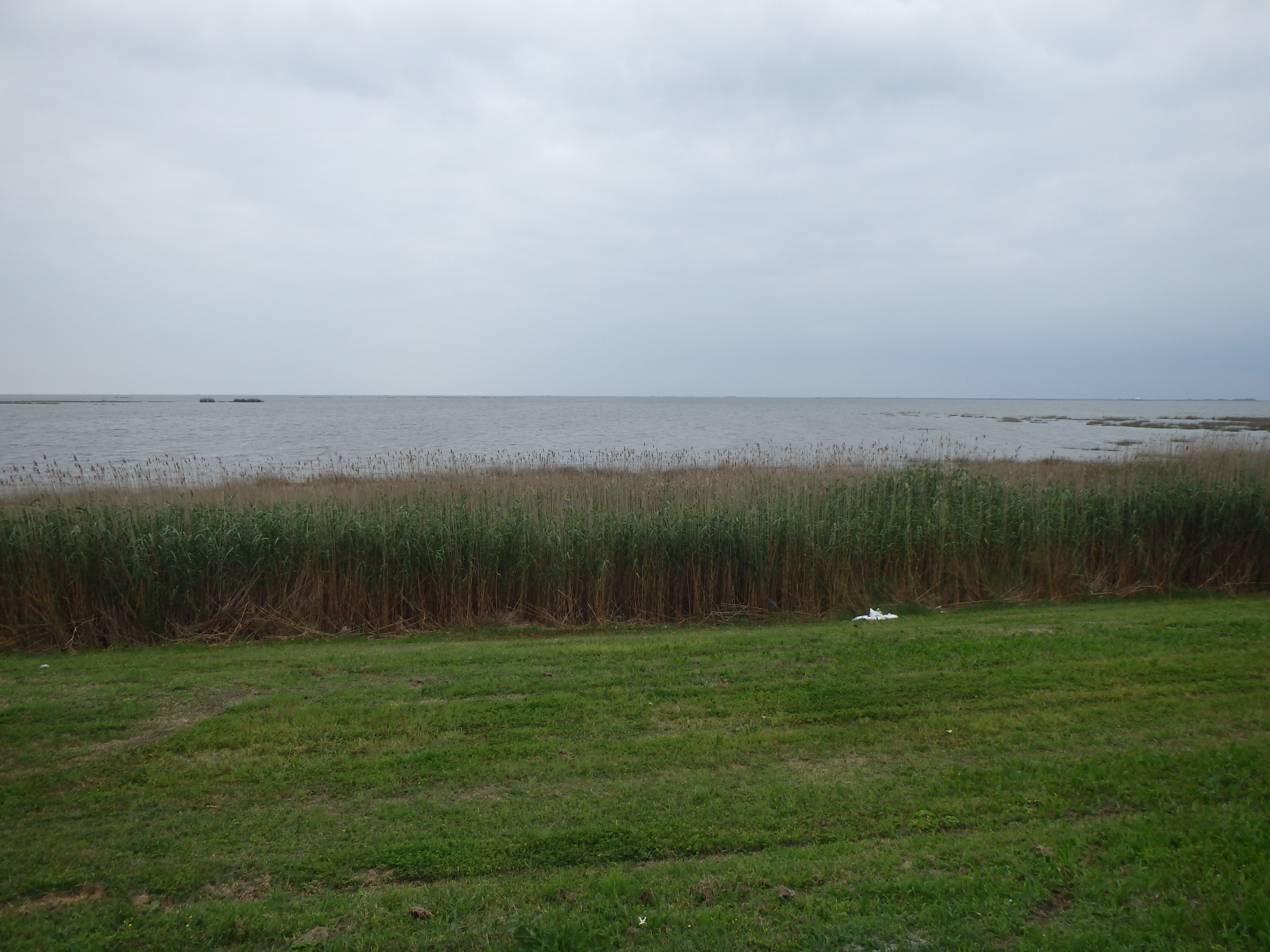
The "wetlands" west of Buras. Just a few feet of grass and then open water.

From the fort for greater speed I returned the main highway, which runs on the opposite side of the narrow peninsula. It too is next to a levee: the so-called “citrus levee,” which protects the area from the wetlands – now more and more the Gulf – to the west. Jutting out into the Gulf, this is one of the most frost-protected regions in all America, and it supported a modest but profitable number of citrus orchards. The levee’s specific purpose was to keep out the salt water, which would have killed the trees; but during Katrina the levee was overtopped, and sure enough, the trees are now all gone. Climbing the levee I found that what once was salt marsh was now open water. Though the water is shallow, a levee is not sufficient protection against it, and the town of Buras, though twenty miles “inland” from Venice, is dangerously exposed to the Gulf.

Before I made it to the highway I passed some men putting up some very large tents – over a hundred feet to a side – as if for a school graduation or reunion.  They swung the sledgehammers, pounding in the tent poles in a most impressive way.  Again, they looked different from any New Yorkers I had met, and speaking to them I found they were from Honduras.

Pretty easy to tell what this was.

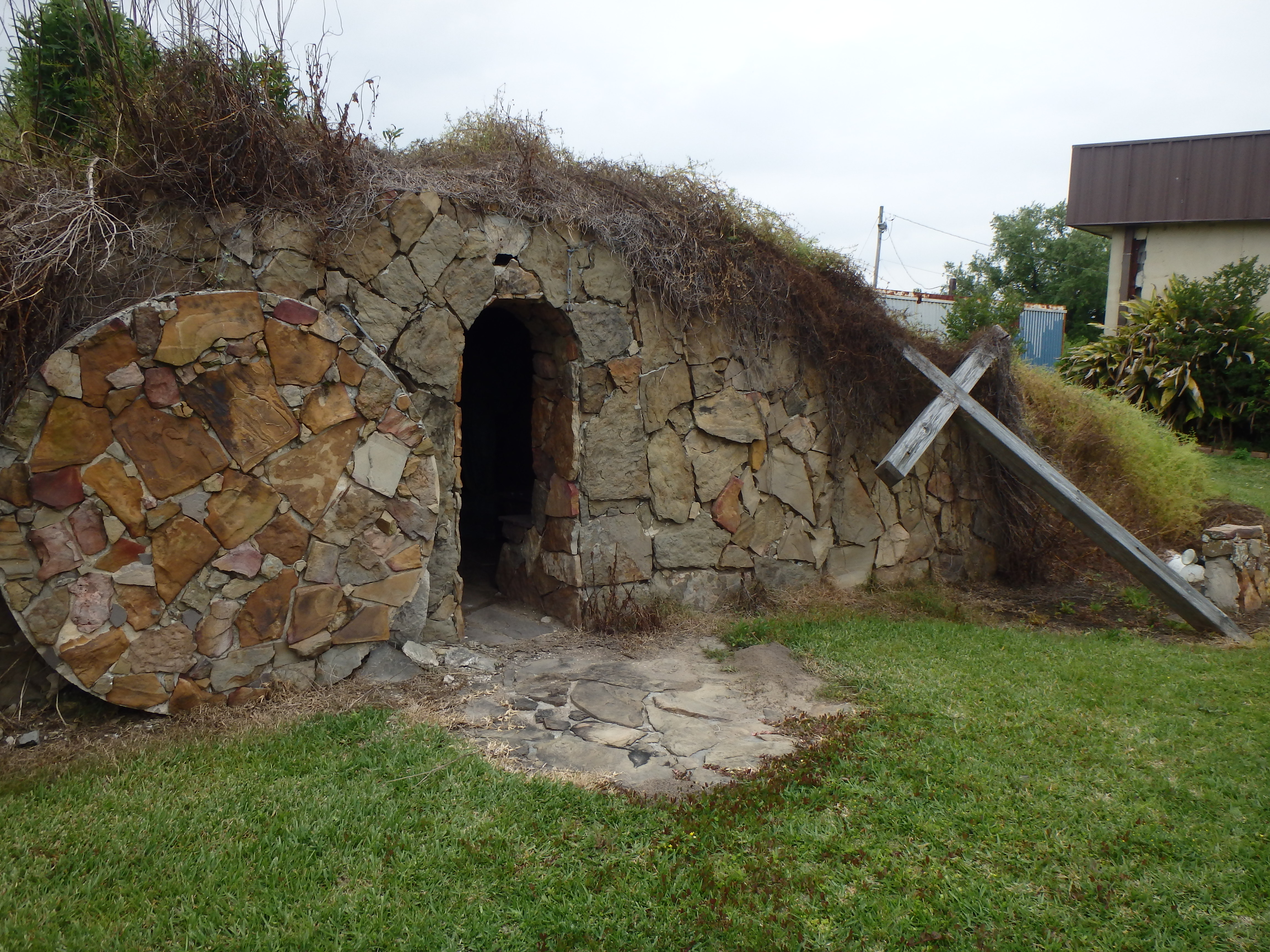
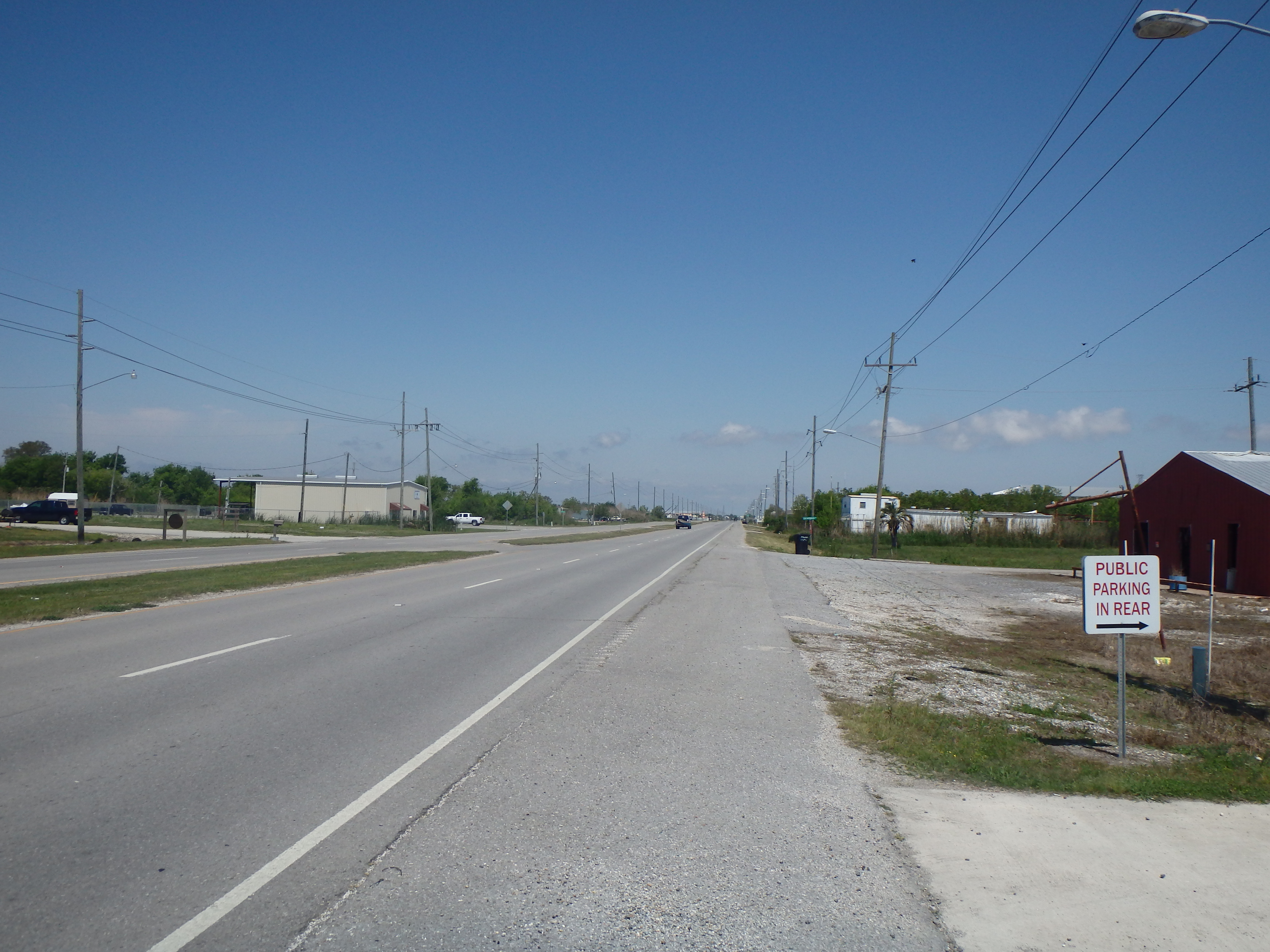
The highway was fast and loud, and its shoulder littered with gravel and broken glass; not an ideal route for a bicycle. What is more, the shoulder served as a kind of hot morgue for local wildlife, and if Louisiana had any need for a public roadkill inspector, I’m sure I could have passed the qualifying examination after just a few miles along that road. I hoped by the end of my trip to be able to tell the animals apart merely by smell, but I found that we all smell about the same when dead.  I passed a mock-up of Jesus’s tomb, where I stopped and said a prayer for my trip.  There was also nearby a cement casting of the Ten Commandments in English, which had broken in half.  Cheap workmanship.

I soon found myself in Buras, which I could tell had some kind of downtown to my right, off the highway, so I took a right turn and found what was probably the old road, going along the river. I passed a sign for a Catholic Church, but the church was gone – presumably destroyed by Katrina. I got off my bike to take a further look.

Big Muddy at Fort Jackson.

When Life Gives You Mud…

12-May-14

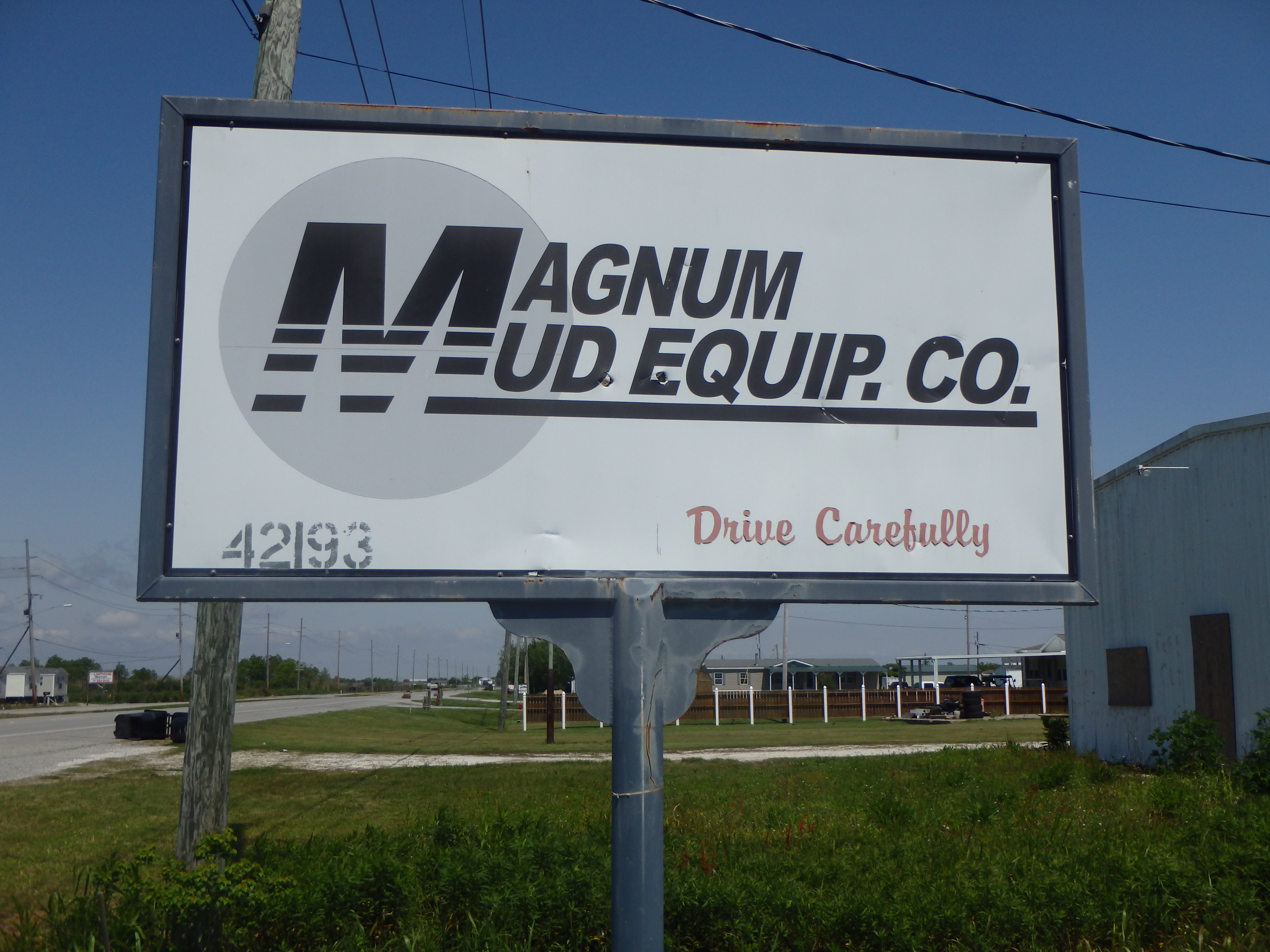
When life gives you mud, start a Mud Equipment Company.  It was closed, but I really wanted to go in and say, “How’s the mud equipment business was in Louisiana?  I’ve been thinking of starting one in the Catskills, and I’m gathering information.”  In Venice, Louisiana.

North through Venice.

10-May-14

"Downtown" Venice.

I left a bit late my first morning on the road – some of it was that I was not planning on cycling that much that day – it is best to start slowly, if you intend to keep going for a long time – but there was a little bit of fear, that gave weight to natural inertia. From the marina the previous evening I had taken a slight detour over to the southernmost point on the road, to mark the beginning of the cycling portion of the trip: it was five miles from there to my hotel. So now I was five miles into the trip, and something like 2,395 miles of river road were north of me. It was such a large prospect that it was almost better not to step into it.

When I walked people would tell me things like, “You’re not looking so good – you all right?” I had thrown my back out two weeks earlier, and it was still a problem. I could cycle, but dismounting was painful, and I simply dreaded having to stand up after being seated. I was doing stretches to fix the problem, and I could feel it was getting better, but it was by no means ideal.

Atop the levee, looking at the river.

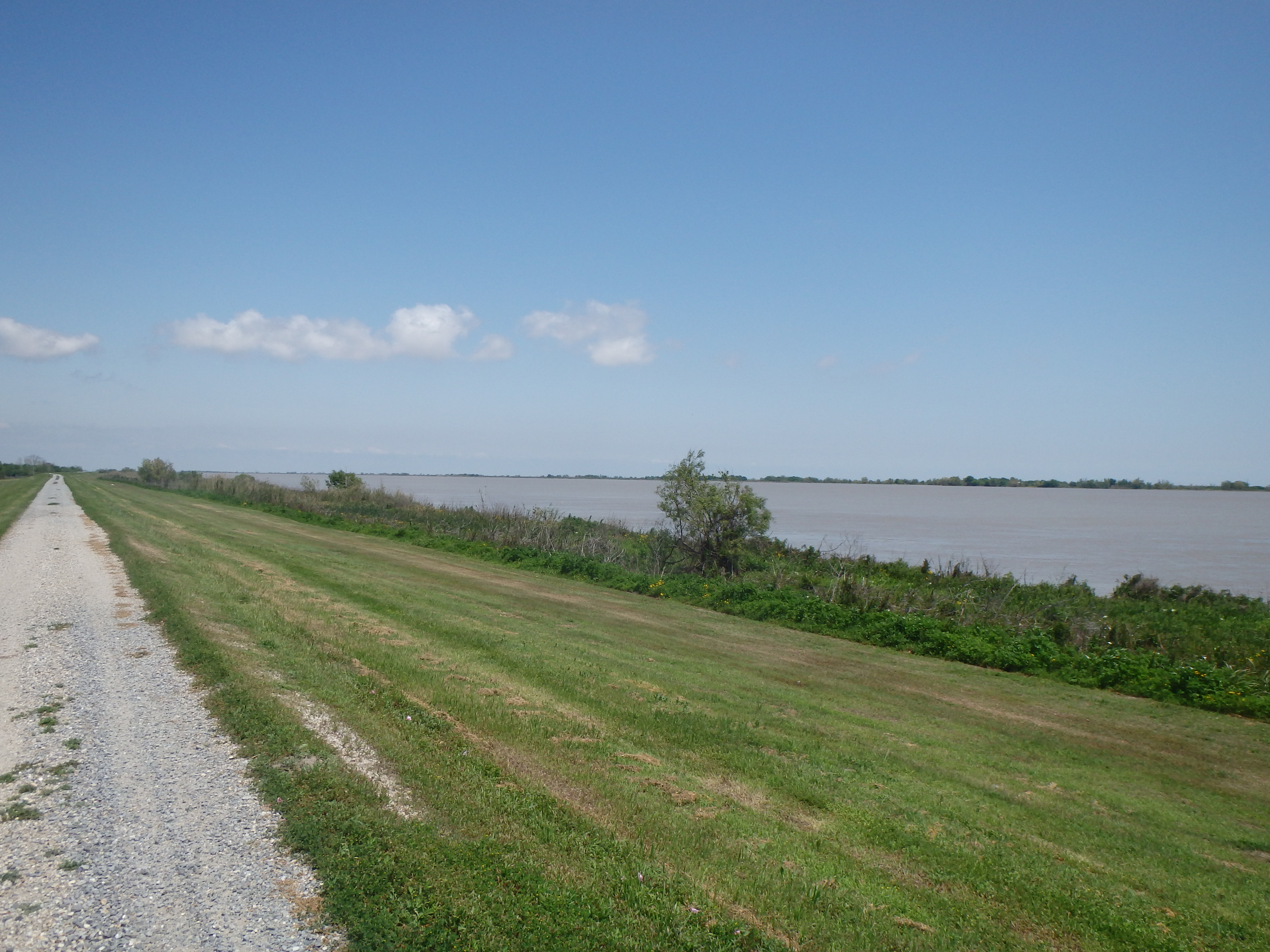
But I rode out that April morning all the same, and pointed my bike north. I started on the main highway, which was ugly, then took a side road past some small houses and trailers for awhile, and then, not feeling close enough to the river, I got up on the levee and rode there. The top of the levee was gravel, a bit looser than I wanted for my bike, but I could ride on it. What I could not do, however, was go more than eight or nine miles an hour on gravel. If I wanted speed I needed a better surface. But it was nice riding on top of the levee – the river was my companion. It was mostly empty – occasionally very large boats came by, but not much else. I saw no one walking or riding their bikes, in the neighborhoods or on the levee.

Venice bleeds seamlessly into Boothville, with buildings scattered at more or less equal distances all along the road. There is no point at which you might say, “This is downtown Venice,” or “This is downtown Boothville” – it was sprawl without definition, along the one through road.

From time to time there were large parking lots, entirely out of scale with the small town around them, several acres’ worth of blacktop.  They were completely filled with vehicles – mostly pickup trucks, and a plurality of white Chevy Silverados. From living in the country I have become very familiar with this truck and the men who drive them, and I will say that I never see one without wincing a little: the men I have known who have owned them, underneath the bravado, have mostly radiated powerlessness and fear. The rural districts of this country, where such trucks are the norm, are also some of the poorest and, in terms of power and influence, least important places in the country. The men who live there live mostly to serve other men more powerful than they, who live in cities: they build extensions onto their summer homes, or mow their lawns, or plow their driveways. Here they were pumping their gas – or more accurately, they were pumping gas for everyone, and pumping money for the few rich who owned the oil companies. They park their Silverados in these lots and take boats or helicopters out to the oil platforms, where they typically work for two weeks straight and then are brought back to land. They typically, I am told, do not live in Venice, but drive back to their homes in upper Louisiana or Texas or Mississippi or Alabama when their two-week shifts are done. Since they are not actually living in Venice – not even during their shifts – they don’t have much of an effect on the local economy. There were almost no stores to serve them – all those thousands of cars resulted in only one grocery, and two bars, which probably served the fishing community more than the oil workers anyway.

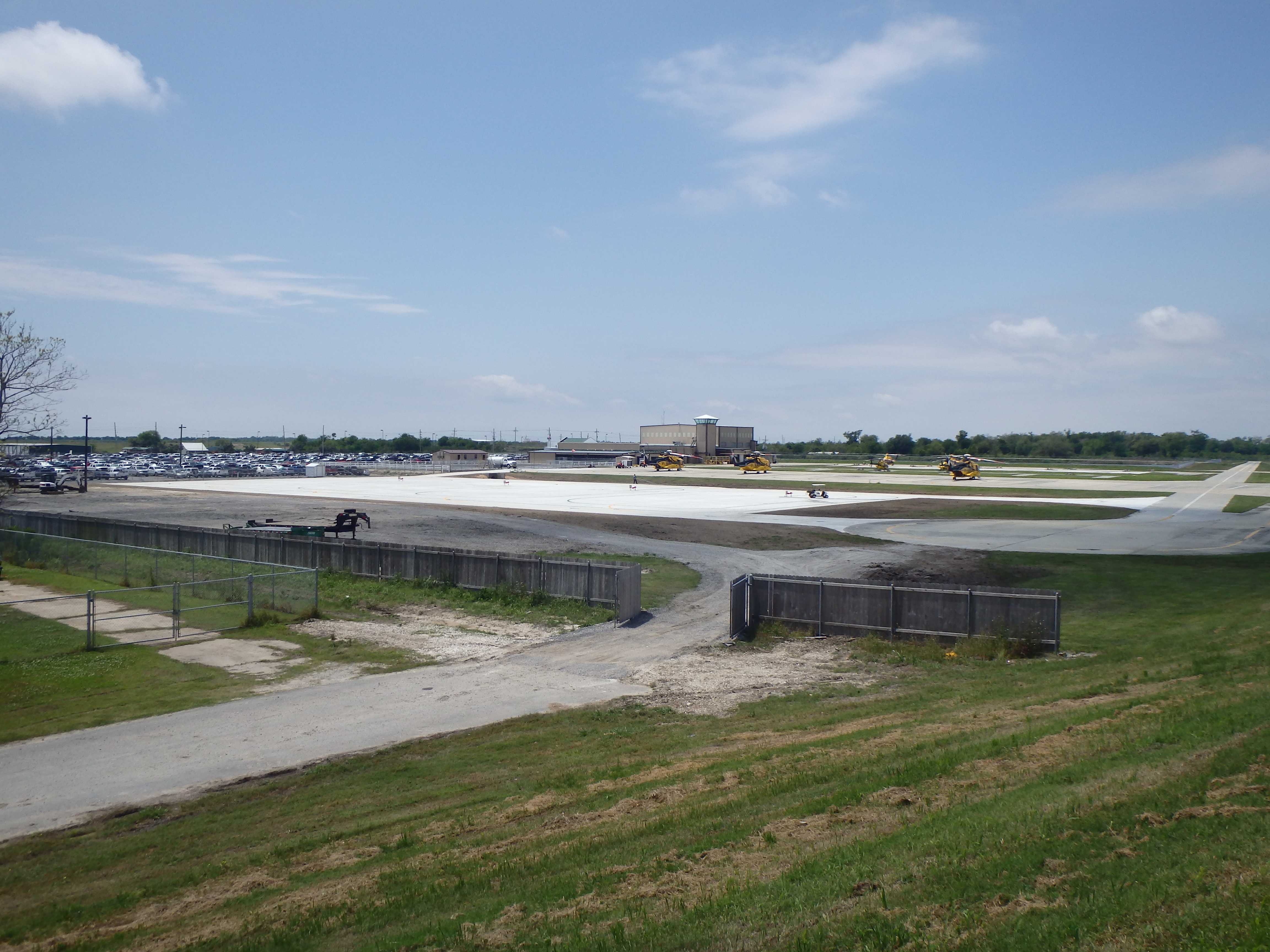
Contraband photo of a Venice heliport.

From atop the levee I could almost get a good picture of one of these lots which was next to a heliport, when a man who was pulling up to the lot’s barbed wire fence got out of his truck and started walking up the levee. The way he had his head down inclined me to believe he meant nothing friendly.

I have a standard way of approaching situations like this now – I have been in many such, as curiosity and corporate America never seem to get along: “Uh-oh,” I said. “Am I in trouble?”

“Yeah.”

“Why is that?”

“You better watch out! Look I just work here, I’m trying to help you out. But they’ve been picking people up who take pictures around here, they take ‘em down to the police station and check them out.”

“There’s nothing illegal about taking pictures, is there?”

“Listen I don’t know the law, but I know they’ve picked people up before. Trust me, all these places along the river, they all have security guards. So I wouldn’t take any pictures if I were you.”

“Okay, good to know. It’s just so impressive – so many cars here. All those cars are people who are out on the Gulf?”

“Oh yeah. There’s actually another lot which is attached to this heliport, it’s about a mile down the road, that one’s full too. This is a brand-new facility they built to handle all the people going out to the oil platforms. The old one wasn’t big enough.”

“Impressive. I saw the lots were full even on Easter.”

“No holidays in the oil business, I’ll say that. Speaking of which, I’m headed to work, but I’m telling you, watch out!”

I took note of his advice but did not follow it, of course.

Venice, jutting out into the Gulf as it does, was almost completely destroyed by Hurricane Katrina. The houses there now are all new because the old ones are almost all gone. But most of the lots do have houses, and the houses all look trim, even though they are mostly trailers of some sort. A friend of mine who lives in Louisiana told me, “I knew Venice would come back after the storm. Maybe other places down in Plaquemines Parish not so much, but Venice is important for the oil industry. It’s the furthest you can get into the Gulf by road. That’s valuable. Even if everything else is just ocean all around, they’ll try to hold on to Venice – it’ll be a bridge to an island, like Key West, if it has to be.”

The Willingness to Start.

09-May-14

I had spent the day in Venice, and had thought about starting to ride north that same day, but thought better of it. It was now the end of the day, and I pedaled back to the Venice Inn, where I had stayed the night before, and got the same room again. The hotel was, again, empty, so it was not difficult. I spoke with a young lady with thick glasses who worked there. She was probably about twenty-two, and slightly nerdy-looking and overweight.

“Aren’t you afraid about biking and camping out there? Just being on your own?”

“I find people are pretty good,” I said. “I know it’s different for girls, but I think there’s a lot less to be afraid of than people think.”

“I’d be afraid of the snakes,” she said. She was waiting at the printer. It printed out my receipt and she marked where I had to sign it.  “But I think it’s great people come here to do these things. A woman came down here, she was taking pictures of all the birds here, and I thought, ‘You know, that’s really great.’”

“Well, you can start small, you know,” I said. “You can take pictures of the birds too.  Or explore the next town over. Or any spot you’re curious about.  Get one of your girlfriends – or a boyfriend – to go with you.”

“I’d be too afraid. That’s why I pretty much just stay inside. Watch television.”

“Oh goodness, shoot that thing. Elvis had it right – he put a bullet in that t.v. It’s a big world out there! And people will help you, if you start down the road. You’ll see.”

“Yeah, I guess.” My enthusiasm was not working on her. I had my receipt folded into my pocket and was ready to go.

“So you’re heading out tomorrow?” she said.

“Yup. North tomorrow. We’ll see how far I get!”

“Good luck,” she said. “Be safe.”