Skip to content

Middle Age.

09-May-20

http://philldiscgolf.com/Leaf.php So much to do, most of it the necessary sort. Children, house, declining body. I think of the way Jung describes the middle of his career:

http://partnershipforcoastalwatersheds.org/community-population-demographics/ With my work at Burgholzi life took on an undivided reality – all intention, consciousness, duty, and responsibility.  It was an entry into the monastery of the world, a submission to the vow to believe only in what was probable, average, commonplace, barren of meaning, to renounce everything strange and significant, and reduce anything extraordinary to the banal.  Henceforth there were only surfaces that hid nothing, only beginnings without continuations, accidents without coherence, knowledge that shrank to ever smaller circles, failures that claimed to be problems, oppressively narrow horizons, and the unending desert of routine.

It passes into other things, of course. But I do understand why sensitive souls shrink from such a life.

So Mighty a Palace, And So Empty

06-May-20

Abu Yazid was asked, “How did you attain to this degree and achieve this station?”

“One night when I was a child,” he answered, “I came out from Bestam. The moon was shining, and the world was at rest. I beheld a Presence, besides which eighteen thousand worlds seemed but a mote. A deep emotion possessed me and I was overmastered by a mighty ecstasy. ‘Lord God,’ I cried, ‘so mighty a palace, and so empty! Works so tremendous, and such loneliness!’ A voice from heaven replied, ‘The palace is not empty because none comes to it; it is empty because We do not desire all and sundry to enter it.'”

This is from Farid Al-Din Attar’s Memorial of the Saints, the Arberry translation, which I found on the J train when I was sixteen and have never been very far from ever since. It doesn’t lose its value in my eyes.

A New Beginning.

07-Apr-20

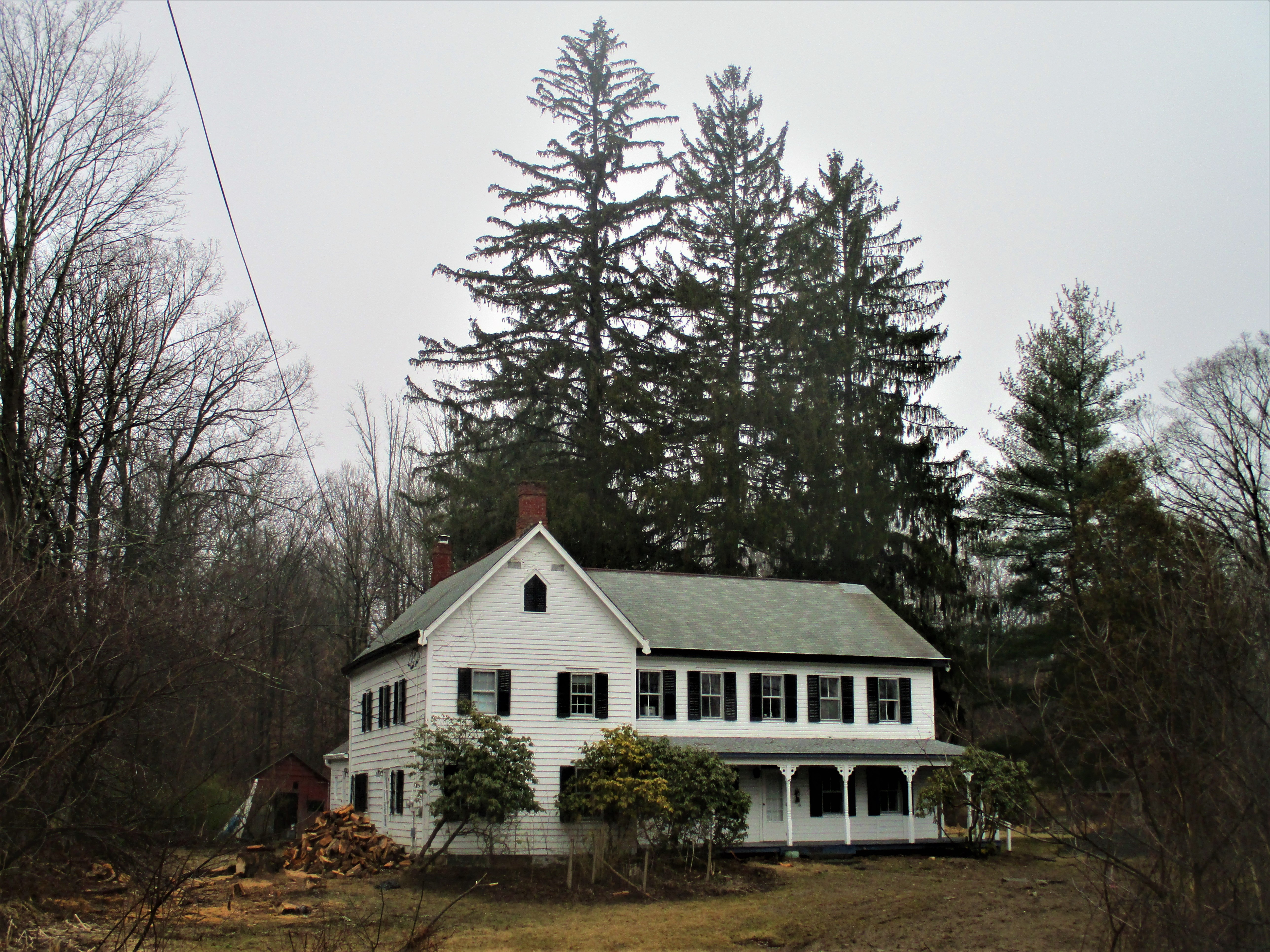
We have moved, as of October 21, into our new old house in High Falls, in the Hudson Valley.  We are told the kernel of the house was begun in 1803, and it passed through a period as the John Forbes Hotel.  It’s a little beat up – heat not functioning on one side, multiple failing chimneys, water in the basement, rot in various places, electric wiring questionable, water quality poor (I could go on) – but an absolutely delightful place.  And now we have three toddlers and an old house that needs everything and something seems wonderfully right about it all.

Raphael and the Bonds Formed by Great Art

06-Apr-20

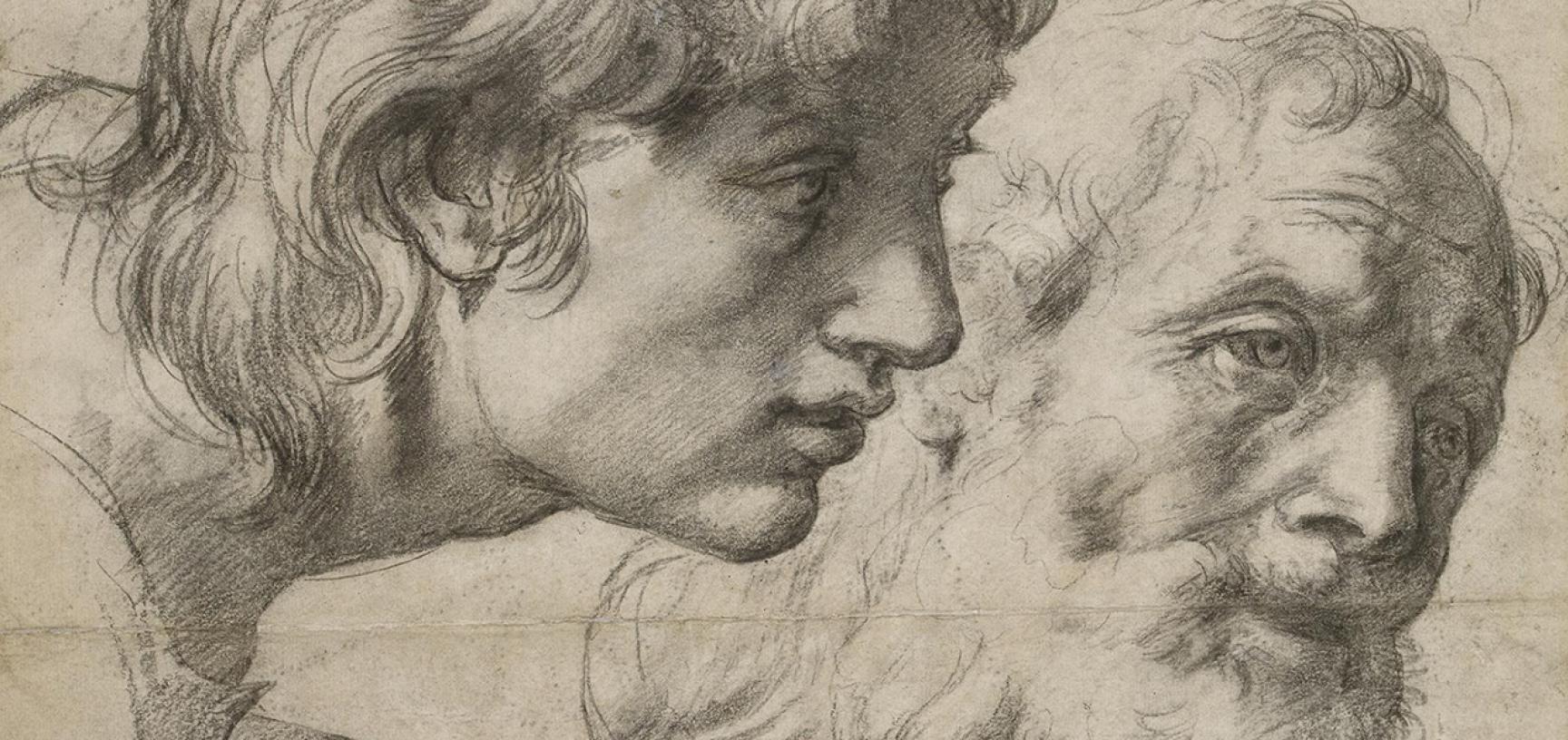
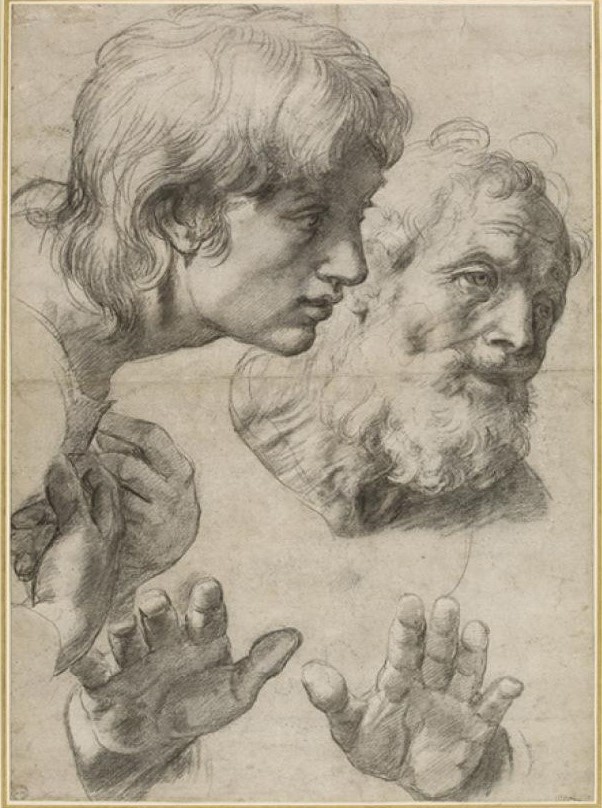
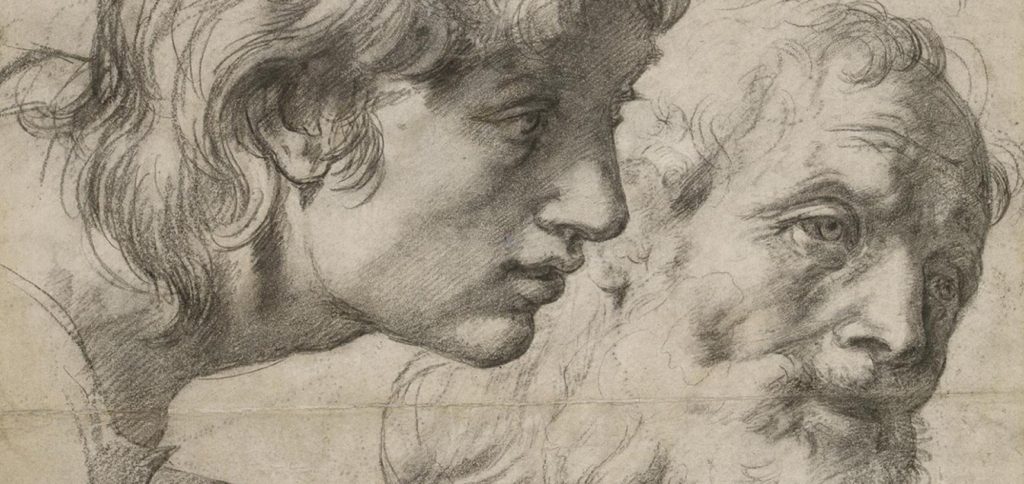
Today marks five hundred years since Raphael’s death; and a further tradition states that April 6th is the day of his birth as well.  I’ve always loved School of Athens, and the Disputa, but really the piece by Raphael that moves me most is a preparatory sketch, one he executed for his final painting, the Transfiguration.

I saw this sketch at the Ashmolean Museum, while a student at Oxford.  One of my (many) pleasures while there was to visit the print room at the Ashmolean; you request a folder – say, “sketches by Raphael” – put on gloves, and take your seat in the print room. A curator brings the folder out, and sets it on a stand in front of your seat, leaving you to the pleasure of going through the folder admiring the sketches.  The curator lurks, to make sure all is well, but there is a lingering sense in the place that all those who request a folder of Raphael sketches are gentlemen, and to be trusted with such things.

I enthused about this print to my mother, and when she came to visit me at Oxford she made a trip to the museum and saw it for herself (I had something or other to do – write a paper or something like that). From that trip she brought me a print of the sketch, which traveled with me from place to place for years. I may well have it here at the house, but I’m sure if I have it it has suffered over the years: it was tacked up at first in my room at Oxford, then it traveled to the United States, graced my room at Princeton, then wandered to New York City. It never got framed, and acquired some dirt and creases and became unpresentable eventually.

But I never tired of looking at it.  Now it makes me think of my mother; I think she saw, in Raphael’s old and young apostles, something like herself and her son. I was so forward, so intense in my interests, so curious, as the young St. John in the sketch; but also held back somehow; I desperately wanted to, but did not put my hands to the things I desired. Whereas old James sees something else; he does not thrust himself into the action, but merely watches with feeling; his curiosity has been satisfied already, he knows what he is seeing, and the track of a tear is visible on his face. His hands spread slightly though, as if he has to calm himself and keep himself in.

In the painting, these two figures are not to my eye especially remarkable, so much less feeling is in the painting, than in the sketch.  I think this is generally true of Raphael: I find myself often unmoved by his paintings, but his sketches, his lines, seem to have a depth beyond all other artists.

And that sketch for me is not only great art, but deeply personal.  I am thankful for this – thankful that she had such a relationship with great art, and thankful that she shared it with me.  It feels like something deep and lasting, something that means something to me twenty years later, and will still mean something in twenty years more, and even be to some extent communicable and shareable with others.  Fine, beautiful things are like this: they take our love and interest and hold them, like heat held in a stone, such that others can feel them long afterward.  Someday perhaps my own children will discover Raphael the draftsman, and I will be the one with the tear in my eye, hands slightly outstretched, while they peer with curious beauty at the life of the world.
Shakespeare, In Praise of More Babies.

10-Mar-20

When I do count the clock that tells the time,
And see the brave day sunk in hideous night;
When I behold the violet past prime,
And sable curls all silver’d o’er with white;
When lofty trees I see barren of leaves,
Which erst from heat did canopy the herd,
And summer’s green all girded up in sheaves,
Borne on the bier with white and bristly beard,
Then of thy beauty do I question make,
That thou among the wastes of time must go,
Since sweets and beauties do themselves forsake
And die as fast as they see others grow;
And nothing ’gainst Time’s scythe can make defence
Save breed, to brave him when he takes thee hence.

“Breed” here seems to function as a noun – “offspring,” or infinitive, “to breed, to make babies.” And “him” I suppose is death more than God. Or of course “breed” could just be the Venereal deed, as that only by its full fructification seems to stand against Time’s scythe. The world as I have known it is running down; the youthful faces I knew are lined and careworn, and are not as I knew them. But my children are still this day’s creation, and the world is all new to them.

Consequences

28-Feb-20

“Order says there is no wrong or right. You just reap what you sow.”

Centuries of Meditations

26-Feb-20

How is it that no one ever told me about Thomas Traherne before?

Do not wonder that I promise to fill it [this book] with those Truths you love but know not; for though it be a maxim in the schools that there is no Love of a thing unknown yet I have found that things unknown have a secret influence on the soul, and like the centre of the earth unseen violently attract it. We love we know not what, and therefore everything allures us. As iron at a distance is drawn by the lodestone, there being some invisible communications between them, so is there in us a world of Love to somewhat, though we know not what in the world that should be. There are invisible ways of conveyance by which some great thing doth touch our souls, and by which we tend to it. Do you not feel yourself drawn by the expectation and desire of some Great Thing?

“… With the Hippo and the Flamingo.”

24-Feb-20

“Berkeley Cole and I, in a private jargon of ours, distinguished between respectability and decency, and divided up our acquaintances, human and animal, in accordance with the doctrine. We put down domestic animals as respectable and wild animals as decent, and held that, while the existence and prestige of the first were decided by their relation to the community, the others stood in direct contact with God. Pigs and poultry, we agreed, were worthy of our respect, inasmuch as they loyally returned what was invested in them, and in their most intimate private life behaved as was expected of them. We watched them in their sties and yards, perseveringly working at the return of investments made, pleasantly feeding, grunting and quacking. And leaving them there, to their own homely, cosy atmosphere, we turned our eyes to the unrespectable, destructive wild boar on his lonely wanderings, or to those unrespectable, shameless corn-thieves, the wild geese and duck, in their purposeful line of flight across the sky, and we felt their course to have been drawn up by the finger of God.

“We registered ourselves with the wild animals, sadly admitting the inadequacy of our return to the community—and to our mortgages—but realizing that we could not possibly, not even in order to obtain the highest approval of our surroundings, give up that direct contact with God which we shared with the hippo and the flamingo.”

From Karen Blixen’s Shadows on the Grass.  What a glorious human being.

S. M. Stephenson’s Critical Anthology of Latin Literature.

08-Jan-20

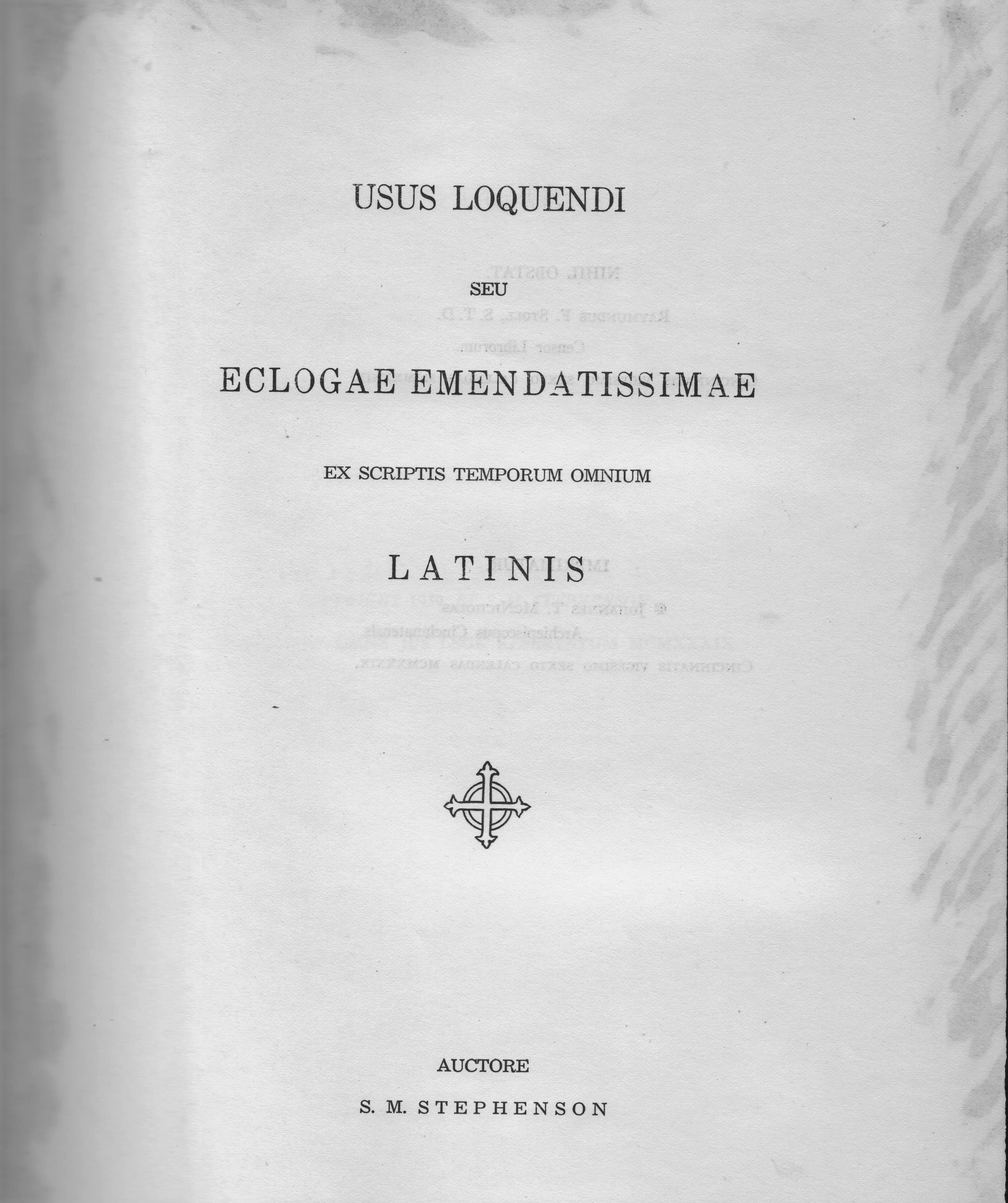
I own the only copy of this book that I’ve ever seen come for sale online. This is the high school textbook that Reginald Foster used while in the Carmelite Seminary in Peterborough, New Hampshire. It is the best, most thorough anthology of Latin literature I’ve ever seen, and thanks to the diligence of my friend Tyler Patterson, we can present it to the public to be downloaded and read.  Its full title in English is, Stylistic, or Critical Anthology of Latin Literature, by S.M. Stephenson. It’s a pretty big download, but it’s worth it.

Stephenson – A Critical Anthology of Latin Literature (1939) (1)

Winter At High Elevation.

08-Jan-20